Introduction
Gallstone disease is among the most common gastrointestinal disorders requiring surgical intervention worldwide. Approximately 10–20% of adults develop gallstones during their lifetime, and nearly 10–20% of these patients harbour concomitant common bile duct stones, resulting in choledocholithiasis [1-4]. Untreated common bile duct stones may lead to obstructive jaundice, acute cholangitis, biliary pancreatitis, hepatic dysfunction, and recurrent biliary events if left untreated [5][6]. Endoscopic retrograde cholangiopancreatography (ERCP) with endoscopic sphincterotomy followed by laparoscopic cholecystectomy has become the standard two-stage management for patients with cholelithiasis and choledocholithiasis and achieves successful duct clearance in more than 90% of patients [7-10].Laparoscopic cholecystectomy following successful ERCP prevents recurrent biliary complications and decreases the risk of recurrent common bile duct stones and readmissions [11-13].The optimal timing of laparoscopic cholecystectomy after ERCP, however, remains controversial. Traditionally, surgery has been delayed for 4–6 weeks to allow inflammation to subside, but this delay may increase recurrent biliary events and make surgery technically more difficult because of inflammatory adhesions [14-16].Increasing evidence from randomized controlled trials and meta-analyses suggests that laparoscopic cholecystectomy performed during the same admission or within 48-72 hours after ERCP is associated with shorter operative time, lower conversion rates, fewer complications, reduced hospital stay, and lower healthcare costs compared with delayed surgery [17-21] Several international guidelines therefore recommend early or same-admission laparoscopic cholecystectomy whenever feasible following successful ERCP for choledocholithiasis, although delayed surgery continues to be practiced in many institutions because of logistical and organizational constraints [22-25].
Materials and Methods
Study Design
A prospective, randomized comparative study was conducted in the Department of General Surgery over a period of four years, from January 2022 to December 2025, to compare the outcomes of early versus delayed laparoscopic cholecystectomy following successful ERCP in patients with concomitant cholelithiasis and choledocholithiasis.
Ethical Approval
The study protocol was approved by the Institutional Ethics Committee before commencement. Written informed consent was obtained from all participants prior to enrolment. The study was conducted in accordance with the ethical principles of the Declaration of Helsinki and Good Clinical Practice guidelines.
Study Population
A total of 60 consecutive adult patients diagnosed with symptomatic cholelithiasis and choledocholithiasis who underwent successful ERCP with complete common bile duct clearance were included.
Randomization
Patients were randomly allocated using a computer-generated randomization sequence into two equal groups (30 patients each):
Group A (Early LC): Laparoscopic cholecystectomy performed within 48–72 hours after successful ERCP during the same hospital admission.
Group B (Delayed LC): Laparoscopic cholecystectomy performed 4-6 weeks after successful ERCP.
Inclusion Criteria
-
Age ≥18 years
-
Both male and female patients
-
Symptomatic cholelithiasis with radiological evidence of choledocholithiasis
-
Successful ERCP with complete CBD stone extraction
-
Patients fit for laparoscopic surgery under general anaesthesia
-
Willingness to participate and provide informed consent
Exclusion Criteria
-
Age <18 years
-
Failed ERCP requiring surgical common bile duct exploration
-
Suspected or confirmed gallbladder malignancy
-
Previous upper abdominal surgery precluding laparoscopic access
-
Severe cardiopulmonary disease contraindicating laparoscopy
-
Pregnancy
-
Patients refusing consent
Preoperative Evaluation
All patients who presented to us with cholelithiasis and choledocholithiasis were admitted and included in the study. Detailed history and clinical examination of all patients were performed. All blood investigations including Complete blood count, Liver function tests, Renal function tests, Coagulation profile were done in all patients. Serum amylase and lipase were done when indicated. Ultrasonography of the abdomen, MRCP where required before ERCP. Anaesthetic fitness assessment was also done in all patients.
ERCP Procedure
ERCP was performed by experienced therapeutic endoscopists under conscious sedation or general anaesthesia. Endoscopic sphincterotomy was performed, followed by complete extraction of CBD stones using balloon or basket catheters. Completion cholangiography confirmed complete duct clearance. Patients with unsuccessful ERCP or retained CBD stones requiring repeat intervention were excluded from the study.
Surgical Technique
Laparoscopic cholecystectomy was performed under general anaesthesia using the standard four-port technique. The critical view of safety (CVS) was achieved before clipping and dividing the cystic duct and cystic artery. The gallbladder was dissected from the liver bed using electrocautery and retrieved through the epigastric port. Conversion to open cholecystectomy was undertaken when safe laparoscopic dissection was not feasible due to dense adhesions, distorted anatomy, uncontrolled bleeding, or bile duct injury.
Outcome Measures
Primary Outcome Measures
Mean operative time
Intraoperative blood loss
Conversion to open cholecystectomy
Bile duct injury
Secondary Outcome Measures
Postoperative bile leak
Surgical site infection
Duration of postoperative hospital stay
Readmission due to recurrent biliary events
Mortality
Follow-up
Patients were reviewed at 1 week,1 month,3 months,6 months,12 months and 18 months.
During follow-up, patients were assessed for postoperative complications, recurrent biliary symptoms, wound-related problems, and overall recovery.
Statistical Analysis
Data were entered into Microsoft Excel and analysed using IBM SPSS Statistics version 25.0. Continuous variables were expressed as mean ± standard deviation, while categorical variables were presented as frequencies and percentages. The Student's t-test was used to compare continuous variables, and the Chi-square test or Fisher's exact test was applied for categorical variables. A two-tailed p value <0.05 was considered statistically significant.
Results
A total of 60 patients with cholelithiasis and choledocholithiasis who underwent successful ERCP followed by laparoscopic cholecystectomy were included in the study between January 2022 and December 2025. Patients were randomized equally into Group A (Early LC) and Group B (Delayed LC), with 30 patients in each group. The mean age in early group was 48.6 years and 49.1 years in delayed group. There were 16 males (26.7%) and 44 females (73.3%), giving a male: female ratio of 1:2.75. No patient was lost during the 18-month follow-up. The two groups were comparable with respect to demographic characteristics as shown in table -1.
| Variable | Group –A | Group-B | P- value |
| Mean age in years | 48.6 | 49.1 | 0.41 |
| Males | 7 | 9 | 0.77 |
| Females | 21 | 23 | 0.64 |
The mean operative time in early group was 1.26 hours and in the delayed group it was 1.55 hours. Mean blood loss in early group was 15.4ml and in delayed group the mean blood loss was 24ml. Mean hospital stay in early group was 1.8 days and in delayed group 2.9 days. Readmissions for recurrent biliary attacks was high 15/30 in delayed group and none in early group. One patient in early group had bile leak while as in delayed group bile leak occurred in 2 patients. In the early group the bile leak occurred from liver bed , suture was taken, drain was put in and it resolved of its own within a week and drain was removed on 8th post- operative day. In delayed group one patient had bile leak from liver bed and in another from gall bladder stump as subtotal cholecystectomy was done in this patient. Drain was put in these two patients and were managed conservatively. Over all there was no mortality in either group as shown in table-2.
| Outcome | Early LC | Delayed LC | P-value |
| Mean operative time in hours | 1.26 | 1.55 | <0.001 |
| Conversion to open | 0 | 2 | 0.06 |
| Mean blood loss | 15 ml | 24 | <0.001 |
| Mean hospital stay (days) | 1.8 | 2.9 | <0.001 |
| Readmission/Recurrent biliary events | 0 | 15 | <0.001 |
| Bile leak | 1 | 2 | 0.09 |
| Mortality | 0 | 0 | - |
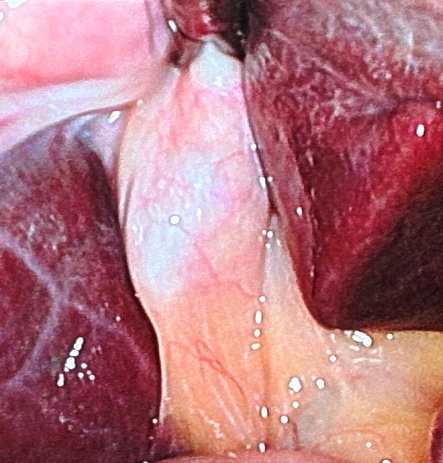
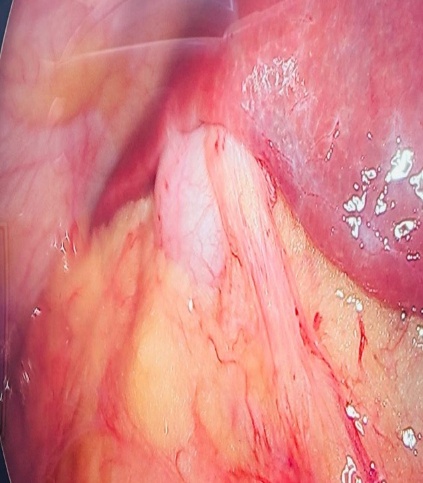
Early laparoscopic cholecystectomy performed within 48–72 hours after successful ERCP demonstrated, Shorter operative time, Reduced intraoperative blood loss, no conversion to open surgery, no bile duct injury, no postoperative bile leak or wound infection, Shorter postoperative hospital stay, no readmissions for recurrent biliary events, and Zero mortality during 18 months of follow-up. In comparison, delayed laparoscopic cholecystectomy performed after 4–6 weeks was associated with increased operative difficulty, longer surgery, greater blood loss, higher conversion rates, more perioperative complications, prolonged hospitalization, and a markedly higher readmission rate. This difference between the two groups is due to the fact that there were mild, thin and flimsy adhesions in early group and thick and fibrotic adhesions in the delayed group as seen in figure -1 and 2.
Discussion
The present randomized comparative study evaluated the outcomes of early laparoscopic cholecystectomy (LC) performed within 48–72 hours after successful ERCP versus delayed LC performed 4–6 weeks later in patients with cholelithiasis and choledocholithiasis. Our findings suggest that early LC is associated with improved perioperative outcomes, fewer recurrent biliary events, and a shorter hospital stay, consistent with current evidence and international guidelines [17][25]. In our study, the mean age was 48.6 years, with a female predominance (male: female ratio 1:2.75). This demographic profile is consistent with the known epidemiology of gallstone disease, which occurs more frequently in women because of hormonal influences on cholesterol metabolism [1][4]. The mean operative time was considerably shorter in the early group (1.26 hours) than in the delayed group (1.55 hours). Similar findings have been reported by Salman et al., Reinders et al., and Lyu et al., who demonstrated that delaying surgery results in dense inflammatory adhesions around the hepatocystic triangle, making dissection technically more demanding and increasing operative duration [17][20]. Mean intraoperative blood loss was also lower in the early group (15.4 mL) compared with the delayed group (24 mL). This observation agrees with previous randomized trials and meta-analyses showing that early surgery is associated with easier tissue handling and reduced operative trauma [18][21]. Conversion to open cholecystectomy occurred in two patients in the delayed group, while no conversion was required in the early group. Previous systematic reviews have similarly demonstrated lower conversion rates with same-admission or early LC, likely because delayed surgery allows fibrosis and adhesions to develop around Calot's triangle [19–22].A bile duct injury occurred in one patient in the delayed group, whereas no such injury occurred in the early group. Although bile duct injury is uncommon, previous studies have shown that delayed surgery may increase operative difficulty because of altered anatomy secondary to recurrent inflammation [20][23]. Postoperative complications were also more frequent in the delayed group. Two patients developed bile leak and two developed surgical site infection, whereas no such complications occurred in the early surgery group. Similar findings have been reported in recent meta-analyses, which demonstrated that early LC does not increase postoperative morbidity and may reduce overall complications [18][21].The mean postoperative hospital stay was 1.8 days in Group A compared with 2.9 days in Group B. Shorter hospitalization following early surgery has consistently been reported in randomized controlled trials and systematic reviews and contributes significantly to reduced healthcare costs.[17][21].One of the most clinically important findings in our study was the occurrence of 15 readmissions in the delayed group due to recurrent biliary symptoms, whereas no patient required readmission after early LC. This observation strongly supports the concept of same-admission cholecystectomy after ERCP and is in agreement with recommendations from international guidelines, which emphasize that delaying surgery exposes patients to recurrent biliary colic, acute cholecystitis, cholangitis, pancreatitis, and recurrent CBD stones [22][25]. No mortality occurred in either group during the 18-month follow-up, confirming that both approaches are safe when performed in appropriately selected patients. However, the superior perioperative outcomes observed with early LC make it the preferred strategy whenever feasible [17][25]. The strengths of the present study include randomized allocation, uniform inclusion criteria, standardized surgical technique, and complete follow-up of all enrolled patients. These factors minimize selection bias and improve the internal validity of the study.
Conclusion
Overall, the findings of the present study support the growing body of evidence that early laparoscopic cholecystectomy within 48–72 hours after successful ERCP offers significant advantages over delayed surgery by reducing operative difficulty, minimizing complications, shortening hospital stay, and preventing recurrent biliary events.
Declarations
Ethics approval and consent to participate
The approval for the initiation of the present study was obtained from the institutional ethical committee GMC-Jammu. Written informed consent was obtained from all participants.
Data Availability
Data are available from the corresponding author on reasonable request
Conflict of interest
None
Source of funding
Nil
Authors contributions
WH and DG prepared the manuscript, SM and JI collected and compiled the data. Guidance during the process was provided by SP and ZH. Every one read the manuscript before submission.
Acknowledgments
Not applicable