Introduction
Respiratory tract infections (RTIs) include acute otitis media, sinusitis, pharyngitis or tonsillitis, acute bronchitis, community-acquired pneumonia (CAP), and exacerbations of chronic airway disease. They represent an important component of ambulatory care and antibiotic exposure. Because many acute upper RTIs are viral or self-limiting, the clinical challenge is to identify the smaller group likely to benefit from antibacterial therapy while avoiding preventable exposure [1,2].
The public-health relevance of appropriate prescribing is reinforced by the global burden of antimicrobial resistance (AMR). A systematic analysis estimated that bacterial AMR was associated with 4.95 million deaths and directly attributable to 1.27 million deaths in 2019 [3]. Inappropriate and excessive antibiotic use accelerates selection pressure, increases avoidable adverse events, and reduces the future effectiveness of essential agents [3-5]. Antibiotic stewardship frameworks therefore emphasize accurate clinical assessment, evidence-based drug selection, appropriate dose and duration, and microbiological testing when results can change management. The World Health Organization (WHO) AWaRe antibiotic book provides practical guidance on antibiotic choice, dose, route, and duration for common infections in adults and children and supports use of the Access, Watch, and Reserve classification [6].
Real-world prescribing patterns, however, are influenced by disease severity, anticipated pathogens, local resistance, underlying comorbidity, availability of diagnostics, physician experience, patient expectations, safety, cost, and convenience [7-8]. In a 2026 primary-care prescription analysis from India, antibiotics appeared in 27.8% of prescriptions; amoxicillin-clavulanic acid was the most frequently prescribed antibiotic, and non-adherence to WHO AWaRe guidance was reported in 56.2% of antibiotic-containing prescriptions [9]. A separate Indian expert survey reported that 83% of clinicians preferred co-amoxiclav as first-line therapy for RTIs [10].
Despite the availability of evidence-based guidelines and antimicrobial stewardship recommendations, considerable variation persists in antibiotic prescribing for respiratory tract infections (RTIs), as physicians must balance diagnostic uncertainty, disease severity, patient characteristics, anticipated pathogens, local resistance patterns, and practical considerations. Therefore, this nationwide survey was conducted to evaluate physician-reported antibiotic prescribing patterns in adult and pediatric RTIs, including antibiotic preferences, factors influencing selection, approaches to assessing appropriateness and treatment failure, susceptibility-testing practices, and challenges in routine clinical practice, with the aim of identifying variations and opportunities to strengthen antimicrobial stewardship and optimize antibiotic use.
Methods
Study Design and Setting
This was a nationwide, multicenter, cross-sectional, observational, questionnaire-based survey conducted across India to evaluate physicians' perspectives and opinions regarding the utilization of oral antibiotics (syrups and tablets) in pediatric and adult patients suffering from respiratory tract infections (RTIs). The study was conducted between February 2025 and 16 June 2026 among qualified medical practitioners involved in the treatment of RTIs in routine clinical practice. The study protocol was reviewed and approved by an independent Ethics Committee prior to study initiation.
Study Population
Eligible participants were qualified medical practitioners involved in the management of pediatric and/or adult RTIs, including pediatricians, general practitioners, physicians, and other specialists managing respiratory infections. Participation was voluntary. Physicians who agreed to participate provided authorization permitting the use of their responses, observations, and findings for educational, publication, and presentation purposes. A total of 25,214 completed physician survey responses were included in the final analysis.
Survey Instrument
Data were collected using a structured questionnaire consisting of 11 questions, including both close-ended and open-ended response items. The questionnaire was designed to capture physicians' perspectives on the epidemiology and management of RTIs, antibiotic prescribing patterns, factors influencing antibiotic selection, approaches to assessing treatment appropriateness, management of treatment failure or antimicrobial resistance, second-line treatment preferences, susceptibility-testing practices, methods used to stay updated with current evidence and guidelines, and antibiotic dose optimization in special populations. In addition, the survey explored physicians' real-world clinical experiences regarding antibiotic effectiveness and challenges encountered during routine prescribing practice.
Data Collection
Survey responses were collected from participating physicians across multiple centers in India during the study period. Completed questionnaires were reviewed and compiled into a centralized database for analysis. Participant confidentiality and anonymity were maintained throughout the study.
Statistical Analysis
Data was analyzed using descriptive statistical methods. Categorical variables were summarized using frequencies and percentages. Results were presented as counts and proportions for each response category. Responses to open-ended questions were reviewed and summarized descriptively to identify commonly reported themes and clinical experiences.
Results
Demographic details
A total of 25,214 physicians participated in the survey. Based on their professional specialty, consulting physicians constituted the largest group of respondents (n=9,329; 37.0%), followed by general practitioners (n=7,060; 28.0%), pediatricians (n=6,556; 26.0%), and ENT surgeons (n=2,269; 9.0%). Thus, the survey included physicians from diverse specialties involved in the diagnosis and management of respiratory tract infections (Table 1).
| Specialties | Number of Physicians |
| Pediatrician | 6556 |
| ENT Surgeon | 2269 |
| Consulting Physicians | 9329 |
| General Practitioner | 7060 |
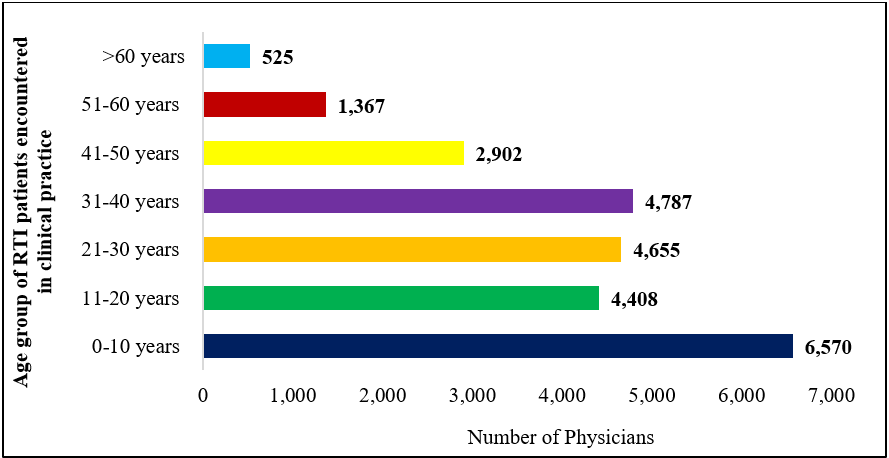
Regarding the age groups most commonly encountered with RTIs, the highest proportion of physicians reported patients aged 0–10 years (n=6,570; 26.1%), followed by those aged 31–40 years (n=4,787; 19.0%), 21–30 years (n=4,655; 18.5%), and 11–20 years (n=4,408; 17.5%). Fewer physicians reported commonly encountering RTIs among patients aged 41–50 years (n=2,902; 11.5%), 51–60 years (n=1,367; 5.4%), and >60 years (n=525; 2.1%) (Figure 1).
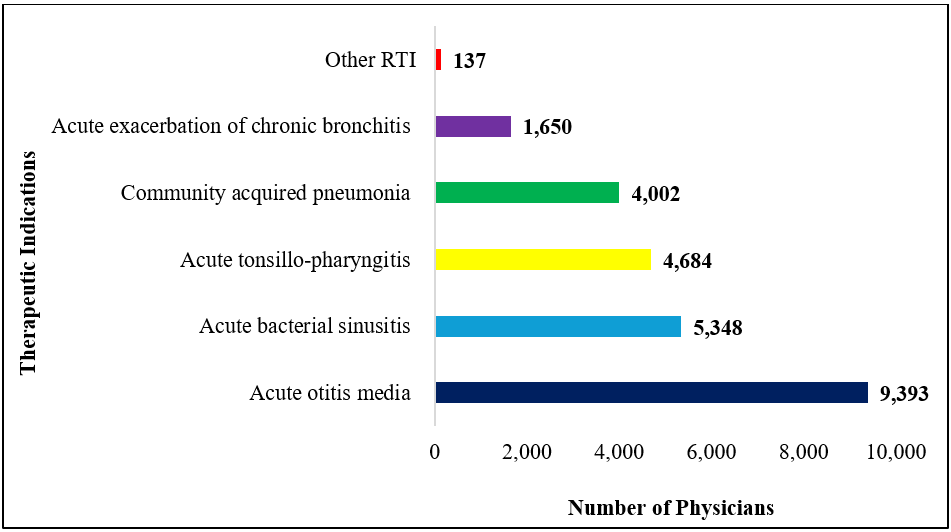
Acute otitis media was the most commonly encountered RTI, reported by 9,393 physicians (37.3%), followed by acute bacterial sinusitis (n=5,348; 21.2%), acute tonsillo-pharyngitis (n=4,684; 18.6%), and community-acquired pneumonia (n=4,002; 15.9%). Acute exacerbation of chronic bronchitis was reported by 1,650 physicians (6.5%), while other RTIs were reported by 137 physicians (0.5%) (Figure 2).
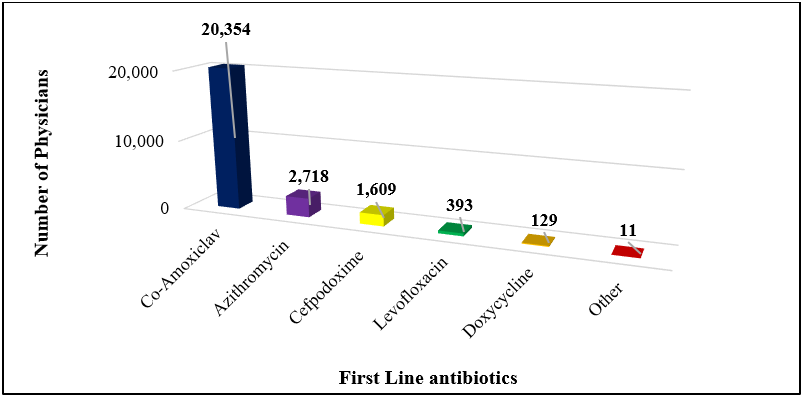
Co-amoxiclav was the most commonly prescribed first-line antibiotic, reported by 20,354 physicians (80.7%). This was followed by azithromycin (n=2,718; 10.8%) and cefpodoxime (n=1,609; 6.4%). Levofloxacin, doxycycline, and other antibiotics were selected less frequently, accounting for 1.6% (n=393), 0.5% (n=129), and <0.1% (n=11) of responses, respectively (Figure 3).
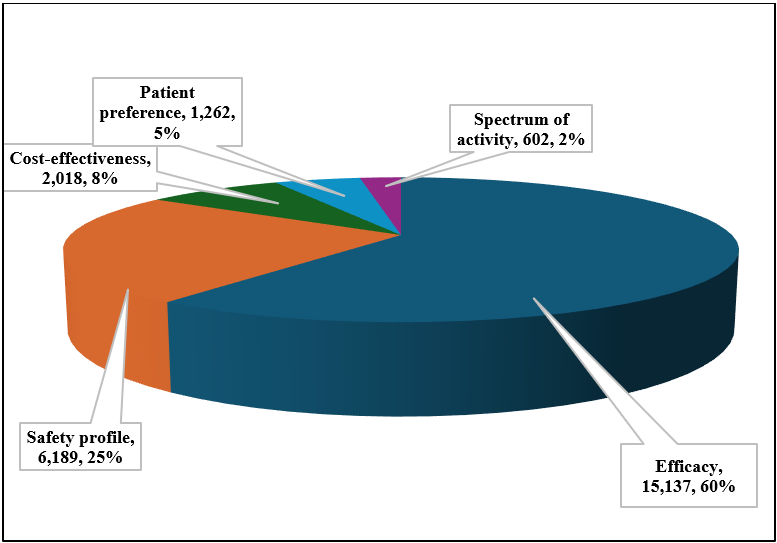
As shown in figure 4, efficacy was the primary reason influencing first-line antibiotic selection, reported by 15,137 physicians (60.0%). Other important considerations included the safety profile (n=6,189; 24.5%), cost-effectiveness (n=2,018; 8.0%), patient preference (n=1,262; 5.0%), and spectrum of activity (n=602; 2.4%).
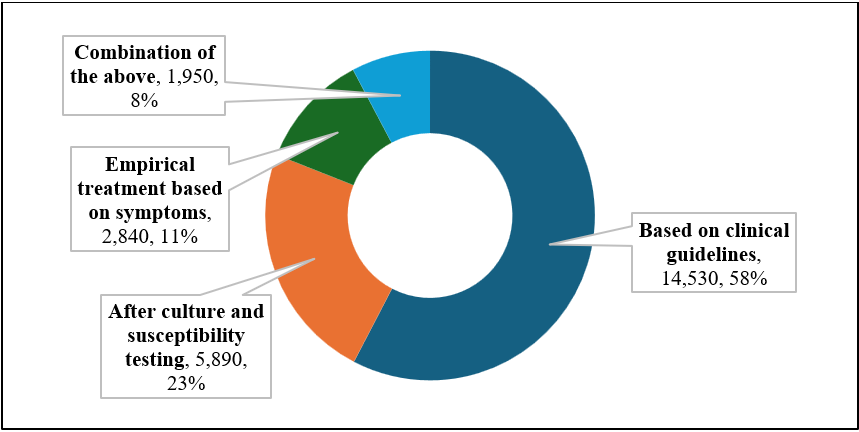
Well, on the assessment of the appropriateness of first-line antibiotic therapy for a specific patient’s condition, 14,530 (57.6%) physicians reported relying primarily on clinical guidelines. This was followed by 5,890 (23.4%) physicians who assessed appropriateness after culture and antimicrobial susceptibility testing. A further 2,840 (11.3%) physicians reported using empirical treatment based on clinical symptoms, while 1,950 (7.7%) physicians considered a combination of these approaches when determining the appropriateness of first-line antibiotic therapy as shown in figure 5. Overall, the findings indicate that clinical guidelines were the predominant basis for assessing the appropriateness of first-line antibiotic selection among surveyed physicians.
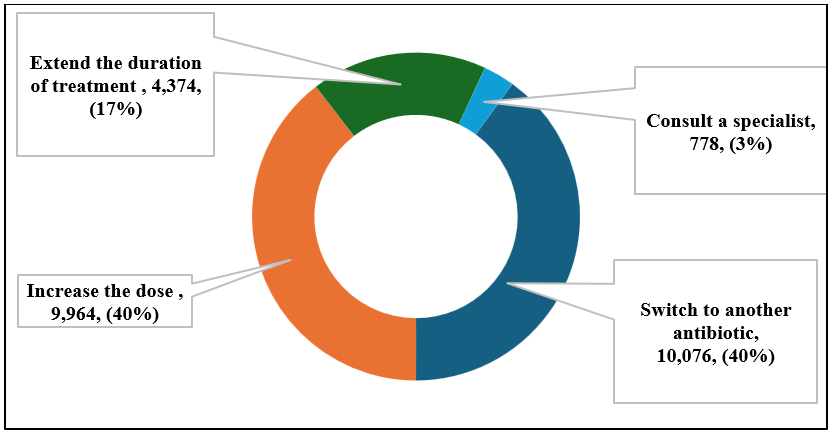
As depicted in figure 6, among physicians managing treatment failure or suspected resistance following first-line antibiotic therapy, 10,076 (40.0%) physicians reported that they would switch to another antibiotic as the next step. A nearly comparable proportion, 9,964 (39.5%) physicians, indicated that they would increase the antibiotic dose. Extending the duration of treatment was reported by 4,374 (17.3%) physicians, while 778 (3.1%) physicians reported that they would consult a specialist. Overall, switching to an alternative antibiotic and increasing the dose were the most commonly reported approaches to inadequate response to first-line antibiotic therapy.
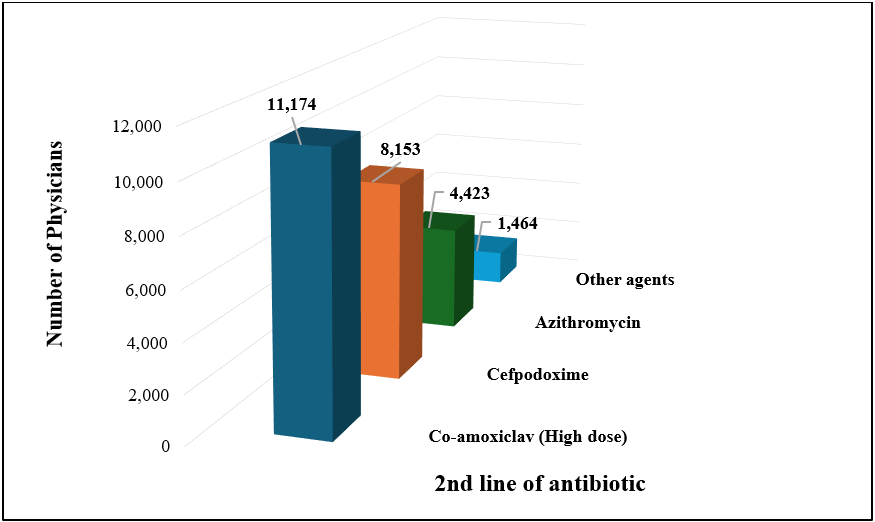
In cases of treatment failure or resistance to first-line antibiotic therapy, high-dose co-amoxiclav was the most commonly reported second-line antibiotic, selected by 11,174 (44.3%) physicians. This was followed by cefpodoxime, reported by 8,153 (32.3%) physicians, while 4,423 (17.5%) physicians reported using azithromycin. A smaller proportion, 1,464 (5.8%) physicians, selected other antibiotic agents as second-line therapy. Overall, high-dose co-amoxiclav and cefpodoxime accounted for the majority of reported second-line antibiotic choices among the surveyed physicians (Figure 7).
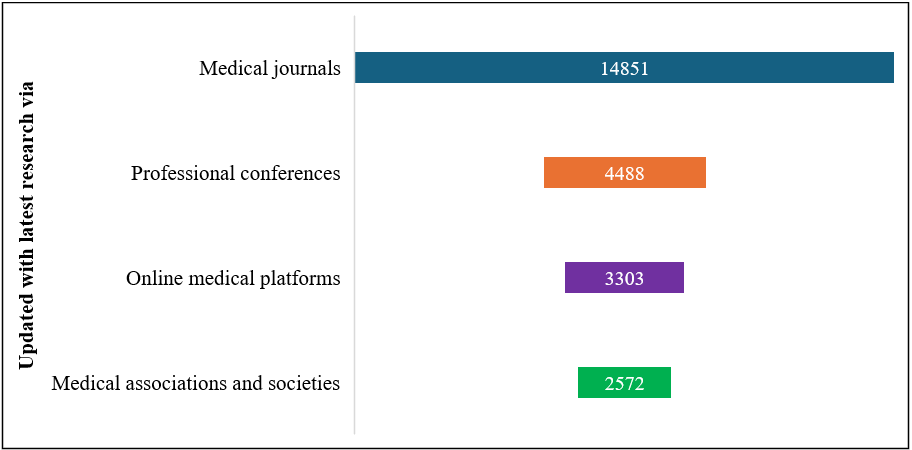
As shown in figure 8, medical journals were the most commonly reported source for staying updated with the latest medical research, cited by 14,851 physicians (58.9%). Professional conferences were the second most frequently used source (n=4,488; 17.8%), followed by online medical platforms (n=3,303; 13.1%) and medical associations or societies (n=2,572; 10.2%). Overall, the findings indicate that physicians primarily rely on peer-reviewed scientific literature, with conferences and digital learning platforms serving as important supplementary sources of medical information.
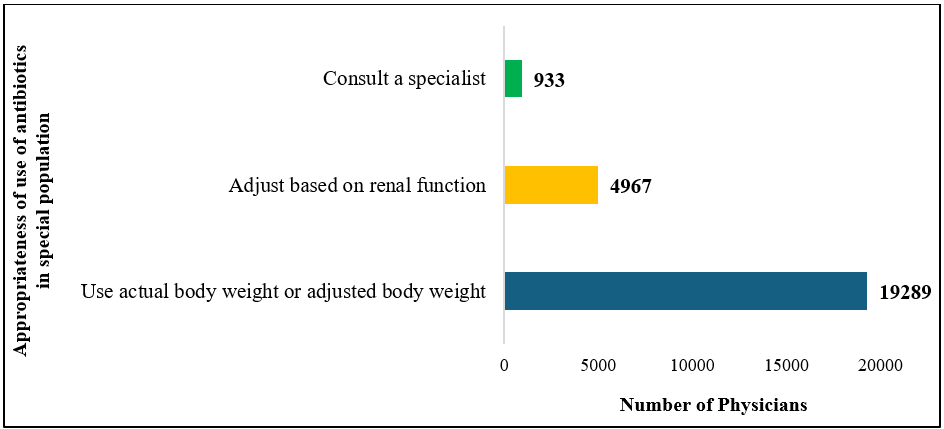
When assessing the appropriateness of first- or second-line antibiotic dosing in special populations, 19,289 (76.5%) physicians reported using actual or adjusted body weight to determine the appropriate dose. 4,967 (19.7%) physicians reported that they adjusted antibiotic dosing based on renal function, while 933 (3.7%) physicians indicated that they would consult a specialist for dosing decisions in these populations. Overall, the findings suggest that body-weight-based dosing was the predominant approach used by physicians when determining antibiotic dosing in special populations, followed by adjustment according to renal function. (Figure 9).
Responses to the open-ended questions indicated that amoxicillin–clavulanate was commonly perceived as an effective first-line option in appropriately selected patients with suspected bacterial respiratory tract infections, including acute otitis media, sinusitis, and selected lower respiratory tract infections. Cefpodoxime–clavulanic acid was described as a useful alternative oral option in selected clinical situations. Among patients with an inadequate response to initial therapy, respondents reported the use of high-dose amoxicillin–clavulanate or cefpodoxime–clavulanic acid as potential second-line treatment options, depending on the clinical presentation, previous antibiotic exposure, treatment response, and suspected bacterial etiology. However, respondents emphasized that persistent symptoms should prompt reassessment of the diagnosis, treatment adherence, disease severity, complications, or underlying conditions rather than automatic escalation of antibiotic therapy.
The commonly reported challenges included diagnostic uncertainty in differentiating bacterial from viral respiratory infections, lack of microbiological confirmation in routine clinical practice, previous antibiotic exposure, concerns regarding possible antimicrobial resistance, and assessment of inadequate treatment response. Pediatricians additionally highlighted challenges related to weight-based dosing, formulation acceptance, and treatment adherence, while gastrointestinal intolerance was occasionally reported as a practical concern, particularly with amoxicillin–clavulanate. Respondents also emphasized the need to reassess patients who failed to respond to first-line therapy before switching or escalating antibiotic treatment.
Overall, the survey highlights current physician practices in antibiotic selection, treatment escalation, and dose optimization for pediatric and adult RTIs. Clinical guidelines were the predominant basis for first-line antibiotic selection, while switching therapy and dose adjustment were common approaches to treatment failure. These findings emphasize the importance of evidence-based antibiotic use and appropriate dosing to support effective and rational management of RTIs.
Discussion
This nationwide survey demonstrated a strong preference for co-amoxiclav as first-line therapy, which was selected in 80.7% of responses and remained the predominant choice across all five predefined RTIs. This finding is consistent with an earlier Indian expert survey, in which 83% of clinicians reported preferring co-amoxiclav as first-line treatment for RTIs, suggesting a broadly consistent prescribing preference across different physician populations [10]. However, findings from the PERCEPT survey, conducted exclusively among 1,000 pediatricians, reported cefpodoxime alone or in combination with clavulanic acid as the preferred antibiotic for managing RTIs. This difference may be attributed to the pediatrician-specific study population, compared with the broader physician population included in the present survey [11].
It is also directionally consistent with a 2026 Indian primary-care prescription study, where amoxicillin-clavulanic acid was the most frequently prescribed antibiotic, although its share was lower at 34.2% because that study examined all antibiotic-containing prescriptions rather than physician preferences within a selected RTI survey [9,12]. A nationwide survey among otorhinolaryngologists reported that 59% used high-dose co-amoxiclav as first-line therapy for upper RTIs, again demonstrating substantial but less concentrated use than observed here.
The predominance of acute otitis media, particularly among younger age groups, is consistent with its well-recognized high burden in pediatric clinical practice and the greater susceptibility of children to middle-ear infections. The findings are also broadly consistent with evidence from India. A systematic review and meta-analysis of otitis media among Indian children reported a pooled prevalence of acute suppurative otitis media of 0.55%, while emphasizing that otitis media remains an important pediatric health problem and that the available epidemiological evidence in India remains limited. Younger children are more susceptible to middle-ear infections because of anatomical and physiological characteristics of the Eustachian tube, along with the frequent occurrence of viral upper respiratory tract infections that can predispose to bacterial infection of the middle ear [13,14].
Efficacy and safety were the predominant considerations for first-line antibiotic selection, accounting for 60.0% and 24.5% of responses, respectively. These findings are consistent with previous Indian surveys of co-amoxiclav prescribing. Manjula and Kumar reported that clinicians perceived co-amoxiclav as advantageous because of its broad-spectrum activity, favorable pharmacokinetic properties, and clinical and bacteriological efficacy, whereas Pal et al. identified clinical efficacy as the principal driver of high-dose co-amoxiclav use among otorhinolaryngologists [10,12]. Collectively, these findings reinforce the importance of perceived effectiveness in shaping antibiotic prescribing decisions. However, from an antimicrobial stewardship perspective, perceived efficacy should be considered alongside the clinical indication, local antimicrobial susceptibility patterns, safety considerations, and the principle of using the narrowest effective spectrum [15].
More than half of records indicated guideline-based assessment (57.6%), which is encouraging, although it was lower than the 74.0% guideline-concordant prescribing reported in a 2026 observational study of adults with lower RTIs in an Indian teaching hospital. Conversely, the 23.4% selecting empirical symptom-based assessment in our study was substantially lower than the 89.0% empirical therapy reported in that hospital-based LRTI study [6]. These differences are likely to reflect study design and case-mix: the present analysis measured questionnaire preferences across upper and lower RTIs, whereas the comparator evaluated actual antibiotic prescriptions in hospitalized or hospital-attending adults with LRTIs.
Routine susceptibility testing was reported in 59.4% of records, higher than the 36.0% culture-testing rate reported in an Indian LRTI drug-utilization study. However, this difference should be interpreted cautiously, as the present survey showed inconsistencies between reported testing practices and the criteria used to assess antibiotic appropriateness. These findings highlight the distinction between self-reported behavior and documented microbiological evidence. WHO stewardship guidance supports microbiological testing when it can meaningfully guide therapy, while recognizing that uncomplicated outpatient RTIs are often managed empirically based on clinical assessment [6,16].
Management of treatment failure was almost equally divided between dose escalation (40.0%) and switching antibiotics (39.5%), while specialist consultation was infrequent. These findings should be interpreted cautiously, as treatment failure may result from incorrect diagnosis, viral illness, nonadherence, inadequate therapy, or antimicrobial resistance. Stewardship principles recommend reassessing the diagnosis and obtaining microbiological evidence when appropriate, rather than routinely broadening antibiotic therapy. However, the survey did not capture the clinical context needed to determine the appropriateness of these management decisions [6,15]. The same antibiotic was reported as both first- and second-line therapy in 41.8% of records, making this finding difficult to interpret as a conventional treatment-escalation pathway. This may reflect continuation of the same agent with dose or duration modification, differing interpretations of “second-line” therapy, or repeated data entry. Future surveys should define second-line therapy more explicitly as treatment selected following documented treatment failure, intolerance, or resistance, while allowing respondents to indicate continuation of the same antibiotic with a modified regimen.
The narrative findings identified resistance or treatment failure, adverse effects, diagnostic uncertainty, patient expectations, adherence, and cost as important practical considerations. These concerns are consistent with the broader outpatient antimicrobial stewardship literature. Fleming-Dutra et al. reported substantial inappropriate antibiotic use in U.S. outpatient settings, with acute respiratory conditions contributing considerably to antibiotic prescribing. Although these findings cannot be directly extrapolated to India or to physician-preference surveys, they highlight RTIs as an important target for stewardship interventions. Similarly, a recent Indian AWaRe analysis reported non-adherence to WHO guidance in 56.2% of antibiotic-containing prescriptions, underscoring the need for strengthened prescriber education and antimicrobial stewardship [17,9].
Conclusion
Co-amoxiclav emerged as the predominant first-line antibiotic for respiratory tract infections across India, with efficacy, safety, and clinical guidelines being the key drivers of prescribing decisions. While most physicians reported guideline-based practice, diagnostic uncertainty, limited microbiological confirmation, and antimicrobial resistance remained important challenges. These findings highlight the need to strengthen antimicrobial stewardship, support evidence-based antibiotic selection, and optimize treatment strategies in routine clinical practice.
Declarations
Ethical Clearance
Reviewed and approved by a registered Independent Ethics Committee (EC).
Conflict of Interest
Authors (Author Number 5, 6, 7, & 8) AG, AP, DP, and AS are full-time employees of the Medical Affairs Department, Alkem Laboratories Ltd., Mumbai, India.
Funding/ financial support
The study was funded by Alkem Laboratories Ltd., Mumbai, India.
Acknowledgements
The authors extend their heartfelt appreciation to the healthcare professionals who contributed to this study through their dedicated efforts in data collection and their strict adherence to confidentiality and accuracy. Most importantly, the authors are profoundly grateful to the patients whose medical information played a crucial role in enhancing our understanding of dental infections and in evaluating the therapeutic effectiveness of co-amoxiclav.