Introduction
Lung cancer remains the leading cause of cancer-related mortality worldwide, accounting for a substantial proportion of cancer deaths despite advances in diagnostic and therapeutic strategies. Non-small cell lung cancer (NSCLC) represents approximately 85% of all lung cancer cases, and most patients are diagnosed at an advanced stage when systemic therapy becomes the primary treatment option. In Indonesia, lung cancer also represents a major public health challenge, ranking among the most frequently diagnosed cancers and the leading cause of cancer-related mortality, particularly among men. Because the majority of Indonesian patients present with advanced-stage disease, platinum-based chemotherapy continues to serve as the cornerstone of treatment in routine clinical practice [1,2]. Although platinum-based chemotherapy remains an important component of NSCLC management, its therapeutic benefits are often accompanied by treatment-induced immunosuppression and systemic inflammation, which may compromise antitumor immune responses and negatively affect clinical outcomes. Consequently, supportive strategies capable of preserving immune competence during chemotherapy have become increasingly important to optimize treatment outcomes and maintain patients' overall physiological status [3-5].
The interaction between cancer progression and host immunity has attracted increasing attention in recent years. Chemotherapy-induced immune dysfunction has stimulated growing interest in biomarkers that reflect both immune competence and systemic inflammatory responses [5]. Among circulating immune biomarkers, CD4+ T cells play a central role in coordinating adaptive immune responses through activation of cytotoxic T lymphocytes, stimulation of antigen-presenting cells, and regulation of cytokine production. Reduced CD4+ T-cell levels have been associated with impaired immune surveillance, increased susceptibility to infection, and poorer prognosis in patients with cancer [6]. In addition, the neutrophil-to-lymphocyte ratio (NLR) has emerged as a simple and reliable marker of systemic inflammation. Elevated NLR reflects an imbalance between protumor inflammatory activity and antitumor immune responses and has consistently been associated with unfavorable survival outcomes in patients with NSCLC [7].
Interest has therefore grown in supportive interventions capable of preserving immune homeostasis during chemotherapy. Curcumin, the principal polyphenolic compound derived from Curcuma longa, possesses antioxidant, anti-inflammatory, and immunomodulatory properties. Experimental studies have demonstrated that curcumin can modulate the tumor immune microenvironment by suppressing inflammatory signaling pathways, reducing regulatory T-cell activity, enhancing T-helper 1 responses, and restoring antitumor immune surveillance [8,9]. Curcumin has also been reported to prevent tumor-induced T-cell dysfunction and preserve CD4+ T-cell-mediated immune responses, suggesting potential benefits as an adjunctive therapy during cancer treatment [9].
Channa striata (snakehead fish) is a nutrient-rich freshwater fish widely consumed in Southeast Asia and traditionally used to promote recovery after illness and surgery. Its extract contains abundant albumin, essential amino acids, polyunsaturated fatty acids, zinc, and other micronutrients that may support immune function and tissue repair. Recent evidence indicates that Channa striata exhibits anti-inflammatory and immunomodulatory properties and may contribute to the regulation of inflammatory responses and maintenance of physiological homeostasis [10-12]. Given their distinct but complementary biological mechanisms, the combination of curcumin and Channa striata may provide synergistic immunonutritional support by attenuating systemic inflammation, reducing oxidative stress, and preserving adaptive immune responses during chemotherapy; this possibility requires clinical evaluation [13].
Despite promising preclinical evidence and emerging clinical findings regarding the immunomodulatory properties of curcumin and Channa striata, high-quality clinical studies evaluating their combined immunonutritional effects in patients with non-small cell lung cancer (NSCLC) remain limited, particularly in Southeast Asian clinical settings. Furthermore, the effects of this combination on clinically relevant immune and inflammatory biomarkers, such as CD4+ T-cell levels and the neutrophil-to-lymphocyte ratio (NLR), have not been comprehensively evaluated in patients receiving platinum-based chemotherapy. Therefore, this study aimed to evaluate the effects of curcumin and Channa striata supplementation on CD4+ T-cell levels and the neutrophil-to-lymphocyte ratio during chemotherapy in patients with NSCLC.
Methods
Study Design and Setting
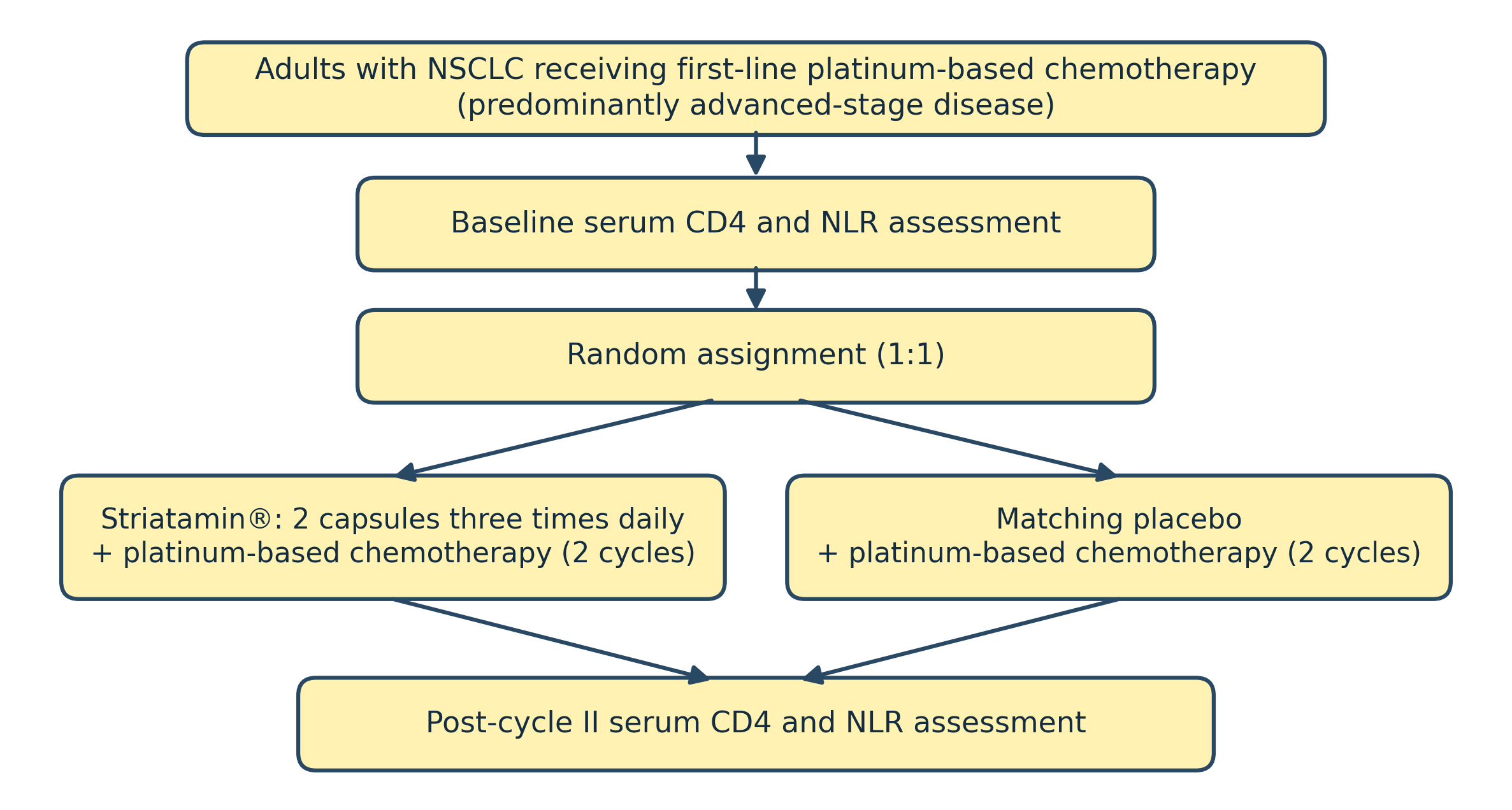
A prospective, double-blind randomized controlled trial was conducted at the Thoracic Oncology Clinic and inpatient wards of Prof. Dr. Chairuddin P. Lubis Universitas Sumatera Utara Hospital, Murni Teguh Memorial Hospital, and Elisabeth Hospital Medan, Indonesia. The study was performed from December 2025 to May 2026. Patients with histologically confirmed non-small cell lung cancer (NSCLC) who were scheduled to receive first-line platinum-based chemotherapy were consecutively recruited and randomly assigned to either a supplementation group or a placebo group according to the study protocol.
Participant Flow
Participants
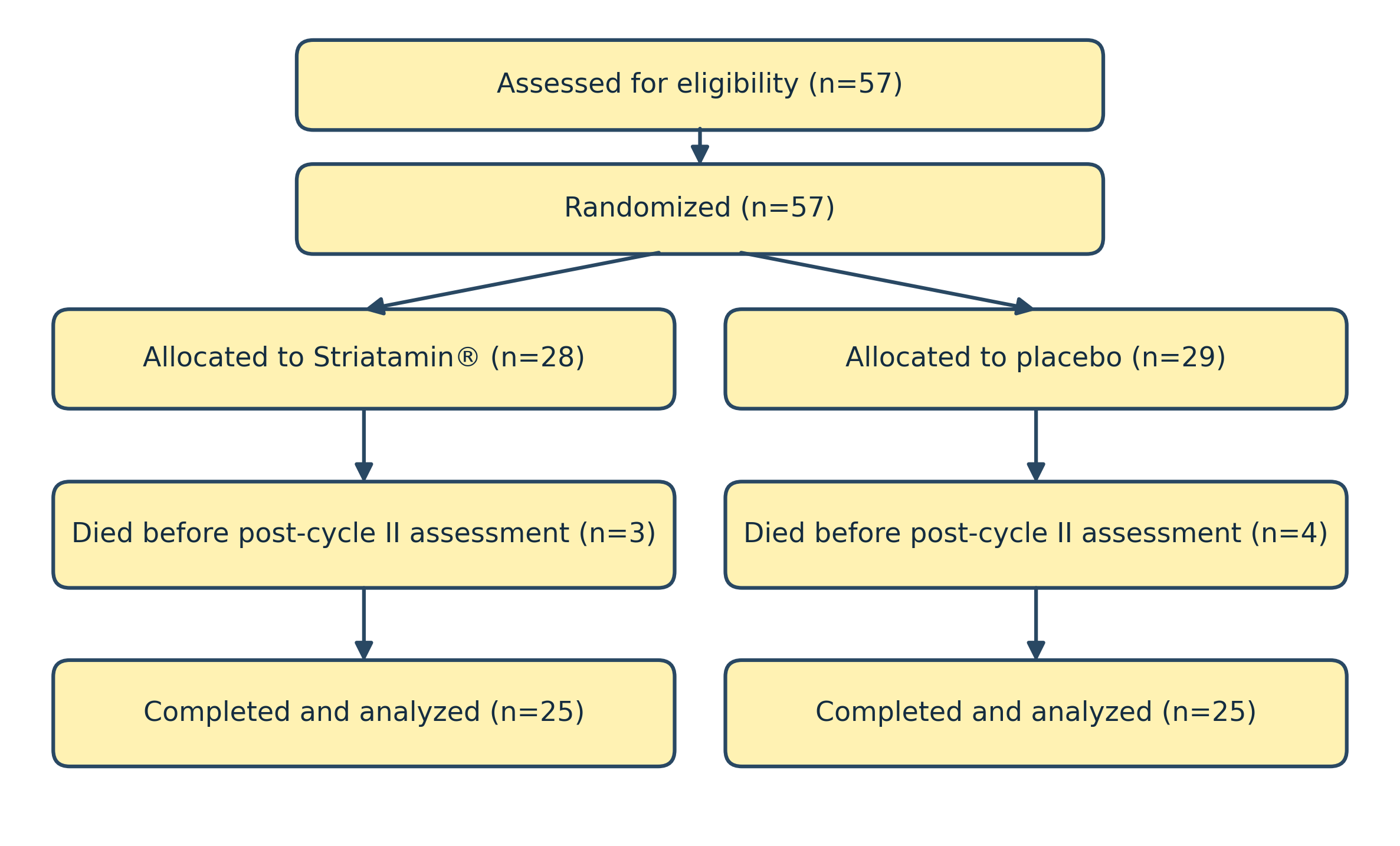
Eligible participants were adults aged ≥18 years with histologically confirmed NSCLC who were planned to undergo first-line platinum-based chemotherapy and had an Eastern Cooperative Oncology Group (ECOG) performance status of 0–2. Patients were excluded if they had active infections, autoimmune diseases, hematological disorders, severe hepatic or renal impairment, previous exposure to immunotherapy, or were receiving other immunomodulatory supplements during the study period. Of 57 randomized participants (28 assigned to Striatamin® and 29 to placebo), 50 completed the study and were analyzed, comprising 25 in each group (Figure 2). Three participants assigned to Striatamin® and four assigned to placebo died before the post-cycle II assessment.
Randomization and Blinding
A 1:1 allocation sequence was generated with Research Randomizer (https://www.randomizer.org) using permuted blocks of four. An independent researcher who was not involved in clinical assessment or data analysis managed allocation and assigned each participant a unique study identification number. Striatamin® and placebo capsules were identical in color, size, texture, and appearance. Participants and clinical assessors remained unaware of group assignment; allocation codes were retained until primary data collection and the initial analysis were complete.
Intervention
Participants in the intervention group received Striatamin®, a nutraceutical preparation containing Curcuma longa (curcumin) extract and Channa striata extract. The supplement was administered at a dose of two capsules three times daily (3 × 2 capsules/day) throughout the first two cycles of platinum-based chemotherapy. Participants in the control group received placebo capsules that were identical in appearance, size, color, and administration schedule but contained no active ingredients.
All participants continued to receive standard platinum-based chemotherapy according to institutional treatment protocols. Adherence to supplementation was assessed by capsule counts and participant interviews during each follow-up visit.
Outcome Measures
The primary outcomes were changes in CD4+ T-cell levels and the neutrophil-to-lymphocyte ratio (NLR). Peripheral venous blood samples were collected at two time points:
-
Before initiation of the first chemotherapy cycle (baseline).
-
After completion of the second chemotherapy cycle (post-treatment).
Approximately 5 mL of peripheral venous blood was collected from each participant. Blood samples for complete blood count analysis were collected in EDTA tubes, whereas serum samples for CD4+ analysis were processed according to the manufacturer's instructions for immunoassay analysis.
Serum CD4+ T-cell levels were measured using a commercially available enzyme-linked immunosorbent assay (ELISA) kit (ELK Biotechnology, ELK2928, China) and expressed as ng/mL. Complete blood counts were analyzed using an automated hematology analyzer (Yumizen H550, HORIBA Medical, France). The neutrophil-to-lymphocyte ratio (NLR) was calculated by dividing the absolute neutrophil count by the absolute lymphocyte count. NLR is a widely recognized biomarker of systemic inflammation and has been associated with prognosis and treatment outcomes in patients with NSCLC [14-16].
Data Collection
Demographic and clinical characteristics, including gender, age, smoking history, body mass index, histopathological subtype, cancer stage, and chemotherapy regimen, were recorded at baseline. Clinical and laboratory data were obtained from medical records and direct patient assessments.
Ethical Considerations
The study was approved by the Health Research Ethics Committee of the Faculty of Medicine, Universitas Sumatera Utara (approval number: 1399/KEPK/USU/2025). Written informed consent was obtained from all participants before enrollment. The study was conducted in accordance with the principles of the Declaration of Helsinki.
Statistical Analysis
Data were analyzed using IBM SPSS Statistics version 29.0 (IBM Corp., Armonk, NY, USA). Continuous variables were presented as mean ± standard deviation (SD) or median (range) depending on the data distribution, while categorical variables were presented as frequencies and percentages.
Baseline characteristics were compared between the two groups using an independent-samples t-test or Mann–Whitney U test for continuous variables, depending on data distribution, and the chi-square test or Fisher’s exact test for categorical variables, as appropriate. Within-group changes in CD4+ T-cell levels and NLR from baseline to post-cycle II were assessed using the Wilcoxon signed-rank test. Individual change scores (Δ) were calculated as baseline values minus post-cycle II values. Between-group differences in post-cycle II values and change scores were assessed using the Mann–Whitney U test. All statistical tests were two-tailed, and a p-value <0.05 was considered statistically significant.
Results
Baseline Characteristics
Of 57 randomized patients with non-small cell lung cancer (NSCLC), 50 completed the study and were analyzed: 25 in the Striatamin® supplementation group and 25 in the placebo group (Figure 2). Baseline demographic and clinical characteristics are presented in Table 1. Most participants were male (88.0% in both groups). The mean age was 54.76 ± 7.8 years in the Striatamin® group and 56.28 ± 5.9 years in the placebo group (p = 0.501). Heavy smoking exposure was observed in 72.0% and 84.0% of patients in the Striatamin® and placebo groups, respectively. Adenocarcinoma was the predominant histopathological subtype, accounting for 64.0% of cases in the Striatamin® group and 52.0% in the placebo group. Most patients had advanced-stage disease and an Eastern Cooperative Oncology Group (ECOG) performance status of 1. The seven participants who did not complete the study died before post-cycle II assessment (Striatamin®, n=3; placebo, n=4).
No statistically significant differences were observed between the two groups regarding gender, age, smoking history, histopathological subtype, disease stage, or performance status (all p > 0.05), with no detected baseline differences.
| Characteristic | Striatamin® (n=25) | Placebo (n=25) | p-value |
| Gender, n (%) | 1.000ᵃ | ||
| Male | 22 (88.0) | 22 (88.0) | |
| Female | 3 (12.0) | 3 (12.0) | |
| Age (years), mean ± SD | 54.76 ± 7.8 | 56.28 ± 5.9 | 0.501ᵇ |
| Smoking status, n (%) | 0.297 | ||
| Passive smoker | 1 (4.0) | 2 (8.0) | |
| Light smoker | 3 (12.0) | 0 | |
| Moderate smoker | 3 (12.0) | 2 (8.0) | |
| Heavy smoker | 18 (72.0) | 21 (84.0) | |
| Histopathology, n (%) | 0.314 | ||
| Adenocarcinoma | 16 (64.0) | 13 (52.0) | |
| Squamous cell carcinoma | 7 (28.0) | 12 (48.0) | |
| Large-cell carcinoma | 2 (8.0) | 0 | |
| Stage, n (%) | 0.737ᶜ | ||
| IIIB | 2 (8.0) | 3 (12.0) | |
| IIIC | 3 (12.0) | 1 (4.0) | |
| IVA | 15 (60.0) | 16 (64.0) | |
| IVB | 5 (20.0) | 5 (20.0) | |
| Performance status, n (%) | 0.747ᵈ | ||
| PS 1 | 19 (76.0) | 18 (72.0) | |
| PS 2 | 6 (24.0) | 7 (28.0) |
ᵃFisher’s exact test; ᵇMann–Whitney U test; ᶜKruskal–Wallis test; ᵈChi-square test.
Comparison of CD4+ T-Cell Levels and Neutrophil-to-Lymphocyte Ratio Between Groups
The comparison of CD4+ T-cell levels and NLR between the Striatamin® and placebo groups is shown in Table 2. No significant differences were observed between groups at baseline for either NLR (p = 0.318) or CD4+ T-cell levels (p = 0.923). Following two cycles of chemotherapy, post-treatment NLR remained comparable between the Striatamin® and placebo groups (4.63 vs. 3.44, p = 0.479). Similarly, post-treatment CD4+ T-cell levels did not differ significantly between groups (0.13 vs. 0.12 ng/mL, p = 0.884). Analysis of individual change scores also revealed no significant between-group differences for NLR (p = 0.915) or CD4+ T-cell levels (p = 0.148).
| Variable | Striatamin® (n=25) | Placebo (n=25) | p-value |
| NLR, baseline | 5.16 (0.83–27.75) | 4.32 (0.67–16.81) | 0.318 |
| NLR, post-cycle II | 4.63 (0.31–29.80) | 3.44 (0.01–11.55) | 0.479 |
| NLR change score | 0.98 (-21.15–11.49) | 0.53 (-6.51–10.24) | 0.915 |
| CD4+ (ng/mL), baseline | 0.27 (0.05–8.51) | 0.49 (0.03–16.08) | 0.923 |
| CD4+ (ng/mL), post-cycle II | 0.13 (0.00–14.29) | 0.12 (0.00–8.95) | 0.884 |
| CD4+ change score | 0.07 (-13.51–8.48) | 0.16 (-8.92–15.26) | 0.148 |
*Mann–Whitney U test; values are presented as median (range). Change scores were calculated as baseline minus post-cycle II values.
Within-Group Changes Following Chemotherapy
Table 3 presents the within-group analyses. In the Striatamin® supplementation group, neither NLR (p = 0.083) nor CD4+ T-cell levels (p = 0.989) changed significantly after two cycles of chemotherapy. In contrast, significant within-group changes were observed in the placebo group for both NLR (p = 0.026) and CD4+ T-cell levels (p = 0.032). In the placebo group, median CD4+ T-cell levels decreased from 0.49 ng/mL at baseline to 0.12 ng/mL after two chemotherapy cycles, while median NLR decreased from 4.32 to 3.44.
| Group | Variable | Baseline | Post-cycle II | p-value |
| Striatamin® | NLR | 5.16 (0.83–27.75) | 4.63 (0.31–29.80) | 0.083 |
| CD4+ (ng/mL) | 0.27 (0.05–8.51) | 0.13 (0.00–14.29) | 0.989 | |
| Placebo | NLR | 4.32 (0.67–16.81) | 3.44 (0.01–11.55) | 0.026 |
| CD4+ (ng/mL) | 0.49 (0.03–16.08) | 0.12 (0.00–8.95) | 0.032 |
*Wilcoxon signed-rank test; values are presented as median (range).
Overall, no significant between-group differences were observed in CD4+ T-cell levels or NLR after two chemotherapy cycles. Although significant within-group changes in both parameters were observed in the placebo group, no significant between-group differences were found in their respective change scores.
Discussion
This randomized controlled trial evaluated the immunonutritional role of curcumin and Channa striata supplementation in maintaining CD4+ T-cell levels and neutrophil-to-lymphocyte ratio (NLR) during chemotherapy in patients with advanced non-small cell lung cancer (NSCLC). The results demonstrated no statistically significant differences between the supplementation and placebo groups in post-treatment CD4+ T-cell levels, NLR, or their respective change scores after two cycles of chemotherapy. These findings indicate that short-term supplementation with curcumin and Channa striata did not produce measurable improvements in the evaluated immunological and inflammatory markers compared with placebo.
Despite the absence of significant between-group differences, within-group analyses yielded different significance results. Patients receiving curcumin and Channa striata supplementation showed no statistically significant within-group changes in either CD4+ T-cell levels or NLR throughout treatment, whereas significant changes were observed in the placebo group. In particular, CD4+ T-cell levels decreased significantly following chemotherapy among placebo-treated patients. CD4+ T lymphocytes play a central role in coordinating adaptive immune responses through activation of cytotoxic T cells, regulation of cytokine production, and maintenance of immune surveillance against malignant cells. Consequently, preservation of CD4+ T-cell populations during systemic treatment may be clinically relevant in patients with advanced NSCLC [17].
Chemotherapy-induced lymphopenia is a well-recognized consequence of cytotoxic treatment and has been associated with impaired antitumor immunity, increased susceptibility to infections, and poorer clinical outcomes in several malignancies [18,19]. Previous studies have demonstrated that reductions in circulating lymphocyte populations, particularly CD4+ T cells, may persist during treatment and contribute to long-term immune dysfunction [20]. Although the present study was not designed to evaluate clinical outcomes, the absence of significant CD4+ T-cell changes in the supplementation group cannot, by itself, establish a protective effect of curcumin and Channa striata during chemotherapy.
The findings of the present study are generally consistent with previous clinical investigations evaluating curcumin supplementation as an adjunct to cancer therapy. Although several clinical studies have reported that curcumin may improve inflammatory and immune-related biomarkers, the observed effects have been heterogeneous depending on the type of malignancy, treatment regimen, duration of supplementation, and outcome measures evaluated. Systematic reviews have suggested that curcumin supplementation may reduce systemic inflammatory markers and improve antioxidant status in patients with cancer; however, robust evidence demonstrating significant improvements in adaptive immune biomarkers such as CD4+ T-cell levels remains limited. Therefore, the absence of statistically significant between-group differences observed in the present study is not unexpected and may reflect the complexity of immune regulation during platinum-based chemotherapy rather than the absence of biological activity [4,13].
The maintenance of CD4+ T-cell levels and NLR observed in the supplementation group is also in line with the broader concept of immunonutrition in oncology. Previous studies have demonstrated that nutritional interventions containing immunomodulatory components may help preserve immune function, reduce systemic inflammation, and improve tolerance to anticancer treatment, even when statistically significant improvements in individual immune biomarkers are not consistently observed. The clinical meaning of these within-group patterns remains uncertain without a significant between-group difference, particularly among patients with advanced NSCLC who are vulnerable to treatment-induced immune dysfunction [21,22].
The relative stability of CD4+ T-cell levels and NLR observed in the supplementation group may be explained by several complementary biological mechanisms involving both curcumin and Channa striata. The biological plausibility of these findings is supported by the well-established immunomodulatory properties of curcumin. Curcumin has been shown to regulate multiple signaling pathways involved in inflammation and immune responses, including inhibition of nuclear factor-kappa B (NF-κB), suppression of pro-inflammatory cytokines such as tumor necrosis factor-alpha (TNF-α) and interleukin-6 (IL-6), and modulation of T-cell activation and differentiation [23-25]. Experimental studies have further demonstrated that curcumin can restore impaired T-cell responses within the tumor microenvironment, enhance antitumor immune activity, and reduce chronic inflammation associated with cancer progression [26]. Although these immunomodulatory mechanisms have primarily been demonstrated in experimental studies, they provide biological plausibility for the relative stability of CD4+ T-cell levels and NLR observed among participants receiving supplementation in the present study.
In addition to curcumin, Channa striata may provide complementary immunonutritional benefits. The extract contains albumin, essential amino acids, polyunsaturated fatty acids, zinc, and other micronutrients that are important for immune cell proliferation, protein synthesis, and tissue repair [11]. Reviews describe anti-inflammatory properties of Channa striata, while experimental wound-healing studies support its potential as a nutritional adjunct; effects during chemotherapy have not been established [27,28]. Adequate nutritional support is increasingly recognized as an important determinant of immune competence in patients with cancer, and immunonutritional interventions have been proposed as a strategy to improve treatment tolerance and recovery [21,22]. The nutritional composition of Channa striata may complement the immunomodulatory effects of curcumin by supporting immune cell metabolism, protein synthesis, and recovery from chemotherapy-induced physiological stress. Although the present study did not demonstrate statistically significant between-group differences, the stability of CD4+ T-cell levels and NLR observed in the supplementation group may reflect these complementary immunonutritional effects. Nevertheless, this interpretation should be considered hypothesis-generating, as the underlying biological mechanisms were not directly evaluated in the present study.
The present study did not demonstrate significant differences in NLR between groups. Nevertheless, NLR remained relatively stable throughout treatment in the supplementation group. NLR is widely regarded as a prognostic marker in NSCLC and reflects the balance between systemic inflammation and host immune responses. Elevated NLR has consistently been associated with poorer survival outcomes, advanced disease burden, and reduced treatment efficacy in patients with lung cancer [14,16]. Although the clinical significance of maintaining NLR during chemotherapy remains uncertain, the absence of substantial fluctuations in the supplementation group may indicate preservation of inflammatory equilibrium during treatment. However, this observation should be interpreted cautiously given the lack of statistically significant between-group differences.
Several factors may explain the inability to demonstrate significant treatment effects. First, the sample size was relatively small, limiting statistical power to detect modest differences between groups. Second, the observation period was restricted to two chemotherapy cycles and may not have been sufficient to capture longer-term immunological changes. Third, the study population consisted predominantly of patients with advanced-stage disease, resulting in considerable biological heterogeneity that may have influenced individual immune responses. Finally, only two biomarkers were evaluated, whereas additional assessments, including CD8+ T-cell counts, cytokine profiles, regulatory T cells, and clinical outcomes, could provide a more comprehensive understanding of the immunological impact of supplementation.
To our knowledge, this is among the first clinical studies evaluating the combined immunonutritional effects of curcumin and Channa striata supplementation on CD4+ T-cell levels and NLR in patients with NSCLC undergoing chemotherapy. Although significant improvements compared with placebo were not demonstrated, the observed maintenance of immunological and inflammatory parameters during treatment provides preliminary evidence supporting further investigation of this combination as an adjunctive immunonutritional strategy. Future larger randomized controlled trials, longer follow-up periods, and broader immunological assessments are needed to clarify the clinical significance of these findings.
Conclusion
Curcumin and Channa striata supplementation did not produce statistically significant improvements in CD4+ T-cell levels or neutrophil-to-lymphocyte ratio (NLR) compared with placebo after two cycles of platinum-based chemotherapy in patients with non-small cell lung cancer. Nevertheless, participants receiving supplementation maintained relatively stable immunological and inflammatory parameters throughout treatment, whereas significant changes were observed in the placebo group. These within-group findings do not establish preservation of immune homeostasis, given the absence of significant between-group differences. Further randomized controlled trials with larger sample sizes, longer follow-up periods, and comprehensive immunological assessments are required to confirm these findings and establish their clinical significance.
Declarations
Ethical Approval and Informed Consent
The study was approved by the Health Research Ethics Committee, Faculty of Medicine, Universitas Sumatera Utara (Approval No. 1399/KEPK/USU/2025). Written informed consent was obtained from all participants, and the study adhered to the Declaration of Helsinki.
Funding
This research received no external funding.
Conflict of Interest
The authors declare no conflict of interest.
Author Contributions
Conceptualization: Dewi Simarmata and Noni Novisari Soeroso.
Methodology: Dewi Simarmata, Noni Novisari Soeroso, Setia Putra Tarigan, and Dina Octafrida.
Data Collection and Formal Analysis: Dewi Simarmata.
Investigation: Dewi Simarmata, Setia Putra Tarigan, and Dina Octafrida.
Writing – Original Draft Preparation: Dewi Simarmata.
Writing – Review and Editing: Noni Novisari Soeroso, Setia Putra Tarigan, Dina Octafrida, Dina Afiani, and Elisna Syahruddin.
All authors have read and approved the final manuscript.
Informed Consent
Written informed consent was obtained from all participants before enrollment in the study.
Data Availability Statement
The datasets generated and/or analyzed during the current study are available from the corresponding author upon reasonable request.
Acknowledgments
The authors sincerely thank all patients who participated in this study and the physicians, nurses, and staff of the Thoracic Oncology Division and Clinical Pathology Laboratories at Prof. Dr. Chairuddin P. Lubis Universitas Sumatera Utara Hospital, Murni Teguh Memorial Hospital, and Elisabeth Hospital Medan for their valuable assistance in patient recruitment, specimen collection, laboratory analyses, and data collection. The authors also acknowledge the support of the Faculty of Medicine, Universitas Sumatera Utara, and the participating hospitals for facilitating the conduct of this study.