Introduction
Tramadol is a centrally acting opioid analgesic widely used for moderate to moderately severe pain. Although initially considered to have a lower abuse potential than conventional opioids, prolonged use can result in dependence and misuse, including intramuscular self-administration [1,2]. Repeated injections predispose to severe soft tissue infections, septic shock, and sepsis-associated acute kidney injury [3,4]. We report a 45-year-old man with a 10-year history of self-administered intramuscular tramadol who developed extensive thigh cellulitis, septic shock, and acute kidney injury requiring renal replacement therapy, highlighting the importance of early multidisciplinary management and de-addiction services.
Methods
Patient Information
A 45-year-old morbidly obese man (>100 kg) with no known comorbidities presented with a 3-day history of right thigh pain, swelling, erythema, and fever, followed by oliguria and altered sensorium for 2 days.
Medical History
The patient had undergone an open appendicectomy 10 years earlier and subsequently developed chronic abdominal pain despite extensive evaluation revealing no identifiable cause. He had self-administered 100 mg intramuscular tramadol on alternate days for symptomatic relief over the past 10 years using a new disposable needle for each injection. He denied previous injection-site infections, smoking, or illicit drug use and reported only occasional alcohol consumption.
Physical Examination
On admission, he was febrile (102°F), hypotensive (80/40 mmHg), tachycardic (130 beats/min), disoriented, and had feeble peripheral pulses. The right thigh showed diffuse swelling, erythema, increased local temperature, marked tenderness, and enlarged right inguinal lymph nodes (>2 cm).
Diagnostic Assessment
The initial laboratory and diagnostic parameters on admission are summarized in Table 1.
| Category | Parameter | Patient Value | Clinical Indication |
| Hematology | Hemoglobin | 10 g/dL | Mild anemia |
| Total Leukocyte Count | 19,100/mm³ | Severe leukocytosis | |
| Platelet Count | 291,000/mm³ | Normal | |
| Renal & Electrolytes | Creatinine | 5.19 mg/dL | Severe acute kidney injury |
| Urea | 119 mg/dL | Uremia | |
| Blood Urea Nitrogen | 55.9 mg/dL | Elevated | |
| Sodium | 134 mEq/L | Mild hyponatremia | |
| Potassium | 3.9 mEq/L | Normal | |
| Chloride | 98 mEq/L | Normal | |
| Arterial Blood Gas | pH | 7.28 | Acidemia |
| pCO₂ | 32 mmHg | Respiratory compensation | |
| pO₂ | 90 mmHg | Normal oxygenation | |
| HCO₃ | 15 mEq/L | Metabolic acidosis | |
| Lactate | 5.0 mmol/L | Lactic acidosis | |
| Inflammatory & Muscle Markers | C-Reactive Protein | >40 mg/dL | Severe inflammation |
| Creatine Phosphokinase | 704 IU | Muscle injury |
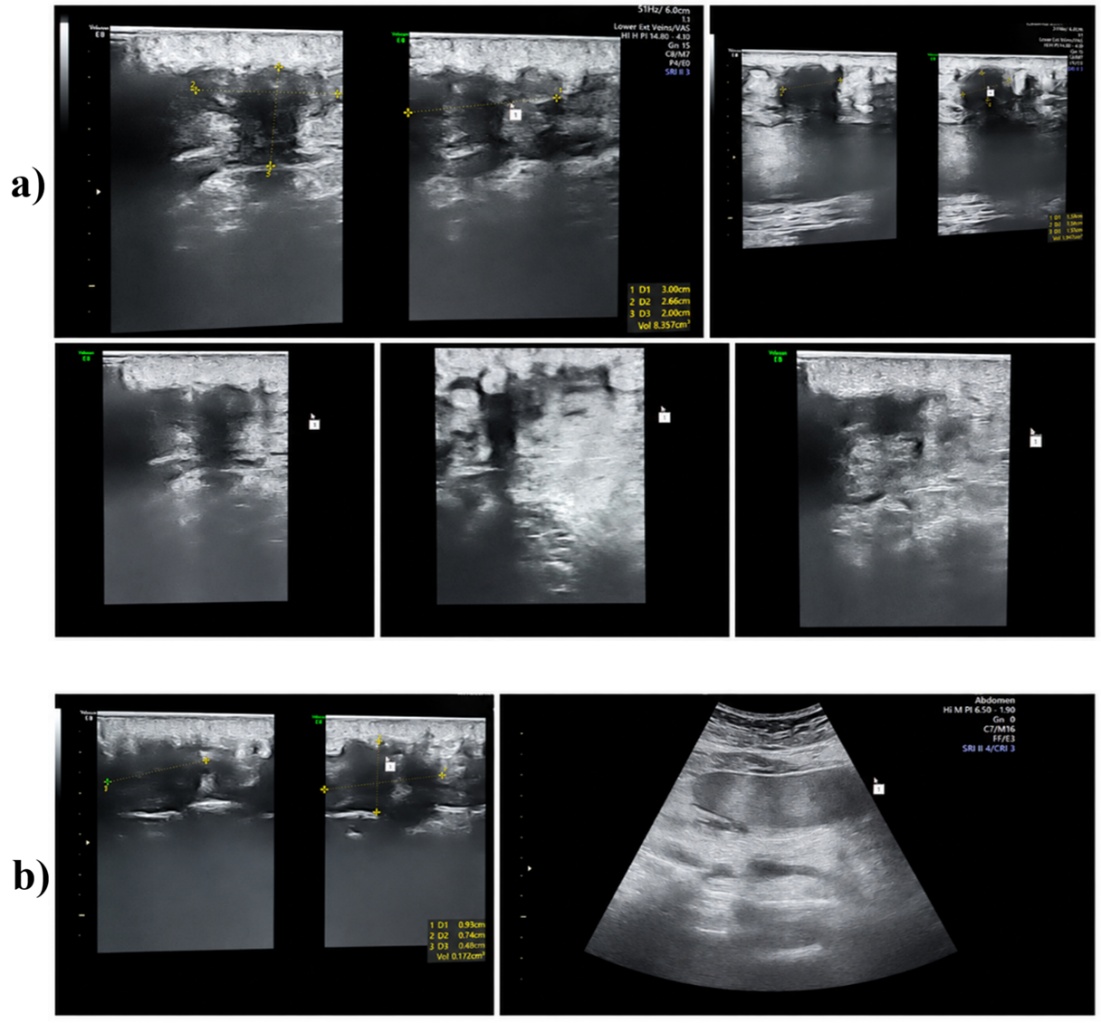
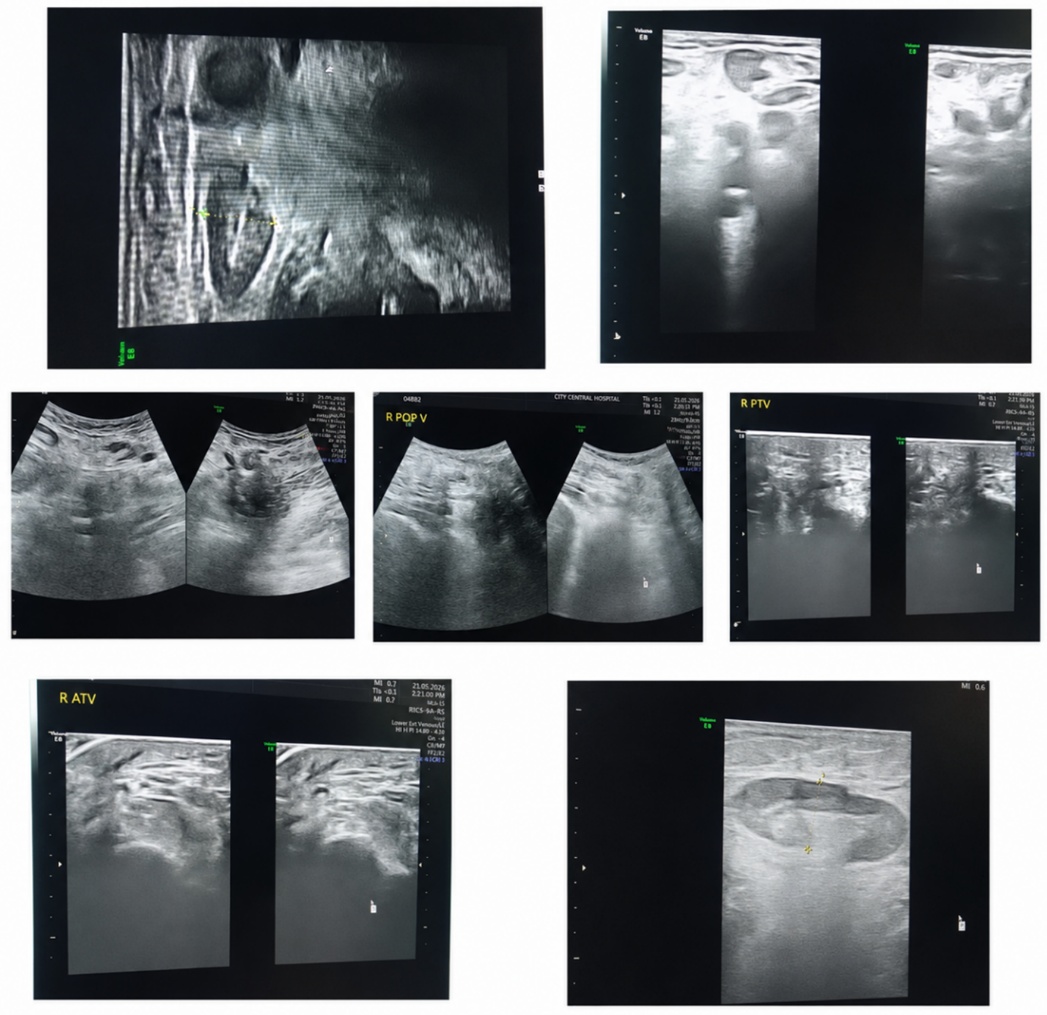
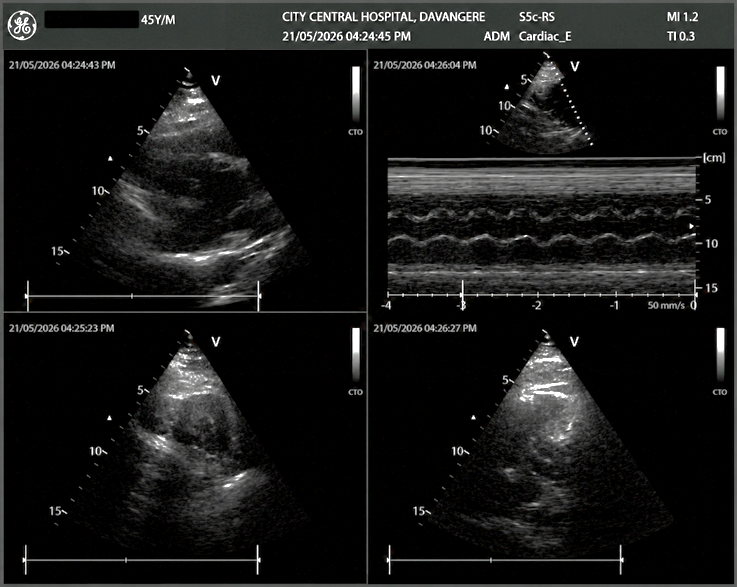
Imaging Studies: Ultrasonography of the right thigh revealed diffuse cellulitis with multiple fluid collections and right inguinal lymphadenopathy (Figure 1a). Abdominal ultrasonography showed diffuse hepatic steatosis with a normal-sized liver and no focal lesions or biliary dilatation (Figure 1b). The gallbladder, spleen, pancreas, and kidneys were unremarkable, with no hydronephrosis, calculi, free intraperitoneal fluid, or other significant intra-abdominal abnormalities. Venous Doppler showed a patent deep venous system without thrombus, excluding deep vein thrombosis as the cause of limb swelling (Figure 2). Two-dimensional transthoracic echocardiography showed normal cardiac chambers, preserved left ventricular systolic function (ejection fraction ~60%), and no regional wall motion abnormalities, significant valvular disease, pericardial effusion, or structural cardiac abnormalities (Figure 3).
Microbiological Assessment: Blood cultures were obtained before empirical broad-spectrum antibiotics, and pus from bedside incision and drainage was sent for culture and sensitivity. Pus culture grew multidrug-resistant (MDR) Klebsiella pneumoniae susceptible to tigecycline and polymyxin B, while blood cultures showed no growth. Antimicrobial therapy was accordingly tailored to intravenous tigecycline (100 mg twice daily) and polymyxin B (5 lakh IU twice daily), with de-escalation after 7 days based on clinical and microbiological response.
Therapeutic Intervention
Initial Resuscitation: The patient was admitted to the intensive care unit with septic shock and worsening hemodynamic instability. Owing to altered sensorium and progressive deterioration, endotracheal intubation was performed. Intravenous fluid resuscitation was initiated according to the institutional sepsis protocol. Medical Management: After blood culture collection, empirical broad-spectrum antibiotics were started. Ultrasonography of the right thigh demonstrated diffuse cellulitis with multiple intramuscular fluid collections containing internal echoes, consistent with abscesses and surrounding inflammatory changes. These findings confirmed extensive soft tissue infection and guided urgent bedside incision and drainage for definitive source control (Figure 1). Surgical Source Control: An urgent bedside incision and drainage of the right thigh abscess was performed, evacuating approximately 1 L of pus, which was sent for culture and sensitivity. A Vacuum-Assisted Closure (VAC) dressing was applied to facilitate drainage and promote wound healing. Renal Replacement Therapy: Because of Stage 3 acute kidney injury, a hemodialysis catheter was inserted, and Sustained Low-Efficiency Daily Diafiltration (SLEDD) was initiated. The patient underwent four sessions during his intensive care stay.
Results
Clinical Course and Follow-up
Clinical Progress: Following intensive care management, the patient improved steadily and was successfully extubated after 48 hours. By day 6, he was hemodynamically stable without vasopressors, renal function had recovered sufficiently to discontinue SLEDD, and he was transferred from the intensive care unit to the general ward. Psychiatric Management: Psychiatric evaluation confirmed tramadol dependence syndrome. A supervised tramadol taper was initiated with adjunctive clonidine (100 µg three times daily), olanzapine (5 mg twice daily), and de-addiction counseling. Discharge and Follow-up: The patient was discharged in stable condition on day 10. Follow-up showed complete clinical recovery, healthy wound healing after VAC therapy without recurrent infection, normalization of renal function, continued psychiatric follow-up, adherence to tramadol tapering, and no evidence of relapse.
Patient Perspective
The patient acknowledged becoming dependent on self-administered intramuscular tramadol for chronic pain and was unaware of its serious complications. Following recovery, he expressed commitment to continuing psychiatric follow-up and the supervised tapering program to prevent recurrence. The chronological clinical course, major interventions, and outcomes are summarized in Table 2.
| Timeline | Clinical Course |
| Day -3 to Day -1 | Right thigh pain, swelling, redness, and fever. |
| Day -2 to Day -1 | Reduced urine output and altered sensorium developed. |
| Day 0 | Presented with septic shock. Blood cultures obtained. Intubated. Broad-spectrum antibiotics initiated. Fluid resuscitation according to sepsis protocol. Bedside incision and drainage performed with approximately 1L pus evacuated. VAC dressing applied. Hemodialysis catheter inserted and SLEDD initiated. |
| Day 2 | Successfully extubated after 48 hours. |
| Day 0–5 | Four sessions of renal replacement therapy completed. |
| Day 6 | Hemodynamically stable without vasopressors. Acute kidney injury resolved. No further renal replacement therapy required. Psychiatry consultation obtained. Tramadol taper initiated with benzodiazepines and clonidine. Shifted to general ward. |
| Day 10 | Discharged in stable condition. |
Discussion
Pathophysiology
Repeated intramuscular drug injections disrupt skin integrity, predisposing to cellulitis, abscesses, sepsis, and septic shock. Although tramadol has a lower perceived abuse potential, chronic intramuscular misuse can cause severe injection-related infections [5,6]. Our patient developed extensive cellulitis with multiple intramuscular abscesses after 10 years of self-injection. Early imaging, prompt surgical drainage, and source control were critical for successful management [3,4].
Systemic Complications
The patient developed septic shock with KDIGO Stage 3 acute kidney injury requiring SLEDD. Early resuscitation, surgical drainage, culture-guided antibiotics, and renal replacement therapy resulted in complete recovery [7].
Addiction Medicine Perspective
Persistent abdominal pain after appendicectomy led to chronic self-administration of intramuscular tramadol despite no identifiable structural pathology. Long-term opioid exposure can produce tolerance, dependence, and compulsive drug use despite adverse consequences [8,9]. Psychiatric evaluation confirmed tramadol dependence syndrome, and supervised tapering with clonidine, olanzapine, counseling, and structured de-addiction services was initiated, highlighting the importance of integrating addiction medicine into the management of injectable opioid misuse [10].
Clinical Takeaways
Chronic intramuscular tramadol misuse can cause life-threatening soft tissue infection complicated by septic shock and acute kidney injury. Clinicians should suspect deep soft tissue infection in patients with limb swelling and sepsis who have a history of injectable drug use. Successful outcomes depend on early imaging, aggressive sepsis management, culture-guided antibiotics, prompt surgical source control, renal replacement therapy when indicated, and concurrent treatment of opioid dependence through a multidisciplinary approach.
Conclusion
This case highlights that chronic intramuscular tramadol misuse can cause life-threatening soft tissue infection, septic shock, and acute kidney injury requiring renal replacement therapy. Early diagnosis, prompt surgical source control, intensive care, and appropriate antimicrobial therapy are essential for favorable outcomes. Long-term recovery also requires recognition and treatment of tramadol dependence through psychiatric care, structured de-addiction, and multidisciplinary follow-up to prevent relapse and recurrent complications.
Clinical significance
This case emphasizes the need to recognize chronic intramuscular tramadol misuse as a cause of severe soft tissue infection, septic shock, and acute kidney injury. Early multidisciplinary intervention, including source control, intensive care, and addiction treatment, is essential for improving outcomes and preventing recurrence.
Strengths and Limitations
The strength of this case is its detailed description of severe infection, septic shock, acute kidney injury, and multidisciplinary management. However, as a single case report, the findings cannot establish causality or be generalized to all patients, and longer-term follow-up was limited.
Declarations
Acknowledgements
The authors would like to acknowledge the intensive care, surgical, nursing, microbiology, nephrology, and psychiatry teams for their valuable contributions to the management of the patient and for providing multidisciplinary care throughout the patient’s hospitalization and recovery.
Conflict of interest
The authors declare no conflict of interest.
Funding/ financial support
No funding or financial support was received for this work.
Contributors
All authors contributed to the conception, preparation, review, and final approval of the manuscript.
Ethical Clearance
Institutional Ethics Committee approval was not required for the publication of this single anonymized case report in accordance with the institutional policy. Written informed consent for publication of the clinical details and accompanying images was obtained from the patient.
Trial details
Not applicable to this case report.