Introduction
Traumatic brain injury (TBI) represents a major global health burden, with millions affected annually and significant contributions to long-term disability and mortality [1,2]. Survivors often experience long-term neurocognitive, behavioral, and functional impairments, contributing to significant socioeconomic burden [3]. The global incidence and high morbidity highlight the urgent need for improved prognostic tools to guide clinical management and rehabilitation strategies. Despite advances in neuroimaging and clinical scoring systems such as the Glasgow Coma Scale, prognostic accuracy remains limited, particularly in predicting long-term neurocognitive outcomes [4,5]. This gap underscores the need for objective biomarkers that can complement traditional assessments.
Oxidative stress has emerged as a central mechanism in secondary injury cascades following TBI. Excessive production of reactive oxygen and nitrogen species overwhelms endogenous antioxidant defences, leading to lipid peroxidation, protein oxidation, and mitochondrial dysfunction [6]. These processes exacerbate neuronal damage and contribute to poor recovery trajectories [7]. Biomarkers reflecting oxidative stress, such as malondialdehyde (MDA), 4-hydroxynonenal (4-HNE), and F2-isoprostanes, provide measurable indicators of these molecular events [8,9].
The clinical relevance of oxidative stress biomarkers lies in their potential to enhance prognostic precision. Elevated levels of lipid peroxidation products have been associated with poor Glasgow Outcome Scale scores, while reduced antioxidant enzyme activity has been observed in patients with higher mortality [8,10]. Although these associations are promising, few studies have reported validated predictive metrics such as sensitivity, specificity, or area under the ROC curve. Current evidence therefore supports biomarkers as potential adjuncts rather than established predictors of patient trajectories [11,12]. Moreover, their integration into precision medicine frameworks may enable individualized treatment strategies, aligning with broader trends in neurotrauma care [13].
Aim and Specific Objectives
The primary aim of this narrative review is to critically evaluate and synthesize current evidence on oxidative stress biomarkers as predictors of clinical outcomes in traumatic brain injury. By integrating findings from experimental and clinical studies, the review highlights the pathophysiological relevance, diagnostic utility, and translational potential of these biomarkers for improving patient management and prognosis. Specifically, it will describe the pathophysiological role of oxidative stress and lipid peroxidation in TBI, outlining how reactive oxygen and nitrogen species contribute to secondary injury cascades. It will also identify and discuss key oxidative stress biomarkers such as MDA, 4HNE, F2isoprostanes, protein carbonyls, and antioxidant enzymes, and examine their correlation with clinical outcomes including mortality, Glasgow Coma Scale scores, and neurocognitive recovery.
Furthermore, the review will evaluate the diagnostic and prognostic utility of these biomarkers in both experimental models and human studies, emphasizing their strengths and limitations. It will analyze methodological challenges in biomarker measurement, including assay variability, sample-collection timing, and confounding clinical factors. It will also highlight limitations in current evidence and identify gaps that hinder clinical translation and integration into routine practice. Finally, the review will propose future perspectives for biomarker research, including the development of multibiomarker panels, pointofcare assays, and their potential role in guiding antioxidant therapies and precision medicine approaches.
Methodology
This review used a narrative synthesis informed by a structured literature search. PubMed, Scopus, Web of Science, and Embase were searched between 2010 and 2026 using combinations of the following keywords: traumatic brain injury, oxidative stress, lipid peroxidation, biomarkers, and clinical outcomes. The search was designed to be comprehensive but did not follow formal systematic review protocols. Inclusion criteria were peerreviewed studies, systematic reviews, and metaanalyses focusing on oxidative stress biomarkers in human or animal TBI models. Exclusion criteria included nonEnglish articles, case reports, and studies without biomarker–outcome correlation. Data extracted included biomarker type, measurement method, patient cohort, and correlation with clinical outcomes (mortality, Glasgow Coma Scale, neurocognitive recovery). Figures were created using BioRender.com under appropriate licensing, and finalized by the author.
Current Gaps in Prognosis
Traditional prognostic approaches, such as the Glasgow Coma Scale (GCS) and neuroimaging, provide valuable information but have limited ability to predict long-term outcomes [14]. These tools often fail to capture the molecular complexity of secondary injury cascades, limiting prognostic accuracy [15]. Consequently, interest is growing in integrating biochemical biomarkers to complement clinical assessments and improve predictive precision [4].
Translational Potential
Biomarker research aligns with precision medicine approaches, offering opportunities to stratify patients by molecular profile and tailor therapeutic interventions accordingly [16]. Multi-biomarker panels and point-of-care assays could enhance predictive accuracy and facilitate rapid bedside decision-making [17,18]. Ultimately, integrating oxidative stress biomarkers into clinical practice may improve individualized treatment strategies and long-term patient outcomes [19,20].
Discussion
Pathophysiological Basis
Traumatic brain injury initiates a cascade of secondary injury mechanisms, including excitotoxicity, mitochondrial dysfunction, and neuroinflammation [21,22]. Oxidative stress arises from excessive production of reactive oxygen species (ROS) and reactive nitrogen species (RNS), overwhelming endogenous antioxidant defences [23,24]. Lipid peroxidation products such as malondialdehyde (MDA) and 4hydroxynonenal (4HNE) are particularly damaging, disrupting membrane integrity and signalling pathways [19]. F2isoprostanes, stable markers of oxidative damage, have been reported in human TBI cohorts and are associated with longterm neurodegeneration and poor recovery outcomes [20]. Protein carbonyls and nitrotyrosine indicate protein oxidation and nitration, processes closely linked to neuroinflammation and contributing to worsening neurological function [25]. Collectively, these biomarkers reflect the molecular complexity of secondary injury cascades and highlight the potential for oxidative stress profiling to inform prognosis in TBI patients.
Key Biomarkers
Malondialdehyde (MDA) has been widely studied in the context of traumatic brain injury, with elevated levels reported in human cohorts and associated with poor Glasgow Outcome Scale scores and unfavorable recovery trajectories [26,27]. Similarly, 4hydroxynonenal (4HNE), a lipid peroxidation product, has been linked to neuronal apoptosis and subsequent cognitive decline, underscoring its role in secondary injury cascades [28]. F2isoprostanes, which are stable markers of oxidative damage, have been shown to predict chronic neurodegeneration and poor recovery outcomes in affected patients [20]. Protein carbonyls and nitrotyrosine indicate protein oxidation and nitration, processes closely linked to neuroinflammation and contributing to worsening neurological function [25]. In addition, reduced activity of antioxidant enzymes such as superoxide dismutase (SOD), catalase, and glutathione peroxidase (GPx) has been correlated with higher mortality rates in TBI patients, highlighting the importance of endogenous antioxidant defences in prognosis [8].
Evidence from Human Studies
The summary of human studies on oxidative stress biomarkers in traumatic brain injury is illustrated in Table 1 [8,19,20]
| Biomarker(s) | Specimen Type | Timing of Sampling | Assay Method | Patient Population / Severity | Outcome Assessed | Principal Finding |
| Malondialdehyde (MDA), SOD, Catalase, GFAP, S100β, IL6 | Serum | Within 24h postinjury | ELISA (GFAP, S100β, IL6); biochemical assays (MDA, SOD, Catalase) | 48 TBI patients vs 48 controls | Biomarker correlations with severity | MDA significantly elevated; SOD & catalase reduced; correlated with GFAP/S100β and poor outcomes. |
| Multiple oxidative stress biomarkers (review synthesis) | Plasma/CSF (varied across studies) | Acute and subacute phases | ELISA, HPLC, MS (varied) | Human TBI cohorts (reviewed studies) | Diagnosis, prognosis | Oxidative stress markers interact with validated TBI biomarkers; patterns may assist prognosis. |
| Reactive species interactome markers (ROS/RNS derivatives) | Plasma | Longitudinal (up to recovery phase) | Advanced redox assays | Mild TBI patients | Recovery trajectory | Specific alterations in oxidative markers reflected recovery status; potential prognostic utility. |
Table 1 summarizes representative human TBI studies evaluating oxidative stress biomarkers, specimen types, timing of sampling, assay methods, and their correlation with clinical outcomes
The summary of Animal Model studies on oxidative stress biomarkers in traumatic brain injury is illustrated in Table 2 [29-31]
| Biomarker(s) | Specimen Type | Timing of Sampling | Animal Model | Intervention / Assay Method | Outcome Assessed | Principal Finding |
| Malondialdehyde (MDA), 4HNE | Brain tissue homogenates | 6–24h postinjury | Rat controlled cortical impact (CCI) | Biochemical assays | Histological damage, neuronal apoptosis | MDA and 4HNE significantly elevated; correlated with neuronal loss and edema |
| F2isoprostanes | CSF, plasma | 24–72h postinjury | Mouse fluid percussion injury | Mass spectrometry | Neurobehavioral recovery | F2isoprostanes increased; levels associated with impaired motor recovery |
| Protein carbonyls, nitrotyrosine | Brain tissue | Acute phase | Rat weightdrop model | Immunohistochemistry | Neuroinflammation markers | Protein oxidation and nitration elevated; linked to microglial activation |
| Antioxidant enzymes (SOD, Catalase, GPx) | Brain tissue, plasma | 24h–7d postinjury | Rat CCI | Enzyme activity assays | Mortality, neurological scores | Antioxidant enzyme activity reduced; supplementation improved outcomes |
| Antioxidant therapy (Nacetylcysteine, edaravone) | Brain tissue, plasma | Post-treatment | Rat/mouse TBI models | Drug administration + biomarker assays | Histology, neurobehavioral recovery | Therapies reduced oxidative stress markers and improved functional recovery |
Table 2 summarizes representative animal model studies evaluating oxidative stress biomarkers in TBI, highlighting biomarker changes and therapeutic interventions
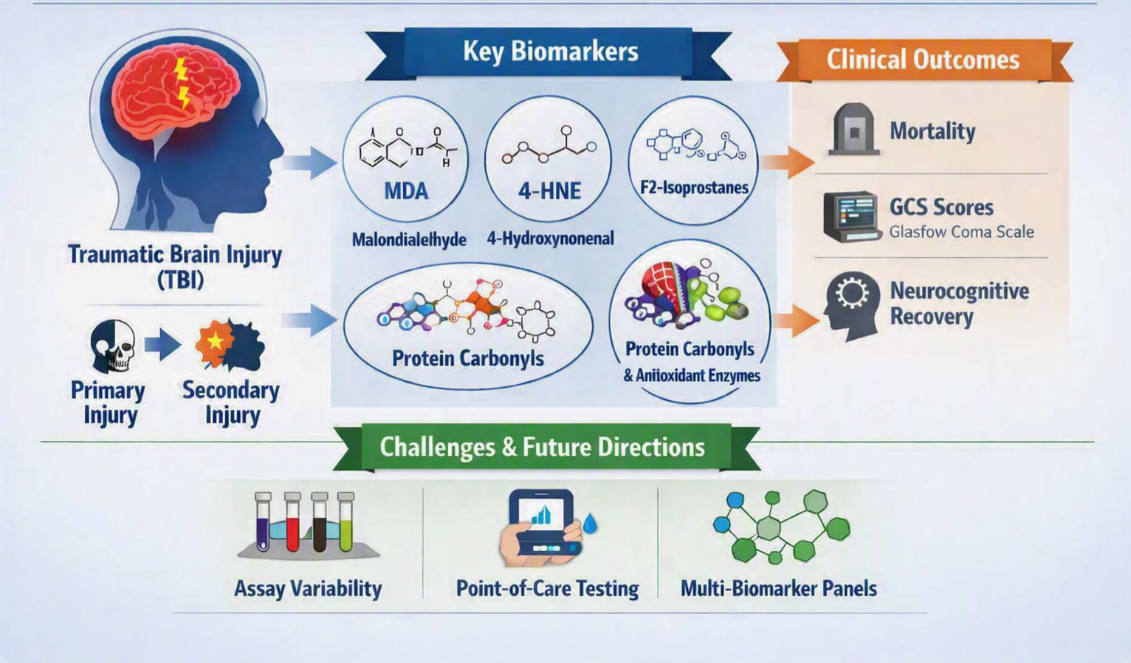
The infographic illustrates the cascade from primary and secondary brain injury to oxidative stress and lipid peroxidation. Key biomarkers—malondialdehyde (MDA), 4hydroxynonenal (4HNE), F2isoprostanes, protein carbonyls, and antioxidant enzymes—are highlighted as indicators of neuronal damage and recovery potential. The figure depicts their associations with clinical outcomes, including mortality, Glasgow Coma Scale (GCS) scores, and neurocognitive recovery. Solid arrows indicate established pathways supported by current evidence, whereas dashed arrows represent proposed future applications requiring further validation. The lower panel summarizes methodological challenges and future directions, emphasizing assay variability, pointofcare testing, and multibiomarker panels for precision medicine applications
Clinical Utility
Oxidative stress biomarkers provide valuable information that may complement traditional clinical scoring systems. They provide valuable adjunctive information in traumatic brain injury, with associations reported between elevated malondialdehyde, F2isoprostanes, and reduced antioxidant enzyme activity and poor clinical outcomes. These findings suggest potential utility alongside established prognostic tools such as the Glasgow Coma Scale and neuroimaging. However, most studies report correlations rather than validated predictive metrics. Evidence demonstrating incremental prognostic value over established variables is limited, and quantitative comparisons (e.g., ROC curve analysis, sensitivity/specificity) are rarely available. Current data therefore support biomarkers as promising adjuncts, while their independent predictive contribution remains to be determined through prospective validation. Several studies have reported that elevated malondialdehyde (MDA) and F2isoprostanes are associated with longterm cognitive impairment in TBI patients, while reduced antioxidant enzyme activity has been observed in individuals with higher mortality rates [19,20,25]. These associations highlight the potential of biomarkers as adjunctive prognostic indicators. However, most available studies report correlations rather than validated predictive measures. Metrics such as sensitivity, specificity, odds ratios, or area under the ROC curve are rarely provided, limiting conclusions about their independent prognostic performance. Current evidence therefore supports oxidative stress biomarkers as promising adjuncts to neuroimaging and clinical scales, but prospective validation studies are needed to determine their incremental predictive value over established variables [32].
Methodological Considerations
Assay variability remains a challenge. Plasma vs cerebrospinal fluid (CSF) measurements yield different results, and lack of standardization limits clinical translation [33]. Moreover, confounding factors such as age, comorbidities, and systemic inflammation complicate interpretation [34,35].
Future Perspectives
Oxidative stress biomarkers represent a promising frontier in the management of traumatic brain injury. Their consistent association with injury severity, mortality, and longterm cognitive outcomes underscores their potential to complement existing clinical tools. Beyond their diagnostic and prognostic utility, these biomarkers may eventually inform therapeutic strategies, particularly in guiding antioxidant interventions and monitoring treatment response. At the same time, several challenges remain. Current evidence is largely correlative, with limited reporting of validated predictive metrics such as sensitivity, specificity, or ROC curve performance. Assay variability, differences in sampling timing, and heterogeneity across patient populations further complicate interpretation. To move from association to prediction, future research must prioritize standardized biomarker assays, multibiomarker panels, longitudinal sampling across acute and chronic phases, and multicenter validation studies [25]. Another promising avenue is the creation of pointofcare assays, which could enable rapid bedside testing and revolutionize emergency management of TBI patients [36]. Advances in precision medicine suggest that stratifying patients according to biomarker profiles could facilitate individualized interventions, thereby enhancing recovery outcomes and longterm prognosis [37].
Integration of oxidative stress markers with neuroimaging and established clinical scales, supported by advanced analytic approaches such as machine learning, may help determine their incremental predictive value. Translational efforts should also bridge the gap between robust findings in animal models and more modest changes observed in human cohorts. Ultimately, these steps will be essential to establish oxidative stress profiling as a validated prognostic tool and to realize its potential in personalized management of traumatic brain injury. Beyond their diagnostic and prognostic potential, oxidative stress biomarkers may eventually contribute to therapeutic strategies, particularly in guiding or monitoring antioxidant interventions such as Nacetylcysteine and edaravone. However, current evidence does not establish that biomarkerguided use of these treatments improves outcomes in TBI. This possibility remains an important research direction and requires prospective trials to determine whether biomarkerbased stratification can enhance therapeutic efficacy.
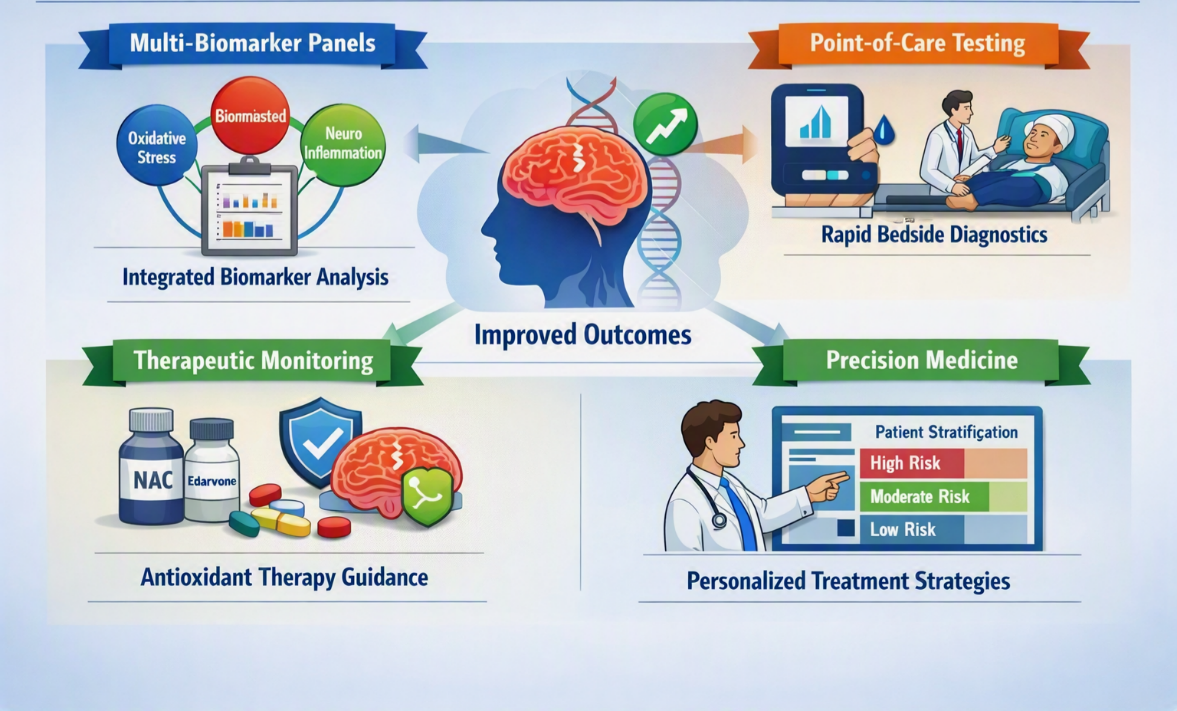
This schematic illustrates the major future directions in TBI research. Multibiomarker panels that combine oxidative stress, neuroinflammatory, and neurodegenerative markers are expected to improve prognostic precision. Pointofcare testing will enable rapid bedside diagnostics and enhance emergency management. Therapeutic monitoring using oxidative stress biomarkers will guide antioxidant treatments such as Nacetylcysteine and edaravone to optimize therapy. Precision medicine approaches will stratify patients according to biomarker profiles, allowing individualized interventions. All these strategies aim to improve patient recovery and longterm outcomes.
Limitations
Despite the promising role of oxidative stress biomarkers in predicting clinical outcomes after TBI, several limitations remain. First, TBI heterogeneity poses a major challenge, as the condition encompasses a wide spectrum of severity, mechanisms, and patient demographics. Biomarker levels may therefore vary significantly between mild, moderate, and severe cases, limiting their generalizability [4]. Second, assay variability remains a critical issue. Different laboratories employ diverse analytical techniques such as ELISA, HPLC, and mass spectrometry, which often produce inconsistent results. The lack of standardized protocols hinders reproducibility and slows clinical translation.
Biomarker measurement and timing critically influence reported associations in TBI cohorts. Plasma and serum assays often yield divergent results due to clotting factors, while CSF measurements more directly reflect central nervous system oxidative stress but are limited by invasiveness. Sampling timing is equally important [38]: acute elevations in MDA and F2isoprostanes within 24 hours reflect injury severity, whereas persistent subacute elevations are more closely associated with poor recovery. Analytical methods also contribute to variability—spectrophotometric assays such as TBARS may overestimate MDA, while mass spectrometry provides more specific quantification of F2isoprostanes. These methodological differences explain inconsistencies across studies and underscore the need for standardized protocols in future biomarker validation.
Furthermore, confounding factors such as systemic inflammation, comorbidities including diabetes or cardiovascular disease, and patient age can influence oxidative stress markers, complicating their interpretation in the context of isolated brain injury [39]. Finally, although biomarkers show strong associations with clinical outcomes, they are rarely incorporated into routine practice. Most evidence remains confined to experimental or pilot studies, with few largescale multicenter validations available to support widespread clinical integration.
Conclusion
Oxidative stress plays a central role in the secondary injury cascades of traumatic brain injury, with both human and animal studies consistently demonstrating elevations in lipid peroxidation products, protein oxidation, and reductions in antioxidant defences. Evidence from human cohorts shows that biomarkers such as malondialdehyde (MDA), F2isoprostanes, and antioxidant enzyme activity are associated with injury severity, mortality, and longterm cognitive outcomes. However, these associations remain largely correlative, and few studies have reported validated predictive metrics such as sensitivity, specificity, or area under the ROC curve. Current evidence therefore supports oxidative stress biomarkers as promising adjuncts to neuroimaging and clinical scales, but prospective validation studies are needed to determine their incremental predictive value over established prognostic variables. In contrast, animal models provide robust evidence of oxidative stress involvement in TBI pathophysiology, with consistent biomarker changes and demonstrable benefits of antioxidant therapies such as Nacetylcysteine and edaravone. Yet, the translational gap persists: therapeutic efficacy observed in preclinical models has not been replicated in clinical trials, and biomarker changes in animals are often more pronounced than in human cohorts. This divergence underscores the importance of distinguishing between experimental and clinical evidence.
Taken together, oxidative stress biomarkers represent a promising research avenue for improving TBI diagnosis and prognosis. To advance toward clinical utility, future studies must prioritize standardized assays, longitudinal sampling, and rigorous validation of predictive performance. Only through such efforts can oxidative stress profiling evolve from an associationbased marker to a validated prognostic tool in the management of traumatic brain injury
Abbreviations
TBI: Traumatic Brain Injury
ROS: Reactive Oxygen Species
RNS: Reactive Nitrogen Species
MDA: Malondialdehyde
4-HNE: 4-Hydroxynonenal
CSF: Cerebrospinal Fluid
F2-IsoPs-- F2-isoprostanes
SOD: Superoxide Dismutase
GPx: Glutathione Peroxidase
ELISA: Enzyme-Linked Immunosorbent Assay
HPLC: High-Performance Liquid Chromatography
Declarations
Conflicts of Interest
The author declares no conflict of interest
Sources of Funding
No funds were received to write this review paper
Ethical Approval
Not applicable
Consent
Not applicable
Data Availability Statement
The author has nothing to report.
Transparency Statement
The author affirms responsibility for the integrity of the review process and accuracy of the synthesis. No primary data were collected or analyzed
Author contributions
CJO: Conceptualization, Methodology, Writing Original Draft, Writing – Review & Editing
The author read and approved the final manuscript.