Introduction
Glossopharyngeal neuralgia (GPN) is an uncommon cranial neuralgia characterized by paroxysmal, severe pain localized to the tonsillar fossa, base of the tongue, pharynx, and occasionally radiating to the ear. The condition accounts for less than 1% of all cranial neuralgias and is often underdiagnosed or misdiagnosed due to its rarity and overlapping symptomatology with trigeminal neuralgia, temporomandibular disorders, dental pathology, and cervical musculoskeletal pain [1].
Secondary causes of GPN include tumours, vascular compression, infection, and elongation of the styloid process, commonly referred to as Eagle syndrome. Eagle syndrome is an important but frequently overlooked aetiology of glossopharyngeal-distribution pain and may require distinct diagnostic and therapeutic approaches [2].
Pharmacological management remains the first-line treatment; however, many patients develop inadequate response or intolerance to medications. Interventional strategies such as nerve blocks, conventional radiofrequency ablation, and surgical microvascular decompression have been described, each with varying efficacy and risk profiles [3]. Pulsed radiofrequency (PRF) offers a neuromodulatory approach that avoids neural destruction and has shown promise in the management of cranial neuralgias [4].
The primary objective of this study was to characterize the clinical features of patients with glossopharyngeal neuralgia (GPN) and to determine the diagnostic value of glossopharyngeal nerve block. The secondary objective was to evaluate the efficacy and safety of pulsed radiofrequency (PRF) treatment in patients with persistent or refractory symptoms.
Methods
Study Design and Study Population
A retrospective observational study was carried out at a tertiary-level pain management centre using paper-based records of patients admitted to the pain ward. Patient selection was performed according to predefined eligibility criteria.
Inclusion Criteria
-
Patients aged more than 18 years.
-
Patients diagnosed clinically with Glossopharyngeal Neuralgia or Eagle syndrome according to the International Classification of Headache Disorders, 3rd edition (ICHD-3). [5]
-
Patients who underwent a diagnostic glossopharyngeal nerve block to confirm the pain source.
-
Duration of symptoms exceeding 12 weeks.
-
Availability of complete medical documentation, including:
-
Demographic profile
-
Clinical characteristics
-
Imaging findings
-
Pre- and post-intervention pain assessment using the Numerical Rating Scale (NRS)
-
Availability of follow-up records for at least 6 months.
Exclusion Criteria
-
Patients with secondary causes of glossopharyngeal neuralgia such as intracranial tumors, multiple sclerosis, vascular malformations, or head and neck cancers.
-
Presence of associated trigeminal neuralgia or other cranial neuralgias likely to interfere with pain evaluation.
-
History of previous surgical procedures including microvascular decompression or styloidectomy.
-
Pain duration less than 12 weeks.
-
Inadequate medical records or absence of follow-up data required for outcome analysis.
-
Patients managed exclusively with pharmacological therapy without any interventional procedure.
The study size was determined by including all the patients who fulfilled the inclusion criteria during the specified study period. As this was a retrospective observational study no formal sample size calculation was performed.
Data Collection
Medical records of patients admitted with glossopharyngeal neuralgia between January 2021 and June 2022 were reviewed in detail to identify eligible cases.
Data extracted from the records included patient age, gender, duration of symptoms, pain characteristics, radiological findings, baseline NRS score, response to diagnostic glossopharyngeal nerve block, and outcome following pulsed radiofrequency (PRF) treatment of the glossopharyngeal nerve. All information was entered into a standardized Microsoft Excel data sheet.
Pain severity was documented using the NRS at the following time points:
-
Before intervention (baseline)
-
After diagnostic nerve block
-
Following PRF treatment at discharge
-
At 3-month follow-up
-
At 6-month follow-up
Successful treatment outcome was defined as a reduction of 50% or more in NRS score from baseline.
Any procedure-related adverse events documented in the records were also noted for safety assessment. Data verification was performed before analysis to ensure completeness and to eliminate duplicate entries. Missing data and incomplete records were excluded where applicable. As this was a retrospective observational study, selection bias and information bias could not be completely eliminated.
Ethical Considerations
Prior approval for the study was obtained from the Institutional Ethics Committee (Dean/2022/EC/3325). Since the study involved retrospective evaluation of anonymized patient records, the requirement for informed consent was waived by the ethics committee.
Confidentiality and privacy of patient information were maintained throughout the study process.
Statistical Analysis
Data analysis was carried out using Statistical Package for the Social Sciences (SPSS) software version 29. Continuous variables were summarized as mean ± standard deviation, while categorical variables were expressed as frequencies and percentages.
Pain score trends at different follow-up periods were analysed descriptively. Statistical interpretation was performed using a 95% confidence interval (CI).
Results
Eligible records screened (n=38)
│
├──────── Excluded (n=6)
│ • Incomplete follow-up (n=2)
│ • Previous surgery (n=1)
│ • Alternative diagnosis (n=3)
▼
Included in analysis (n=32)
│
▼
Diagnostic glossopharyngeal nerve block (n=32)
│
├──────── Excluded (n=3)
│ • <50% pain relief after block
▼
Pulsed radiofrequency treatment (n=29)
│
▼
3-month follow-up (n=29)
│
▼
6-month follow-up (n=29)
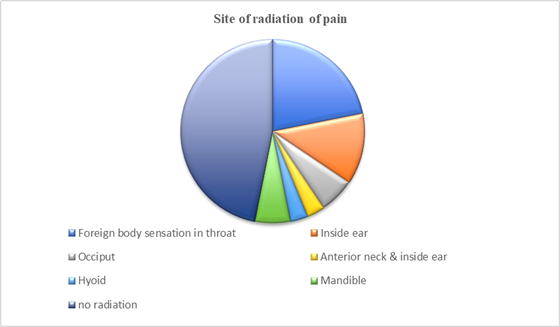
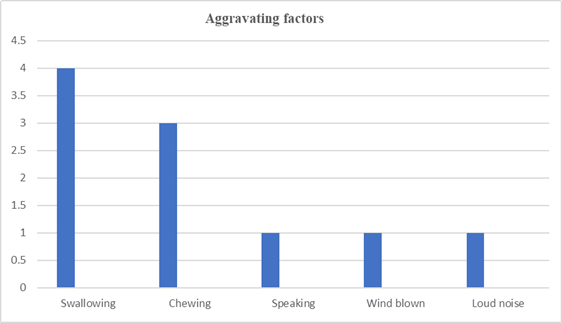
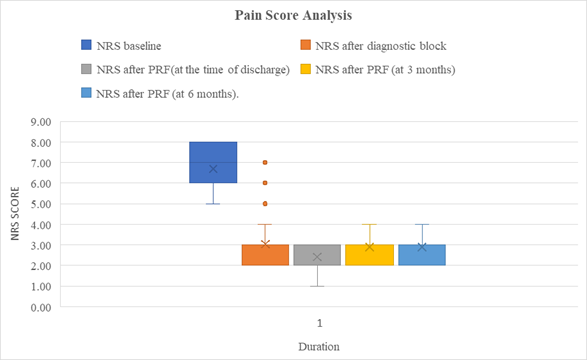
A total of 32 patients diagnosed with Glossopharyngeal Neuralgia or Eagle syndrome fulfilled the study eligibility criteria and were included in the final analysis. Table I summarizes the demographic characteristics of the study population. Female patients predominated, and the age of patients ranged from 19 to 56 years. The mean duration of symptoms before presentation was 12.8 months, suggesting prolonged pain prior to definitive diagnosis and intervention. The duration of symptoms ranged from 2 to 48 months, indicating considerable variability in clinical presentation and referral timing. Distribution of patients according to symptom duration is shown in Table II. Patients demonstrated variable clinical presentations, as summarized in Table III. Figure 1 demonstrates the distribution of site of radiation of pain among study participants. Nine patients had associated aggravating factors, among which swallowing and chewing were the most frequently reported triggers (Figure 2). Computed tomography (CT) imaging of the neck revealed normal findings in 19 patients (59.4%). Radiological abnormalities suggestive of Eagle syndrome, including elongated styloid process or ossified stylohyoid ligament, were observed in 13 patients (40.6%). Most patients had previously received pharmacological therapy, including neuropathic pain medications such as carbamazepine, gabapentin, and amitriptyline, before referral for interventional pain management. The mean baseline Numerical Rating Scale (NRS) score was 6.69 ± 1.03. All patients underwent diagnostic glossopharyngeal nerve block, of whom 29 patients experienced ≥ 50% pain relief following the procedure. Three patients demonstrated suboptimal response and were subsequently found to have alternative diagnoses, including bilateral elongated styloid process (3.5 cm) requiring otorhinolaryngology referral, mandibular nerve–mediated pain, and sternocleidomastoid myofascial trigger point pain. All 29 responders subsequently underwent pulsed radiofrequency (PRF) treatment of the glossopharyngeal nerve. Following diagnostic glossopharyngeal nerve block, the mean NRS score decreased to 3.03 ± 1.18. Further reduction in pain intensity was observed after PRF treatment, with a mean NRS score of 2.41 ± 0.57 at discharge. Pain relief was sustained during follow-up, with mean NRS scores of 2.90 ± 0.72 at both 3 and 6 months, indicating persistent analgesic benefit following PRF intervention. No major complications such as dysphagia, hoarseness, bradycardia, or neurological deficits were observed during the study period. Box plot analysis (Figure 3) was performed to evaluate the distribution of Numerical Rating Scale (NRS) scores at baseline, after diagnostic glossopharyngeal nerve block, after pulsed radiofrequency treatment, and during follow-up. Box plot analysis demonstrated a clear downward shift in median NRS scores following intervention. The interquartile range narrowed post-PRF, indicating more consistent pain relief among patients. Minimal variability was noted at follow-up intervals, suggesting sustained analgesic efficacy.
| Demographic data | ||
| Gender | Male | Female |
| 5 | 27 | |
| Mean age (years) | 34.7 ± 8.3 |
| Duration | Number of patients | Percentage |
| < 6 months | 7 | 21.9% |
| 6-12 months | 19 | 59.4% |
| >12 months | 6 | 18.7% |
| Clinical presentation | n | n% | |
| 1. Nature | Episodic | 19 | 59.4 |
| continuous | 13 | 40.6 | |
| 2. Radiation | Present | 17 | 53.1 |
| Absent | 15 | 46.9 | |
| 3. Aggravating factors | Present | 9 | 28.1 |
| Absent | 23 | 71.9 | |
| 4. Side involvement | unilateral | 30 | 93.8 |
| bilateral | 2 | 6.2 | |
| 5. Pain character | Dull aching | 13 | 40.6 |
| Sharp shooting | 11 | 34.4 | |
| Electric shock like | 2 | 6.2 | |
| Pin prick | 3 | 9.4 | |
| Burning | 3 | 9.4 | |
| 6. Site of pain | submandibular | 11 | 34.4 |
| Below ear | 9 | 28.1 | |
| Inside ear | 2 | 6.2 | |
| Lateral neck | 4 | 12.6 | |
| Angle of mandible | 3 | 9.4 | |
| mandibular | 2 | 6.2 | |
| Sub mental | 1 | 3.1 |
Discussion
Glossopharyngeal neuralgia is a rare cranial neuropathy characterized by recurrent episodes of severe unilateral pain involving the throat, tonsillar fossa, base of tongue, ear, and mandibular region [5]. Due to the rarity of the disease and overlap of symptoms with dental, otolaryngological, temporomandibular, and cervical disorders, diagnosis is frequently delayed [6]. In the present study, the mean duration of symptoms prior to intervention was 12.8 months, with symptom duration ranging from 2 to 48 months. These findings suggest prolonged disease burden before referral to specialized pain services. Similar delays in diagnosis have been reported in previous observational studies of glossopharyngeal neuralgia [3]. Female predominance was observed in the present study, with females accounting for the majority of cases. Primary glossopharyngeal neuralgia is largely a disorder of adulthood, with reports suggesting a tendency toward left-sided involvement and female predominance, although robust meta-analytic evidence supporting these observations is currently lacking [7]. The younger age of presentation in our study may reflect the inclusion of Eagle syndrome cases, referral patterns to a tertiary pain centre, and improved diagnostic awareness, leading to earlier identification of the condition compared with historical reports [8]. while in previous literature glossopharyngeal neuralgia has been described as a disorder predominantly affecting middle-aged and elderly individuals, with peak incidence occurring after the fifth decade of life [9]. Clinical presentation among patients was variable. Episodic pain was more common than continuous pain, consistent with the typical paroxysmal nature of glossopharyngeal neuralgia. Dull aching and sharp shooting pain represented the most common pain characteristics. Radiation of pain was observed in more than half of the patients, commonly involving the ear, mandibular region, and lateral neck. These findings reflect the complex sensory distribution of the glossopharyngeal nerve and its overlap with adjacent cranial and cervical nerves [8]. Swallowing and chewing were the most commonly reported aggravating factors, which correlates with stimulation of the pharyngeal musculature and glossopharyngeal nerve territory during deglutition [10]. Radiological abnormalities suggestive of Eagle syndrome, including elongated styloid process and ossified stylohyoid ligament, were identified in 40.6% of patients. Eagle syndrome is a recognized structural cause of glossopharyngeal nerve irritation and craniofacial pain [11]. However, radiological findings alone may not correlate with symptom severity, emphasizing the importance of clinical evaluation and diagnostic nerve block before definitive intervention. Most patients had previously received conservative medical management including carbamazepine, gabapentin, and amitriptyline before referral for interventional pain treatment. Carbamazepine remains the first-line pharmacological therapy for glossopharyngeal neuralgia; however, prolonged use is frequently associated with inadequate pain control, adverse effects, or poor tolerability [12]. Consequently, minimally invasive interventions such as PRF are increasingly being utilized in refractory cases. A marked reduction in pain intensity was observed following diagnostic glossopharyngeal nerve block and subsequent PRF treatment in the present study. The baseline mean NRS score decreased significantly following intervention and remained low during follow-up at 3 and 6 months. These findings are comparable with previous studies reporting favourable outcomes following PRF treatment for cranial neuralgias [13]. PRF is believed to exert a neuromodulatory effect by delivering short bursts of electrical current at lower temperatures without causing significant neural destruction, thereby minimizing the risk of sensory or motor deficits [14,15]. No major complications such as dysphagia, hoarseness, bradycardia, or neurological deficits were observed in the present study. Considering the close anatomical relationship of the glossopharyngeal nerve with major vascular and neural structures, procedural precision and ultrasound guidance remain important for minimizing complications [16]. The favourable safety profile observed in the present study supports the use of PRF as a relatively safe interventional technique. Three patients demonstrated suboptimal response following diagnostic glossopharyngeal nerve block and were subsequently diagnosed with alternative pain aetiologies including bilateral elongated styloid process (3.5cm) requiring otorhinolaryngology referral, mandibular nerve–mediated pain, and sternocleidomastoid myofascial pain syndrome. This finding highlights the diagnostic value of glossopharyngeal nerve block in differentiating glossopharyngeal neuralgia from other causes of craniofacial pain [17]. Box plot analysis in the present study demonstrated a progressive downward shift in median NRS scores following intervention along with narrowing of the interquartile range after PRF treatment. These findings indicate both effective pain reduction and consistency of analgesic response among patients during follow-up.
The present study has several limitations. The retrospective design and relatively small sample size limit the generalizability of findings. Absence of a control group and dependence on paper-based medical records may have introduced selection and information bias. Additionally, longer follow-up would be necessary to evaluate recurrence rates and long-term efficacy of PRF treatment. Despite these limitations, the study provides valuable real-world evidence regarding the clinical profile and interventional management of glossopharyngeal neuralgia and Eagle syndrome.
In conclusion, pulsed radiofrequency treatment of the glossopharyngeal nerve appears to be a safe and effective minimally invasive therapeutic option for patients with glossopharyngeal neuralgia and Eagle syndrome who demonstrate significant pain relief following diagnostic nerve block. Early recognition and timely referral for interventional pain management may help reduce prolonged disease burden and improve patient outcomes.
Declarations
Ethical Clearance
This study was conducted in accordance with institutional ethical standards and the principles of the Declaration of Helsinki. Ethical approval was obtained from the institutional ethics committee of institute of medical sciences, Banaras Hindu University.
The requirement of informed consent was waived due to the retrospective nature of the study and use of anonymized data.
Acknowledgements
None
Conflict of interest
The authors declare that they have no conflict of interest related to this study.
Funding/ financial support
This research did not receive any funding or financial support.
Contributors
Dr. Deepshikha Deepshikha; Assistant Professor, Department of Anaesthesiology, Heritage Institute of Medical Sciences
Dr. Anil Kumar Paswan, Professor, Department of Anaesthesiology, Institute of Medical Sciences, Banaras Hindu University
Trial details
Not applicable