Introduction
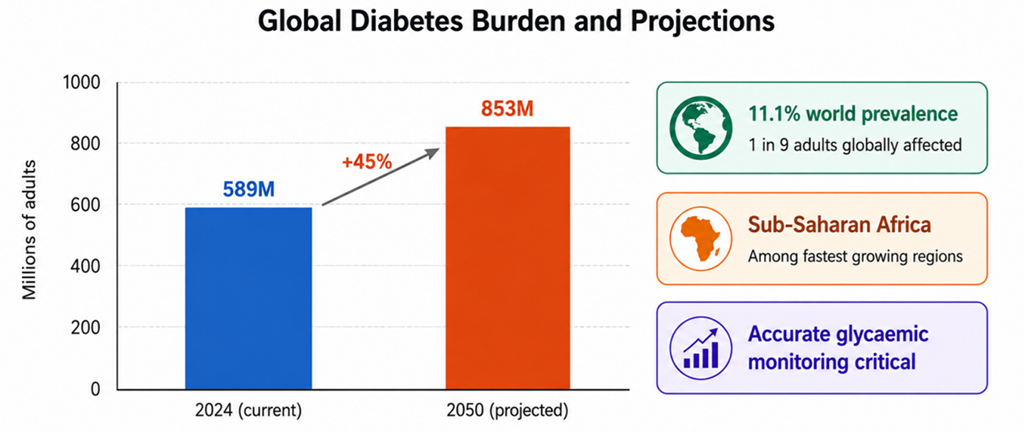
Diabetes Mellitus (DM) is a major global public health challenge and one of the leading causes of morbidity and mortality worldwide. According to recent estimates from the International Diabetes Federation (IDF), more than 500 million adults are living with diabetes globally, with the burden expected to increase substantially over the coming decades [1]. Low- and middle-income countries, particularly those in sub-Saharan Africa, are experiencing a rapid rise in diabetes prevalence driven by urbanization, population growth, aging, dietary transitions, and reduced physical activity. Nigeria, the most populous country in Africa, is among the nations contributing significantly to this increasing burden, with diabetes imposing substantial clinical and economic burden on individuals, healthcare systems, and on national development [1].
Effective glycaemic monitoring is fundamental to the prevention of diabetes-related complications and the optimization of treatment outcomes [2]. Persistent hyperglycaemia is associated with the development of microvascular complications, including retinopathy, nephropathy, and neuropathy, as well as macrovascular diseases such as coronary artery disease, stroke, and peripheral arterial disease [3]. Consequently, reliable biomarkers that accurately reflect mean glycaemia are essential for diagnosis, therapeutic decision-making, and long-term disease monitoring [4].
Glycated haemoglobin (HbA1c) has become the cornerstone of diabetes diagnosis and management because it reflects average blood glucose concentrations over the preceding two to three months and has demonstrated strong associations with the risk of diabetes-related complications. International organizations, including the American Diabetes Association (ADA) and the World Health Organization (WHO), recommend HbA1c for both diagnosis and monitoring of diabetes. Despite its widespread use, HbA1c has several recognized limitations. Its accuracy may be affected by conditions that alter red blood cell lifespan or haemoglobin structure, including haemoglobinopathies, iron deficiency anaemia, haemolytic anaemia, recent blood transfusion, pregnancy, and chronic kidney disease. These limitations may lead to underestimation or overestimation of glycaemic control and potentially influence clinical decision-making [5-8].
The limitations of HbA1c are particularly relevant in many African populations where haemoglobin disorders such as sickle cell disease and haemoglobin C variants remain prevalent. In addition, chronic kidney disease, infectious diseases, nutritional deficiencies, and anaemia are common comorbidities that may further compromise the reliability of HbA1c measurements. These challenges highlight the need for complementary biomarkers capable of providing accurate assessment of glycaemic status when HbA1c interpretation falls short of utility [9-12].
Glycated albumin (GA) has emerged as a promising alternative and adjunctive marker of glycaemic control. Formed through the non-enzymatic glycation of serum albumin, GA reflects glycaemic exposure over a shorter period of approximately two to four weeks, corresponding to the half-life of circulating albumin. Unlike HbA1c, GA is independent of red blood cell turnover and is therefore less susceptible to many haematological factors that affect HbA1c measurement. Furthermore, GA has been reported to respond more rapidly to changes in glycaemic status and may better reflect postprandial glucose excursions and glycaemic variability, which are increasingly recognized as important contributors to diabetes-related complications [13-17].
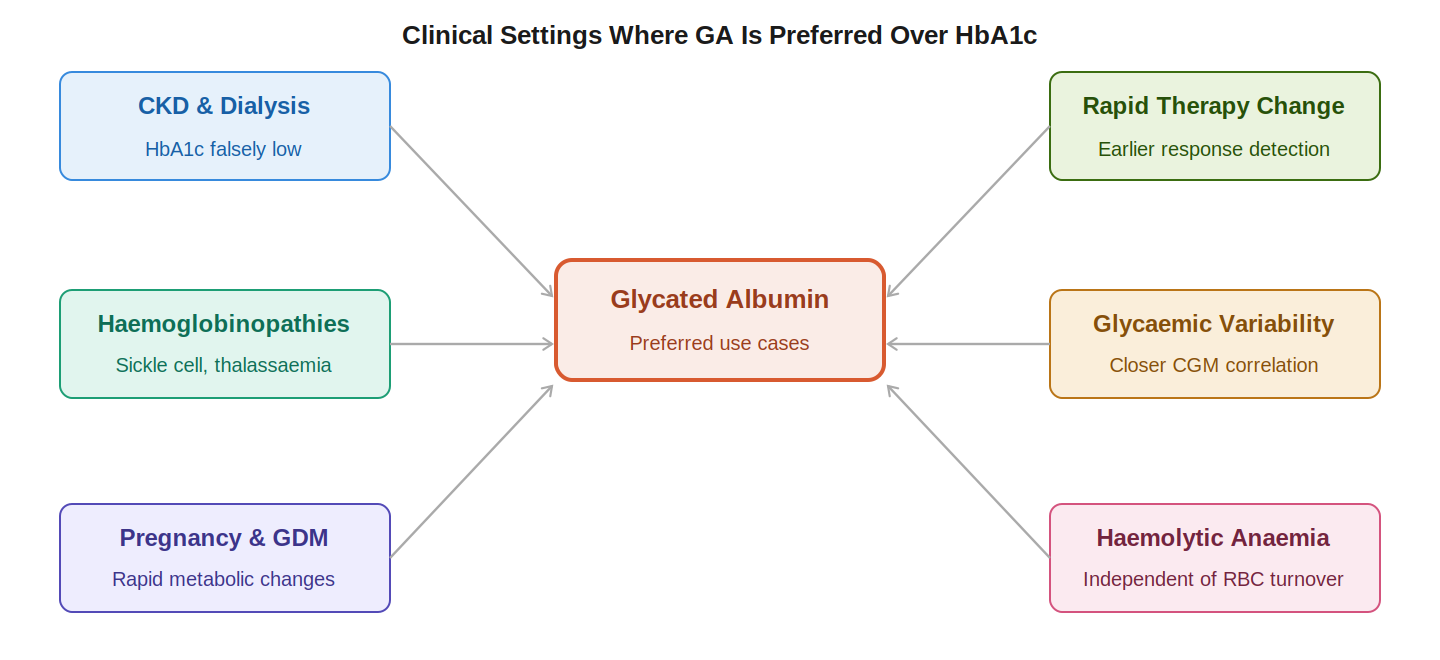
Growing evidence suggests that GA may have particular clinical utility in patients with chronic kidney disease, pregnancy, haemoglobinopathies, anaemia, and other conditions where HbA1c measurements may be unreliable. However, several challenges continue to limit its widespread adoption, including the influence of disorders affecting albumin metabolism, lack of universal assay standardization, and the absence of globally accepted diagnostic and therapeutic cut-off values [18-22].
Given the expanding interest in alternative biomarkers of glycaemic control, a comprehensive evaluation of the comparative roles of GA and HbA1c is warranted. This narrative review examines the biological basis, clinical applications, strengths, and limitations of glycated albumin and glycated haemoglobin in diabetes management, with particular emphasis on special clinical populations and the relevance of these biomarkers in resource-limited settings and the African populations.
Methods
2.1 Study Design
This study was conducted as a narrative review aimed at synthesizing current evidence regarding the role of glycated albumin (GA) and glycated haemoglobin (HbA1c) in the diagnosis, monitoring, and management of diabetes mellitus. The review focused on the biological basis, clinical applications, comparative performance, advantages, limitations, and future perspectives of these biomarkers in diverse clinical settings.
2.2 Literature Search Strategy
A comprehensive literature search was performed using electronic databases including PubMed/MEDLINE, Scopus, Web of Science, and Google Scholar. Relevant publications available up to March 2026 were considered for inclusion.
The search strategy combined Medical Subject Headings (MeSH) terms and free-text keywords related to glycated albumin and glycated haemoglobin. The main search terms included: “glycated albumin,” “glycated haemoglobin,” “HbA1c,” “glycemic control” OR “glycaemic control” “diabetes mellitus,” “chronic kidney disease,” “haemoglobinopathies,” “pregnancy,” “gestational diabetes,” “glycaemic variability,” “postprandial hyperglycaemia,” “diabetes complications,” “continuous glucose monitoring.”
Boolean operators (AND, OR) were applied to refine search results. In addition, reference lists of selected articles and relevant review papers were manually screened to identify additional studies not retrieved during the electronic search.
2.3 Eligibility Criteria
Studies were considered eligible if they:
-
Evaluated glycated albumin and/or HbA1c in diabetes diagnosis, monitoring, or prognosis.
-
Investigated the clinical utility of glycated albumin in special populations such as patients with chronic kidney disease, haemoglobinopathies, anaemia, pregnancy, or dialysis dependence.
-
Examined relationships between glycated albumin and glycaemic variability, postprandial hyperglycaemia, diabetes-related complications, or continuous glucose monitoring metrics.
-
Were published in peer-reviewed journals.
-
Were written in English.
The review included original research articles, systematic reviews, meta-analyses, clinical guidelines, consensus statements, and landmark studies considered relevant to the topic.
Studies were excluded if they:
-
Were conference abstracts without sufficient methodological detail.
-
Were duplicate publications.
-
Focused on biomarkers unrelated to glycated albumin or HbA1c.
-
Were not available in English.
2.4 Study Selection and Data Extraction
Retrieved articles were screened based on title, abstract, and full-text relevance. Priority was given to high-quality studies, systematic reviews, meta-analyses, international guidelines, and landmark investigations with significant contributions to the understanding of glycated albumin and HbA1c.
Information extracted from eligible studies included:
-
Study design and population, Clinical setting, Biomarker evaluated, Major findings, Advantages and limitations of glycated albumin and HbA1c and Clinical implications for diabetes management.
2.5 Data Synthesis
Given the heterogeneity of study designs, patient populations, assay methodologies, and reported outcomes, a quantitative meta-analysis was not performed. Instead, findings were synthesized narratively and organized into thematic sections covering:
-
Biological basis of glycated albumin and HbA1c, Clinical applications, Utility in special populations, Associations with glycaemic variability and diabetes complications, Limitations and challenges, Future research priorities.
2.6 Scope and Context of the Review
Particular emphasis was placed on clinical situations where HbA1c measurements may be unreliable, including chronic kidney disease, haemoglobinopathies, anaemia, pregnancy, and conditions affecting erythrocyte lifespan. Special attention was also given to evidence relevant to low- and middle-income countries and African populations, where the prevalence of haemoglobin disorders and other factors affecting HbA1c interpretation may influence the selection of glycaemic biomarkers.
Results
3.1 Biological Basis of Glycated Albumin and Glycated Haemoglobin
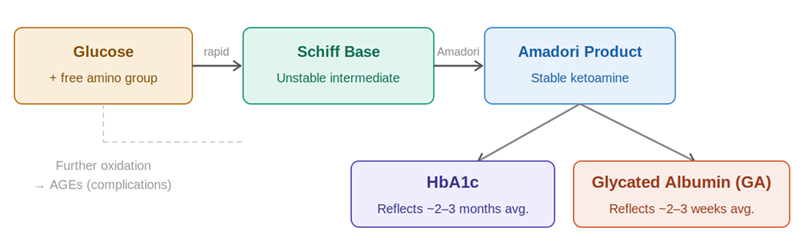
Glycation is a non-enzymatic biochemical process in which reducing sugars, predominantly glucose, react with free amino groups on proteins, lipids, and nucleic acids. This reaction begins with the formation of reversible Schiff bases, which subsequently undergo molecular rearrangement to form more stable Amadori products. Over time, further chemical modifications may lead to the generation of advanced glycation end products (AGEs), which contribute to oxidative stress, inflammation, and the development of diabetes-related complications. The extent of glycation is directly influenced by ambient glucose concentration and the lifespan of the glycated molecule, making glycated proteins useful biomarkers of glycaemic exposure [18,20].
3.1.1 Glycated Haemoglobin (HbA1c)
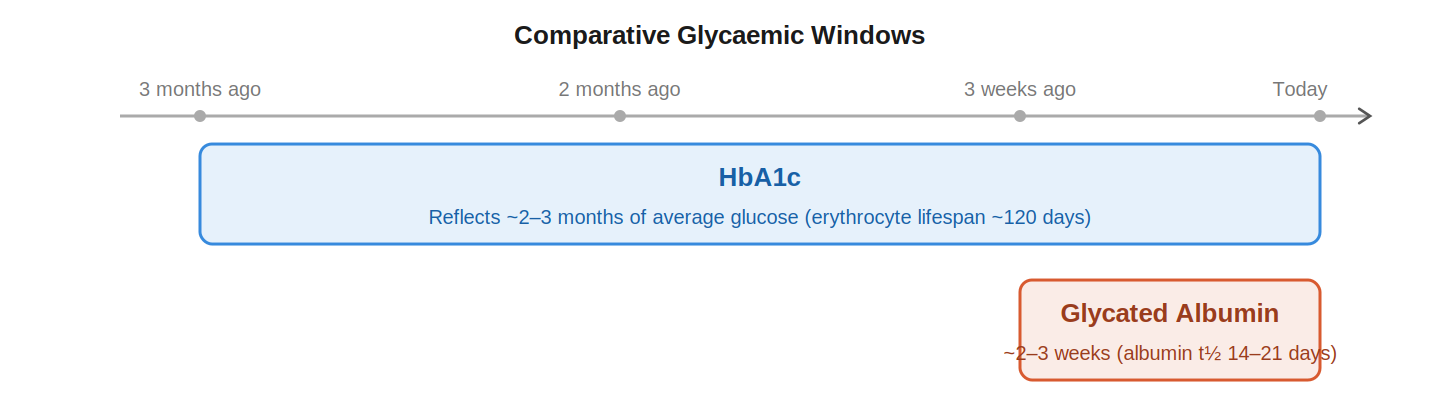
HbA1c is formed through the irreversible non-enzymatic attachment of glucose to the N-terminal valine residue of the β-chain of haemoglobin A within circulating erythrocytes. Because red blood cells have an average lifespan of approximately 120 days, HbA1c reflects mean blood glucose concentrations over the preceding 8–12 weeks, with greater weighting toward more recent glycaemic exposure.
The clinical utility of HbA1c derives from its strong correlation with long-term glycaemic control and its established association with the risk of microvascular and macrovascular complications. Consequently, HbA1c has become the standard biomarker for diabetes diagnosis and monitoring and is incorporated into major international clinical guidelines [4,20].
Despite these advantages, HbA1c measurement is influenced by factors unrelated to glycaemia. Conditions that alter erythrocyte survival, including haemolytic anaemia, acute blood loss, recent blood transfusion, erythropoietin therapy, and chronic kidney disease, may result in falsely low HbA1c values. Conversely, prolonged erythrocyte survival, as may occur in iron deficiency anaemia, can produce falsely elevated values. In addition, haemoglobin variants such as sickle haemoglobin (HbS), haemoglobin C (HbC), and other structural abnormalities may interfere with certain analytical methods and affect result interpretation. These limitations are particularly relevant in populations where haemoglobinopathies and anaemia are common [4,20].
3.1.2 Glycated Albumin (GA)
Glycated albumin is produced by the non-enzymatic glycation of circulating serum albumin, the most abundant plasma protein. Albumin possesses multiple lysine residues that are susceptible to glycation, making it highly responsive to fluctuations in plasma glucose concentration. Because albumin has a shorter biological half-life of approximately 14–21 days, GA reflects average glycaemic exposure over the preceding 2–4 weeks [15,18].
The shorter monitoring window provides several clinical advantages. GA responds more rapidly than HbA1c to changes in glycaemic status and may therefore be useful for assessing treatment response, medication adjustments, and short-term changes in glucose control. Furthermore, because GA formation is independent of red blood cell lifespan, its measurement is unaffected by most haematological disorders that compromise the reliability of HbA1c. This characteristic has generated considerable interest in its use among patients with chronic kidney disease, haemoglobinopathies, anaemia, and pregnancy [18,19].
However, unlike HbA1c, GA may be influenced by conditions that alter albumin metabolism or turnover. Reduced albumin synthesis, increased protein loss, altered catabolism, or changes in albumin distribution can affect GA concentrations independently of glycaemic status. Consequently, liver disease, nephrotic syndrome, thyroid disorders, severe malnutrition, and protein-losing enteropathies may limit the accuracy of GA measurements and should be considered when interpreting results [17,19].
3.2 Biological and Clinical Differences Between HbA1c and GA
Although both HbA1c and GA are products of non-enzymatic glycation, they differ substantially in their biological characteristics and clinical applications. HbA1c reflects long-term glycaemic exposure and remains the most extensively validated marker for predicting diabetes-related complications. In contrast, GA provides a shorter-term assessment of glycaemic control and may better capture rapid changes in glucose levels, postprandial hyperglycaemia, and glycaemic variability [21-22].
These biological differences explain why the two biomarkers should be viewed as complementary rather than competing measures of glycaemic control. HbA1c remains the preferred marker for long-term monitoring in most patients, whereas GA may provide additional clinical information in situations where HbA1c is unreliable or when short-term assessment of glycaemic control is required. Understanding the strengths and limitations of each biomarker is therefore essential for their appropriate application in clinical practice [21-22].
3.3 Clinical Applications of Glycated Albumin in Diabetes Management
The growing interest in glycated albumin (GA) as a biomarker of glycaemic control stems from its ability to reflect short-term glucose exposure and its relative independence from factors affecting red blood cell turnover. Although glycated haemoglobin (HbA1c) remains the cornerstone of diabetes monitoring, accumulating evidence suggests that GA may provide additional clinically relevant information in specific patient populations and clinical situations. The following sections highlight the major applications of GA in contemporary diabetes management [20].
3.3.1 Assessment of Short-Term Glycaemic Control
One of the principal advantages of GA is its ability to reflect average glycaemic status over the preceding 2–4 weeks, corresponding to the biological half-life of serum albumin. In contrast, HbA1c reflects glycaemic exposure over approximately 8–12 weeks. This shorter assessment window allows GA to respond more rapidly to changes in glucose control and makes it particularly useful for evaluating early responses to therapeutic interventions [2,4].
In clinical practice, GA may assist clinicians in monitoring the effectiveness of newly initiated glucose-lowering therapies, assessing adherence to treatment, and evaluating the impact of lifestyle modifications before changes become apparent in HbA1c levels. Consequently, GA can provide more timely feedback for treatment adjustment and patient counselling [25].
3.3.2 Detection of Glycaemic Variability and Postprandial Hyperglycaemia
Emerging evidence suggests that GA may correlate more closely with glycaemic variability and postprandial glucose excursions than HbA1c. While HbA1c provides an estimate of average glucose exposure, it does not adequately capture fluctuations in blood glucose levels or episodes of transient hyperglycaemia. Postprandial hyperglycaemia and glycaemic variability have been increasingly recognized as contributors to oxidative stress, endothelial dysfunction, and vascular complications in diabetes. Several studies have reported stronger associations between GA and continuous glucose monitoring (CGM)-derived measures of glycaemic variability compared with HbA1c. As a result, GA may provide complementary information in patients whose HbA1c [25-26]. Values appear satisfactory despite significant glucose fluctuations. Nevertheless, evidence remains heterogeneous, and further studies are needed to establish standardized clinical thresholds for interpreting GA in relation to glycaemic variability [27-29,31].
3.3.3 Monitoring Glycaemic Control in Chronic Kidney Disease
Patients with chronic kidney disease (CKD) represent one of the most important clinical populations in which GA may offer advantages over HbA1c. In CKD, factors such as reduced erythrocyte lifespan, erythropoietin therapy, iron supplementation, and frequent blood transfusions may affect HbA1c values independently of glycaemic status [40-42].
Several studies have demonstrated that GA may more accurately reflect glycaemic control in patients with advanced CKD and those receiving dialysis. In these settings, GA often shows stronger correlations with directly measured glucose levels than HbA1c. Consequently, GA has been proposed as a useful adjunctive marker for glycaemic monitoring in renal disease [43-44].
However, interpretation should be undertaken cautiously because severe proteinuria, hypoalbuminaemia, inflammation, and altered albumin turnover may influence GA concentrations. Therefore, neither biomarker is entirely free from limitations in patients with CKD [21].
3.3.4 Use in Haemoglobinopathies and Anaemia
The reliability of HbA1c is compromised in several haematological disorders, particularly conditions associated with altered erythrocyte survival or abnormal haemoglobin structure. This issue is especially relevant in regions where sickle cell disease and other haemoglobin variants are prevalent [32].
Because GA is independent of haemoglobin metabolism and red blood cell lifespan, it may provide a more reliable estimate of glycaemic control in individuals with haemoglobinopathies, haemolytic anaemia, and other disorders affecting erythrocyte kinetics. This characteristic is of particular significance in many African populations, where haemoglobin disorders remain common and may limit the diagnostic and monitoring utility of HbA1c [21].
Although current evidence supports the usefulness of GA in these settings, larger population-based studies are needed to establish appropriate reference intervals and clinical decision limits.
3.3.5 Application During Pregnancy
Pregnancy presents unique challenges for glycaemic assessment because physiological changes in erythrocyte turnover and iron metabolism may affect HbA1c interpretation. Furthermore, the rapid changes in glycaemic status that occur during pregnancy may not be adequately captured by a marker reflecting glycaemic exposure over several months [23].
Because GA reflects shorter-term glycaemic control, it has been investigated as a useful biomarker in gestational diabetes mellitus and pre-existing diabetes during pregnancy. Several studies suggest that GA may be more responsive to changes in glycaemic status during pregnancy and may complement HbA1c in monitoring maternal glucose control [24].
Despite these advantages, physiological alterations in albumin metabolism during pregnancy may influence GA concentrations, and further studies are required to define optimal pregnancy-specific reference values and clinical targets.
3.3.6 Potential Role in Predicting Diabetes-Related Complications
Beyond its role in glycaemic monitoring, GA has been investigated as a predictor of diabetes-related complications. Elevated GA levels have been associated with diabetic retinopathy, nephropathy, cardiovascular disease, and other adverse outcomes in several observational studies [33-37]
The biological rationale for these associations may relate to the ability of GA to capture short-term hyperglycaemic excursions and glycaemic variability, which contribute to oxidative stress and vascular injury. However, most available evidence is observational, and the extent to which GA independently predicts clinical outcomes remains an area of ongoing research [38-39]
3.3.7 Current Clinical Position of Glycated Albumin
Despite its promising applications, GA has not yet replaced HbA1c in routine diabetes care. HbA1c remains the most extensively validated biomarker for long-term glycaemic monitoring and continues to be recommended by major clinical guidelines. At present, GA should be viewed primarily as a complementary biomarker that provides additional clinical information in selected circumstances, particularly when HbA1c results may be unreliable or when short-term assessment of glycaemic control is required [45-47].
The integration of GA into routine clinical practice will depend on further standardization of assays, establishment of universally accepted diagnostic and therapeutic thresholds, and validation across diverse populations and healthcare settings [51].
3.4 Limitations and Challenges of Glycated Albumin
Despite its growing clinical utility and several advantages over glycated haemoglobin (HbA1c) in selected patient populations, glycated albumin (GA) is not without limitations. A number of biological, analytical, jand clinical factors can influence GA concentrations independently of glycaemic status, thereby affecting its interpretation and limiting its widespread adoption in routine clinical practice [17].
3.4.1 Influence of Albumin Metabolism and Turnover
Unlike HbA1c, which is influenced primarily by red blood cell lifespan, GA is affected by factors that alter albumin synthesis, distribution, degradation, and clearance. Conditions associated with abnormal albumin metabolism may therefore result in GA values that do not accurately reflect glycaemic control. For example, liver disease may reduce albumin synthesis and alter GA concentrations, while nephrotic syndrome and other protein-losing conditions can accelerate albumin turnover and affect the degree of albumin glycation. Similarly, severe malnutrition, protein-losing enteropathies, and chronic inflammatory states may influence serum albumin dynamics and compromise the reliability of GA measurements. These limitations are particularly important in regions where chronic liver disease, malnutrition, and infectious diseases remain prevalent [18,21].
3.4.2 Effects of Thyroid Dysfunction and Other Endocrine Disorders
Thyroid disorders may influence GA independently of glucose metabolism through their effects on albumin turnover. Hyperthyroidism is generally associated with accelerated albumin metabolism, which may lower GA values, whereas hypothyroidism may prolong albumin survival and result in relatively elevated GA concentrations. Consequently, interpretation of GA should be undertaken cautiously in patients with thyroid disease and other endocrine disorders that alter protein metabolism.
3.4.3 Lack of Universal Standardization
One of the most significant barriers to the widespread clinical use of GA is the absence of universally accepted assay standardization. Unlike HbA1c, which benefits from international harmonization programs and well-established reference systems, GA measurement lacks a globally standardized analytical framework. Differences in assay methodologies, calibration procedures, and reporting formats may contribute to variability between laboratories and studies. This lack of standardization complicates the comparison of results across populations and healthcare settings and limits the development of universally applicable diagnostic and therapeutic targets [19].
Greater international collaboration is required to establish standardized analytical procedures and reference materials that would facilitate broader clinical implementation of GA.
3.4.4 Absence of Universally Accepted Diagnostic and Therapeutic Cut-Off Values
Although numerous studies have proposed diagnostic and monitoring thresholds for GA, there is currently no universally accepted cut-off value for the diagnosis of diabetes mellitus or assessment of glycaemic control. Reported thresholds vary across studies due to differences in ethnicity, population characteristics, assay methods, and study design. This variability presents a major challenge for clinicians seeking to interpret GA results in routine practice. Establishing standardized reference intervals and clinically validated decision limits remains an important research priority [17,19].
3.4.5 Limited Representation in Clinical Guidelines
Despite accumulating evidence supporting its clinical utility, GA has not yet been incorporated into most major international diabetes guidelines as a primary biomarker for diagnosis or routine monitoring. HbA1c remains the preferred and most extensively validated marker because of its strong evidence base and established relationship with long-term diabetes outcomes. The limited guideline endorsement of GA reflects the need for additional large-scale prospective studies demonstrating its clinical effectiveness, prognostic value, and impact on patient outcomes across diverse populations [19].
3.4.6 Population-Specific Variability
Emerging evidence suggests that demographic and biological factors such as age, ethnicity, body composition, and underlying comorbidities may influence GA concentrations. These variations may affect the interpretation of results and raise concerns regarding the universal applicability of reference intervals derived from specific populations [51-52].
The issue is particularly relevant in Africa, where data on GA remain limited. Most available evidence originates from Asian, European, and North American populations, and relatively few studies have evaluated the performance of GA in African populations. Consequently, population-specific reference intervals and validation studies are needed before widespread implementation can be recommended across the continent [17,55-56].
3.4.7 Economic and Accessibility Considerations
Although GA testing is increasingly available, access remains limited in many low- and middle-income countries. Compared with HbA1c, which has become widely integrated into diabetes care pathways, GA assays may not be routinely available in many clinical laboratories. Additional challenges include laboratory infrastructure requirements, assay costs, and limited familiarity among healthcare providers. These factors may restrict the adoption of GA in resource-constrained settings despite its Future Challenges and Opportunities [17].
3.4.8 Future Challenges and Opportunities
The future role of GA will depend on addressing several unresolved challenges, including assay standardization, establishment of universally accepted clinical thresholds, expansion of population-specific reference data, and integration into clinical practice guidelines. Further research is also needed to clarify the relationship between GA and long-term diabetes outcomes, evaluate its cost-effectiveness, and determine its role alongside emerging technologies such as continuous glucose monitoring. While current evidence supports the use of GA as a valuable adjunctive biomarker, its limitations highlight the importance of interpreting results within the broader clinical context rather than as a standalone measure of glycaemic control [19,51-52].
| Parameter | Glycated Albumin (GA) | Glycated Haemoglobin (HbA1c) |
| Biological substrate | Serum albumin (lysine residues) | Haemoglobin within erythrocytes |
| Half life of parent protein | ~14–21 days | ~120 days (erythrocyte lifespan) |
| Glycaemic window reflected | ~2–4 weeks | ~2–3 months |
| Mechanism of formation | Non-enzymatic glycation of serum albumin | Non-enzymatic glycation of haemoglobin β-chain |
| Fasting required | No | No |
| Assay methods | HPLC, immunoassay, enzymatic, capillary electrophoresis | Enzymatic assay, HPLC, affinity chromatography |
| Assay standardisation | Yes (NGSP, IFCC) | Limited (no universal standard yet) |
| Affected by anaemia / haemoglobinopathy | No | Yes |
| Affected by CKD / dialysis | Less affected; preferred in dialysis | Yes (may be falsely low) |
| Affected by altered albumin metabolism | Yes (liver disease, nephrotic syndrome) | No |
| Reflects postprandial glucose | Better correlation | Poorly |
| Reflects glycaemic variability | Stronger correlation | Limited |
| Guideline endorsement | Limited and evolving | ADA, WHO, IDF (gold standard) |
| Availability in routine clinical practice | Limited in many regions | Widely available |
| Use in pregnancy | Promising (more responsive) | Limited (altered RBC turnover) |
| Clinical Category | HbA1c (%) | Glycated Albumin (%) | Remarks |
| Normal glycaemia | <5.7 | <14–16 | Values vary across populations and assays |
| Prediabetes | 5.7–6.4 | 14–16.5 | No universally accepted GA threshold |
| Diabetes diagnosis | ≥6.5 | 16.5–18.0 | Proposed range from published studies |
| Good glycaemic control | <7.0 | <18 | Frequently reported target |
| Suboptimal control | 7.0–8.0 | 18–22 | Increasing hyperglycaemia |
| Poor control | >8.0 | >22 | Associated with inadequate control |
| Very poor control | >9.0 | >25 | Often observed in uncontrolled diabetes |
| High complication risk | >7.0 | >20–22 | Population-specific variation |
| Monitoring Treatment response | 2–3 months | 2–4 weeks | GA responds more rapidly |
Discussion
This review highlights the evolving role of glycated albumin (GA) as a complementary biomarker in diabetes management. Although glycated haemoglobin (HbA1c) is currently the most widely accepted marker of long-term glycaemic control, accumulating evidence suggests that GA provides additional clinically relevant information, particularly in patient populations where HbA1c measurements may be unreliable or falls short of utility [17,19].
The widespread adoption of HbA1c is supported by decades of evidence demonstrating its association with diabetes-related complications and its utility in both diagnosis and long-term monitoring. Its integration into major international clinical guidelines reflects its strong analytical standardization, extensive validation, and established prognostic value. However, HbA1c is not without limitations. Conditions that alter erythrocyte lifespan or haemoglobin structure can significantly affect HbA1c values independently of glycaemic status, potentially leading to inaccurate clinical interpretation. These limitations are especially relevant in populations with a high prevalence of haemoglobinopathies, anaemia, chronic kidney disease, and other disorders affecting red blood cell turnover [2-4].
In contrast, GA offers a distinct biological advantage because it reflects glycaemic exposure over a shorter period of approximately 2–4 weeks and is independent of erythrocyte metabolism. This shorter monitoring window enables more rapid assessment of changes in glycaemic control and may facilitate earlier evaluation of treatment response. Furthermore, GA appears to correlate more closely with postprandial hyperglycaemia and glycaemic variability, both of which have emerged as important contributors to vascular complications in diabetes [11,14,17].
One of the most promising applications of GA is in patients with chronic kidney disease (CKD). Several studies have demonstrated that HbA1c may underestimate glycaemic control in advanced CKD because of altered erythrocyte survival, erythropoietin therapy, and frequent blood transfusions. In such settings, GA often exhibits stronger correlations with measured glucose levels and may provide a more accurate representation of glycaemic status. Nevertheless, the interpretation of GA in CKD should also be approached with caution because severe proteinuria, hypoalbuminaemia, and altered albumin turnover may influence results independently of glycaemia [40,42-43].
Similarly, the utility of GA in haemoglobinopathies and pregnancy has generated considerable interest. In regions such as sub-Saharan Africa, where sickle cell disease and other haemoglobin variants remain prevalent, GA may overcome some of the diagnostic and monitoring challenges associated with HbA1c. Likewise, during pregnancy, the shorter assessment period offered by GA may be advantageous for monitoring rapidly changing glycaemic status. However, physiological alterations in albumin metabolism during pregnancy may also affect GA concentrations, emphasizing the need for population-specific validation studies [17,23, 56].
Despite these advantages, the current evidence does not support replacing HbA1c with GA as the primary biomarker for diabetes monitoring. Several important challenges continue to limit the broader implementation of GA. These include the absence of universally accepted diagnostic and therapeutic thresholds, limited assay standardization, variability across populations, and susceptibility to conditions affecting albumin metabolism. Compared with HbA1c, which benefits from well-established international harmonization programs, GA lacks a comparable global framework for standardization and quality assurance [52-53].
Another important observation emerging from this review is the limited availability of data from African populations. Most studies evaluating GA have been conducted in Asia, Europe, and North America. Consequently, the applicability of reported reference intervals and diagnostic cut-offs to African populations remains uncertain. Given the unique epidemiological profile of many African countries, including high burdens of haemoglobinopathies, chronic kidney disease, infectious diseases, and nutritional disorders, further research is required to validate the clinical performance of GA in these settings [17,51].
The future role of GA is likely to be as part of a multimarker approach to glycaemic assessment rather than as a direct replacement for HbA1c. Combining HbA1c, GA, self-monitoring of blood glucose, and continuous glucose monitoring may provide a more comprehensive understanding of glycaemic status than any single biomarker alone. Advances in precision medicine and digital health technologies may further enhance the integration of these complementary measures into individualized diabetes care [53-54].
Overall, current evidence supports the use of GA as a valuable adjunctive biomarker in selected clinical situations, particularly when HbA1c interpretation is compromised or when short-term assessment of glycaemic control is required. However, further standardization, validation, and outcome-based research are necessary before GA can be more broadly incorporated into routine clinical practice and international diabetes management guidelines [54-56].
Future Directions and Research Priorities
The growing body of evidence supporting the clinical utility of glycated albumin (GA) has generated considerable interest in its role as a complementary biomarker of glycaemic control. However, several scientific, analytical, and clinical questions remain unresolved. Addressing these gaps will be essential for defining the future position of GA in diabetes diagnosis and management [51-52].
Standardization of Assays and Harmonization of Reporting
One of the most pressing priorities is the establishment of internationally standardized methods for GA measurement. Unlike glycated haemoglobin (HbA1c), which benefits from globally harmonized analytical systems and well-defined reporting standards, GA assays remain heterogeneous across laboratories and manufacturers. Variations in assay methodology, calibration procedures, and reporting formats continue to limit comparability between studies and clinical settings. Future efforts should focus on developing internationally accepted reference materials, standardization protocols, and quality assurance frameworks that will facilitate broader clinical adoption and improve the reliability of GA measurements worldwide [4,16,19].
Establishment of Diagnostic and Therapeutic Thresholds
Although numerous studies have proposed GA cut-off values for the diagnosis and monitoring of diabetes mellitus, there is currently no universal consensus regarding optimal diagnostic thresholds or treatment targets. Differences in ethnicity, population characteristics, assay methods, and study design have contributed to considerable variability in reported reference ranges [45-48].
Large multicentre studies involving diverse populations are needed to establish clinically validated diagnostic cut-offs, therapeutic targets, and population-specific reference intervals. Such efforts would improve the interpretability of GA results and enhance their utility in routine clinical practice.
Integration with Continuous Glucose Monitoring
The increasing availability of continuous glucose monitoring (CGM) systems has transformed diabetes management by providing detailed information on glucose patterns, time-in-range, and glycaemic variability. Future research should further explore the relationship between GA and CGM-derived metrics to determine whether GA can serve as a practical surrogate marker in settings where CGM remains inaccessible or unaffordable [53-54].
A better understanding of how GA correlates with glycaemic variability, postprandial hyperglycaemia, and time-in-range may strengthen its clinical relevance and support its integration into modern diabetes care.
Longitudinal Studies and Clinical Outcomes Research
Most existing evidence regarding GA is derived from cross-sectional and observational studies. Although associations between elevated GA levels and diabetes-related complications have been reported, further prospective studies are needed to determine whether GA independently predicts long-term clinical outcomes [17].
Future research should evaluate the relationship between GA and major diabetes complications, including diabetic retinopathy, nephropathy, cardiovascular disease, and mortality. Establishing robust prognostic value would provide stronger evidence for the incorporation of GA into clinical guidelines and risk assessment models [53].
Precision Medicine and Multi-Biomarker Approaches
The future of diabetes management is increasingly moving toward individualized care. Rather than viewing HbA1c and GA as competing biomarkers, future research should investigate how they can be used together to provide a more comprehensive assessment of glycaemic status. Combining HbA1c, GA, continuous glucose monitoring metrics, and other emerging biomarkers may improve risk stratification and support more personalized therapeutic decision-making. Advances in artificial intelligence and predictive analytics may further enhance the integration of these complementary data sources [54].
Research Priorities in Africa and Other Resource-Limited Settings
A major gap in the current literature is the limited availability of data from African populations. Most studies evaluating GA have been conducted in Asia, Europe, and North America, with relatively few investigations undertaken in sub-Saharan Africa. This represents a significant limitation because factors such as haemoglobinopathies, anaemia, chronic kidney disease, infectious diseases, nutritional status, and genetic diversity may influence the performance of glycaemic biomarkers [51,55-56].
Future African research should prioritize:
-
Establishment of population-specific reference intervals for GA.
-
Validation of GA in patients with sickle cell disease and other haemoglobinopathies.
-
Evaluation of GA performance in chronic kidney disease and pregnancy.
-
Assessment of the cost-effectiveness and feasibility of GA testing in routine clinical practice.
-
Development of multicentre studies involving diverse African populations.
Such research will be critical for determining the applicability of GA in regions where HbA1c interpretation may be particularly challenging.
Translation into Clinical Practice
For GA to achieve broader clinical acceptance, future studies should move beyond analytical performance and focus on implementation science. Research should evaluate whether incorporating GA into routine diabetes care improves clinical decision-making, treatment outcomes, patient satisfaction, and healthcare costs.
In addition, stronger evidence from randomized and prospective studies may facilitate the inclusion of GA in international diabetes management guidelines and contribute to the development of evidence-based recommendations for its use in specific clinical populations.
Conclusion
HbA1c remains the cornerstone biomarker for glycaemic monitoring and diabetes diagnosis, supported by robust evidence and global standardisation. However, its limitations in conditions affecting erythrocyte lifespan including CKD, haemoglobinopathies, anaemia, and recent blood transfusion underscore the clinical need for complementary biomarkers. Glycated albumin, reflecting a shorter glycaemic window of two to three weeks, offers clinically valuable information in these settings and demonstrates superior performance in monitoring short-term glycaemic control, glycaemic variability, and response to therapeutic changes [7,17].
GA and HbA1c are best viewed as complementary biomarkers, each providing distinct and clinically relevant information. Their combined use has the potential to improve the comprehensiveness and accuracy of glycaemic assessment, particularly in populations where HbA1c alone is unreliable. The growing evidence base supporting GA, including emerging data from African populations, highlights the importance of further research to establish standardised reference intervals, validate GA-based clinical algorithms, and ultimately integrate GA into evidence-based diabetes management guidelines. Greater clinician awareness and investment in assay standardisation will be essential steps toward realising the full clinical potential of glycated albumin in diabetes care [19,52,54].
Declarations
Ethics Approval
Not applicable
Data availability
All data are available from the corresponding author on reasonable request.
Conflict of Interest
Authors declare no conflict of interest exist
Contributors
Solomon Mercy L.; Department of Chemical Pathologgy, Jos University Teaching Hospital, Jos, Nigeria.
Onubi Jeremiah; Department of Chemical Pathology, Bingham University, Karu, Nigeria
Affi Ayuba; Department of Chemical Pathology, Jos University Teaching Hospital, Jos, Nigeria.
Isichei Christian; Department of Chemical Pathology, Jos University Teaching Hospital, Jos, Nigeria.
Funding Statement
None
Acknowledgements
None