1. Introduction
The health workforce is the backbone of any health system, transforming resources such as medicines, technologies, and financing into effective health services. The World Health Organization (WHO) recognizes health workers as essential to achieving health system goals [1]. However, a persistent global shortage of health workers continues to challenge healthcare delivery, particularly in Africa [2]. Nigeria, Africa’s most populous country with over 230 million people, faces a severe workforce crisis amid a growing burden of communicable diseases, non-communicable diseases, maternal and child health conditions, and emerging infectious threats [3,4]. Despite these demands, the country’s health system remains critically understaffed and continues to lose personnel through emigration and retirement [5]. Health worker migration, commonly known as brain drain, has intensified in recent years. Between 2023 and 2024, health worker emigration reportedly increased by 200%, with over 4,000 doctors and dentists leaving Nigeria in 2024 alone, primarily for the United Kingdom, Canada, the United States, and Australia [6-8]. At the same time, a large proportion of experienced health professionals are approaching retirement age, creating a dual challenge of workforce depletion through migration and retirement attrition [9]. These workforce losses have significant implications for health security and institutional resilience. Effective disease surveillance, outbreak response, and compliance with the International Health Regulations (IHR 2005) depend on an adequate and skilled workforce across all levels of care [10-12]. Similarly, the loss of experienced personnel weakens institutional memory, leadership capacity, and the ability of health systems to withstand and adapt to shocks, as highlighted during the COVID-19 pandemic [13,14]. In response, the Federal Government of Nigeria approved in February 2025 an extension of the retirement age for clinically skilled health workers from 60 to 65 years, with consultants eligible to serve until age 70 [15]. The policy aims to retain expertise, support knowledge transfer, and reduce the immediate effects of workforce shortages. However, questions remain regarding its long-term effectiveness and sustainability [16].
This paper examines workforce attrition and retirement risks within Nigeria’s public health system, assessing their implications for health security and institutional resilience. Guided by the WHO health system building blocks framework [1] and Kruk et al.’s resilient health systems model [13], the study analyzes workforce trends, policy responses, and strategic options for strengthening Nigeria’s health workforce and improving system resilience.
2. Literature Review
2.1 The Global Health Workforce Crisis
The global shortage of health workers remains a major obstacle to achieving Universal Health Coverage (UHC) and the Sustainable Development Goals. WHO estimates a deficit of about 10 million health workers, with the greatest shortages concentrated in low- and lower-middle-income countries, especially in Africa [1]. Although the WHO Workforce 2030 Strategy seeks to improve the availability and equitable distribution of health workers, progress has been uneven [2,17]. Africa carries approximately 24% of the global disease burden but has only 3% of the world’s health workforce [2]. The regional density of physicians, nurses, and midwives remains far below the recommended threshold for UHC [18]. Nigeria’s workforce density is similarly inadequate, and persistent urban-rural disparities further limit equitable access to healthcare [19-21].
2.2 Health Worker Migration and Brain Drain
Migration of health professionals from low- and middle-income countries to wealthier nations is a major contributor to workforce shortages [6]. Push factors include poor remuneration, inadequate working conditions, limited career opportunities, and weak health system governance, while pull factors include better salaries, working environments, and professional development opportunities abroad [25-27]. Nigeria has experienced a significant increase in health worker emigration, particularly among doctors and specialists [9,16]. This trend accelerated after the COVID-19 pandemic due to heightened global demand for healthcare workers [29]. Beyond staffing shortages, brain drain weakens medical education, reduces specialist capacity, and results in the loss of public investment in training health professionals [30-32].
2.3 Retirement Risks in the Health Workforce
An aging health workforce presents an additional challenge to workforce sustainability [33]. Retiring professionals often take with them critical institutional knowledge, leadership skills, and mentorship capacity that are difficult to replace [34]. Traditionally, Nigerian health workers retired at age 60 [35]. In response to workforce shortages, the government extended the retirement age in 2025 to 65 years for clinically skilled health workers and 70 years for consultants [15]. While such policies can help retain expertise and support knowledge transfer, their effectiveness depends on complementary measures such as mentorship programs, workforce planning, and accelerated training of younger professionals [37,38].
2.4 Health Security and Workforce Implications
Health security depends heavily on a skilled and sufficient health workforce. The International Health Regulations (IHR 2005) require countries to maintain capacities for surveillance, reporting, and response to public health threats [39,40]. Workforce shortages have been identified as a major barrier to achieving these capacities in many African countries [41]. Nigeria’s health security system, led by the Nigeria Centre for Disease Control (NCDC), has strengthened disease surveillance and outbreak response. However, shortages in critical fields such as epidemiology, laboratory science, and infectious disease management continue to limit effectiveness [42-44].
2.5 Institutional Resilience in Health Systems
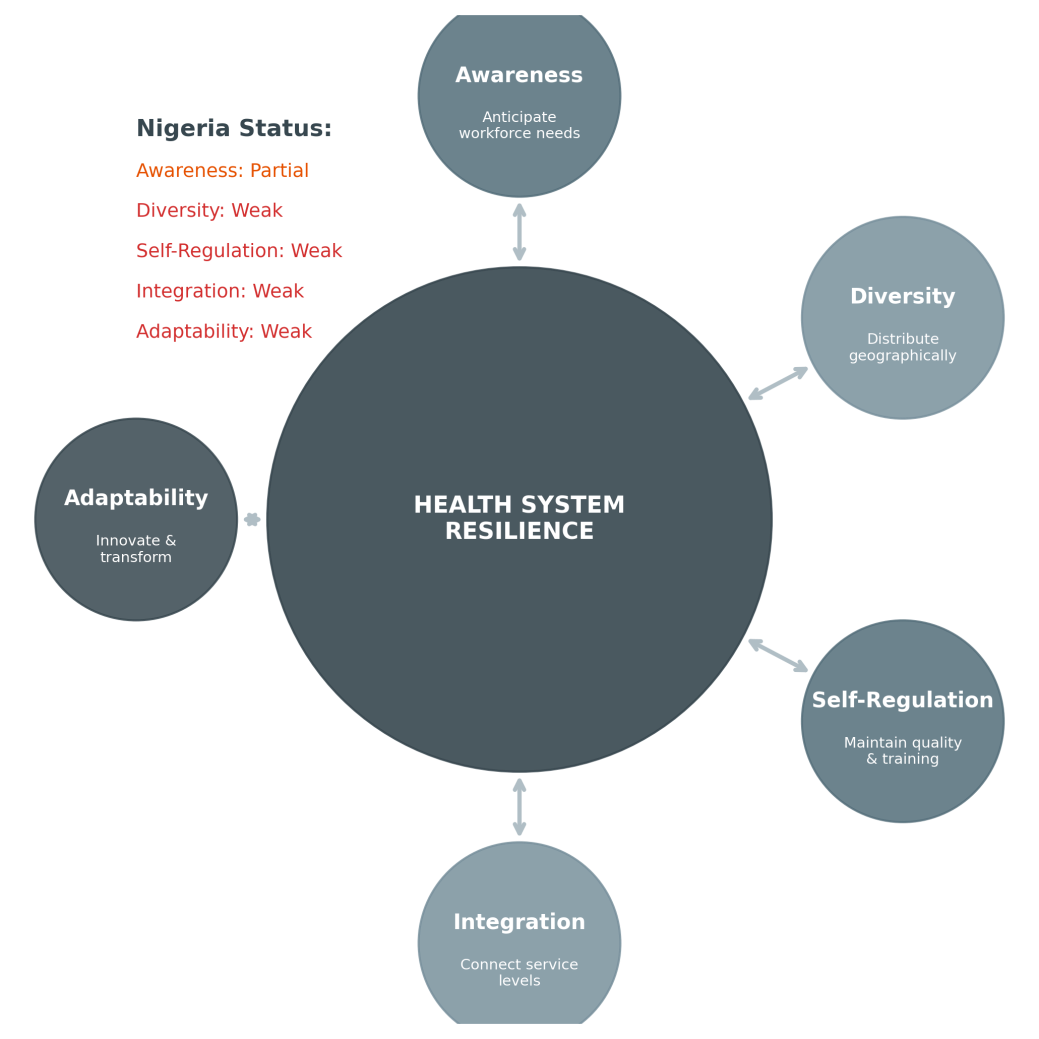
Health system resilience refers to the ability to maintain essential functions during crises and adapt to future challenges [13]. Kruk et al. identify five key dimensions of resilience: awareness, diversity, self-regulation, integration, and adaptability [13]. In Nigeria, workforce attrition undermines all five dimensions. Persistent emigration and retirement reduce institutional memory, leadership capacity, and service delivery coverage. Geographic concentration of health workers in urban areas weakens diversity, while fragmentation across federal, state, and private sectors limits integration [53,61]. The loss of experienced professionals also diminishes adaptability and the ability of the system to learn from past crises [47,62]. Consequently, workforce shortages represent a major threat to health system resilience [48-50].
2.6 Nigeria’s Health System Context
Nigeria’s health system operates through primary, secondary, and tertiary levels of care, supported by both public and private providers [51-53]. Despite recent reforms, health outcomes remain poor, with high maternal and child mortality rates and a substantial burden of communicable and non-communicable diseases [54]. Health financing remains inadequate, with low public expenditure and heavy reliance on out-of-pocket payments [55,56]. Although initiatives such as the Health Sector Renewal Investment Initiative and the Primary Health Care Under One Roof policy prioritize human resources for health, implementation has been constrained by funding limitations, governance challenges, and persistent workforce shortages [57,58].
3. Methodology
3.1 Study Design
This study employed a convergent mixed-methods design that integrates quantitative analysis of health workforce data with qualitative policy analysis to provide a comprehensive assessment of workforce attrition and retirement risks in Nigeria's public health system and their implications for health security and institutional resilience. The mixed-methods approach was selected to capture both the numerical magnitude of workforce attrition and the contextual factors, policy dynamics, and stakeholder perspectives that shape the crisis and potential responses [66].
3.2 Data Sources
Primary quantitative data were sourced from the Federal Ministry of Health and Social Welfare of Nigeria, specifically the Nigeria Health Workforce Profile 2022-2024 and the State of Health of the Nation Report 2024. These official government sources provide data on health worker registration, licensing, geographic distribution, sectoral employment, and migration statistics [7]. Additional data were obtained from professional regulatory bodies including the Medical and Dental Council of Nigeria, the Nursing and Midwifery Council of Nigeria, and the Pharmaceutical Society of Nigeria [9]. International data sources included the World Health Organization's Global Health Workforce Statistics Database, the WHO African Regional Office's State of Health Workforce in the African Region Report (2024), the Organisation for Economic Co-operation and Development (OECD) migration statistics on health professionals, and the International Organization for Migration's Nigeria Migration Health Strategy data [2,8,18]. Health security-related data were drawn from the Global Health Security Index and WHO Joint External Evaluation reports for Nigeria [10,44]. Qualitative data were drawn from policy documents including the National Policy on Health Workforce Migration (2024), the Nigeria Health Sector Strategic Blueprint 2023-2027, and the Primary Health Care Under One Roof policy guidelines [57,58]. Academic literature on health worker migration, health system resilience, and health security provided the theoretical and empirical context for the analysis [13,49,50].
3.3 Analytical Framework
Quantitative analysis involved descriptive statistics on health worker stocks, flows, and distribution; comparative analysis of Nigeria's health workforce density against WHO standards and other African countries; trend analysis of emigration patterns from 2020 to 2024; and projection of workforce availability under different attrition scenarios. Data were analyzed using proportional calculations, compound growth rates, and trend extrapolation methods [67]. Qualitative analysis employed thematic analysis of policy documents and scholarly literature to identify key themes related to workforce attrition drivers, policy responses, and implications for health security and institutional resilience. Kruk et al.'s (2017) five-element resilience framework (awareness, diversity, self-regulation, integration, adaptability) was applied as an evaluative lens to assess Nigeria's institutional capacity to respond to workforce shocks [13]. The WHO health system building blocks model provided a complementary framework for examining cascading effects of workforce attrition across health system components [1].
3.4 Ethical Considerations
This study was based exclusively on publicly available data and published literature. No primary data collection involving human subjects was conducted. All data sources are properly cited and acknowledged. The study adheres to principles of research integrity, transparency, and responsible use of data.
3.5 Limitations
This study has several limitations that should be acknowledged. First, official statistics on health worker migration may undercount the true extent of emigration, as not all emigrating professionals formally notify regulatory bodies of their departure. Second, workforce projections are subject to uncertainty given the rapidly evolving dynamics of health worker migration and potential policy changes. Third, the analysis is constrained by the availability and quality of official data, which may not capture informal sector employment or the full complexity of health worker career trajectories. Fourth, the study does not include primary data collection from health workers themselves, which limits the depth of understanding of individual migration decisions. Despite these limitations, the study provides the most current and comprehensive assessment available of Nigeria's health workforce attrition crisis.
4. Results
4.1 Magnitude of Health Worker Attrition
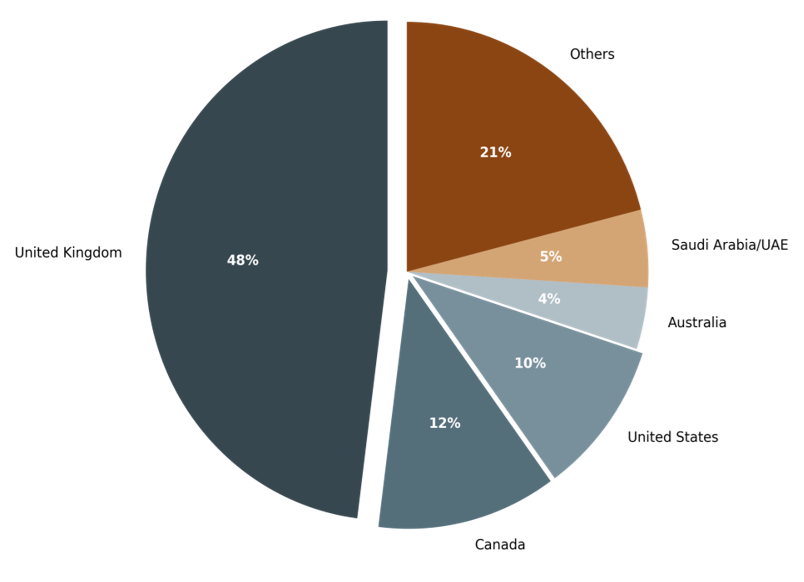
The analysis reveals a health workforce attrition crisis of unprecedented severity in Nigeria, with multiple interconnected dimensions that collectively threaten the fundamental capacity of the public health system. In 2024 alone, 4,193 doctors and dentists formally migrated from Nigeria, representing a 200% increase across all health worker cadres compared to 2023 [7]. The total number of migrating health workers between 2023 and 2024 reached approximately 43,221 across all categories including doctors, dentists, nurses, midwives, pharmacists, and medical laboratory scientists [7]. The United Kingdom received the largest share of emigrating Nigerian doctors and dentists, accounting for approximately 48% (4,627 professionals), followed by Canada with 12% (934), the United States with 10% (561), and Australia with 4% (328) [8]. The dominance of the UK as a destination reflects the active recruitment of Nigerian health workers through the National Health Service's international recruitment programs, the mutual recognition of qualifications between Nigeria and the UK, the English language advantage, and established migration pathways that have been facilitated by prior waves of Nigerian health professional emigration [28].
| Cadre | UK | Canada | USA | Aus/UAE | Other |
|---|---|---|---|---|---|
| Doctors/Dentists | 4,627 | 934 | 561 | 328 | 743 |
| Nurses/Midwives | ~12,000 | ~2,500 | ~8,500 | ~1,000 | ~1,000 |
| Pharmacists | 196 | 765 | 53 | 11 | 11 |
| Lab Scientists | 410 | 6,393 | 1,052 | 3,510 | ~1,000 |
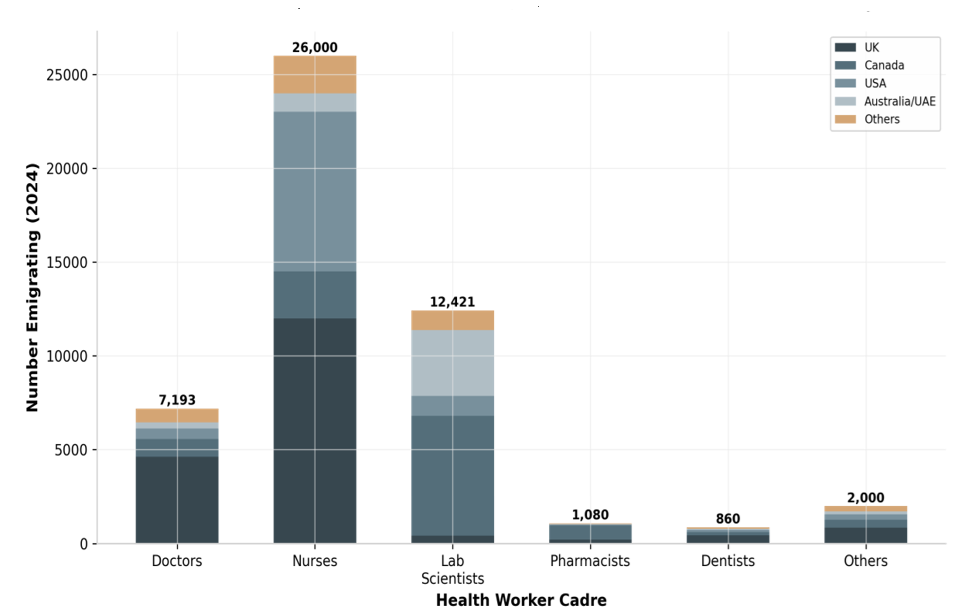
The attrition crisis affects all categories of health workers but demonstrates variation in magnitude and destination patterns across cadres. Nurses and midwives represent the largest group of emigrating professionals, consistent with their position as the largest health worker category in Nigeria [9]. Medical laboratory scientists show particularly high migration to Canada, which has actively recruited this category of professionals through targeted immigration programs [8]. The diversity of destination countries across professional categories suggests that different countries are targeting specific cadres through their immigration policies, with implications for which areas of Nigeria's health system face the most severe shortages.
4.1.1 Economic Cost of Brain Drain
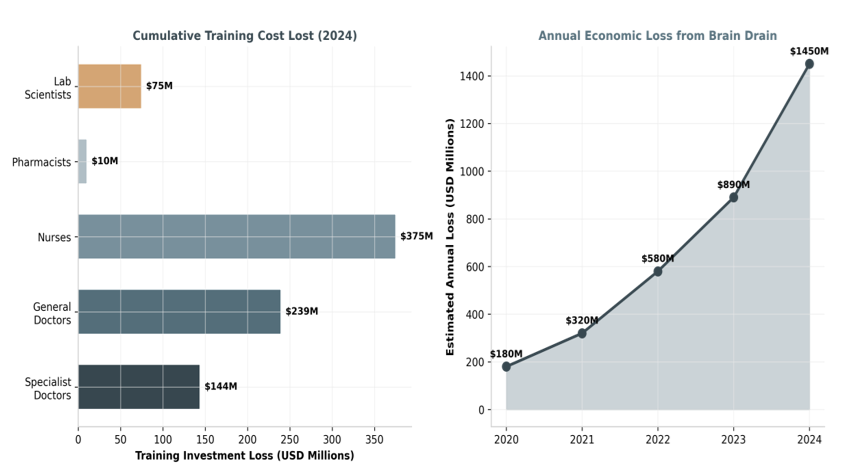
The economic implications of health worker brain drain extend beyond the immediate loss of service delivery capacity. Nigeria's public investment in training health workers represents a significant subsidy to destination countries. The estimated training cost for a medical specialist ranges from $100,000 to $150,000, while a general practitioner costs approximately $80,000 to train [31]. With 4,193 doctors emigrating in 2024 alone, the training investment loss exceeds $380 million for this cadre alone. When nurses, laboratory scientists, pharmacists, and other allied health professionals are included, the total training investment lost to emigration in 2024 approaches $1.45 billion. This represents an annual increase from approximately $180 million in 2020, reflecting the accelerating pace of emigration [30, 31].
4.2 Health Workforce Density and Distribution
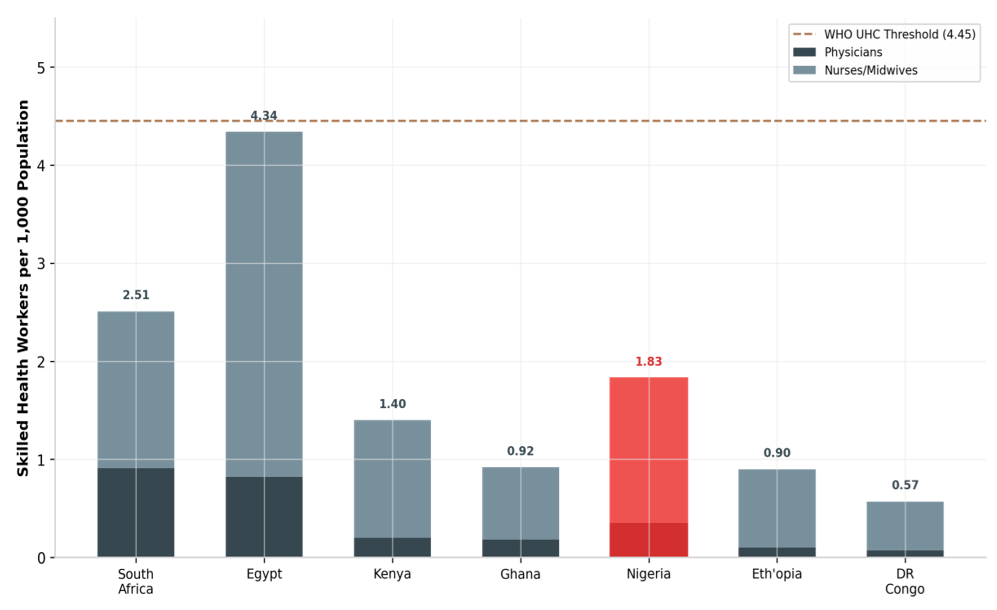
Nigeria's health workforce density of approximately 1.83 skilled health workers per 1,000 population falls significantly below the WHO threshold of 4.45 per 1,000 needed for meaningful progress toward Universal Health Coverage [1]. The doctor-to-population ratio of approximately 1:5,000 is more than eight times worse than the WHO recommended ratio of 1:600 [2]. The nurse-to-population ratio of approximately 1:2,000 similarly falls far below the WHO recommendation of 1:300. These density figures place Nigeria below several comparable African countries including South Africa (2.51 per 1,000), Egypt (4.34 per 1,000), and Kenya (1.40 per 1,000), though above countries such as Ethiopia (0.90 per 1,000) and the Democratic Republic of Congo (0.57 per 1,000) [18].
4.2.1 Geographic Maldistribution Analysis
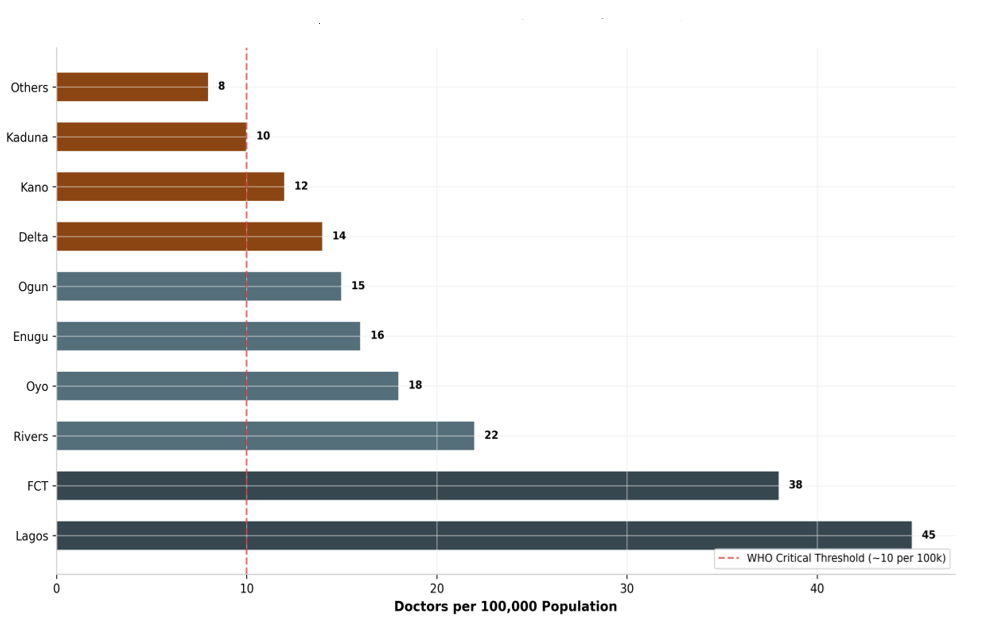
State-level analysis of doctor distribution reveals extreme geographic inequities that compound the overall workforce deficit. Lagos State leads with 45 doctors per 100,000 population, followed by the Federal Capital Territory with 38 per 100,000. In contrast, aggregated northern and rural states fall below the WHO critical threshold of 10 doctors per 100,000 population [63]. This disparity reflects the concentration of tertiary institutions, specialist hospitals, and private facilities in southern urban centers, combined with inadequate incentive structures to attract professionals to underserved regions. The maldistribution creates a two-tier system where urban populations enjoy relatively better access while rural populations, who typically bear the greatest disease burden, face critical shortages.
| Health Worker Cadre | Registered | Actively Licensed | Public Sector | Private Sector | Per 1,000 |
|---|---|---|---|---|---|
| Physicians (General) | 74,543 | ~45,000 | ~80% | ~20% | 0.36 |
| Physicians (Specialist) | 9,364 | ~6,200 | ~85% | ~15% | 0.04 |
| Nurses/Midwives | 301,579 | ~180,000 | ~75% | ~25% | 1.47 |
| Dentists | 25,487 | ~15,000 | ~60% | ~40% | 0.13 |
| Pharmacists | 24,668 | ~18,000 | ~40% | ~60% | 0.12 |
| Lab Scientists | 311,269 | ~90,000 | ~70% | ~30% | 0.31 |
Geographic distribution analysis reveals extreme inequities in health worker availability. Approximately 75% of healthcare workers are concentrated in urban areas, while rural areas housing 55% of the population face critical shortages [7]. State-level analysis shows that Lagos State, the Federal Capital Territory, and a few southern states attract the majority of highly skilled professionals, while northern and rural states experience acute shortages that in some cases fall below 0.5 skilled health workers per 1,000 population [63]. This maldistribution creates a two-tier health system in which urban populations have relatively better access to care while rural populations, who often have the greatest health needs, face the most significant access barriers.
4.3 Emigration Trends and Patterns
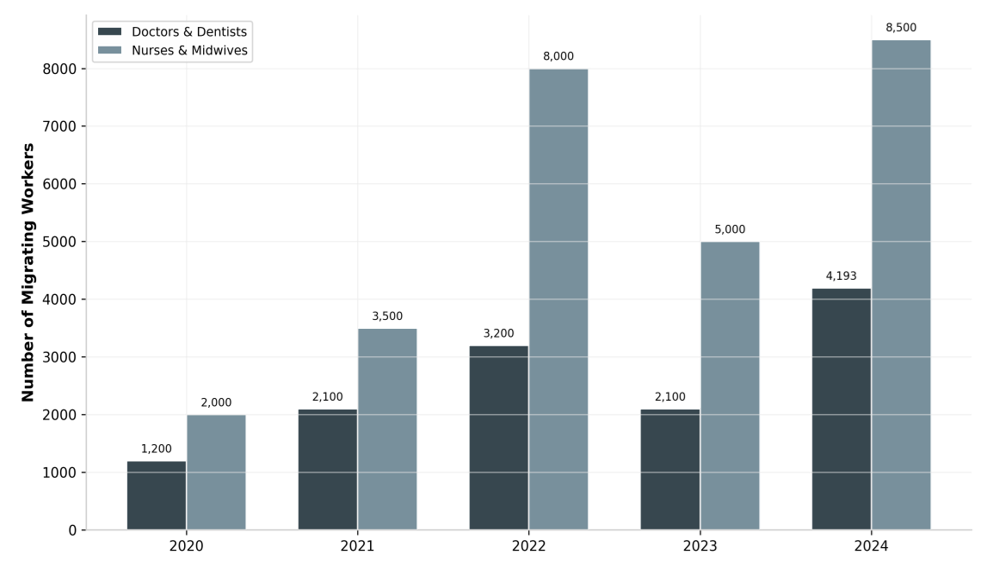
Analysis of emigration trends from 2020 to 2024 reveals a consistent pattern of accelerating migration across all health worker cadres. The COVID-19 pandemic served as an inflection point, with emigration rates increasing significantly from 2021 onward as international borders reopened and destination countries intensified recruitment to address their own pandemic-induced workforce shortages [29]. The data show that emigration of doctors and dentists increased from approximately 1,200 in 2020 to 4,193 in 2024, representing a 249% increase over the four-year period [7].
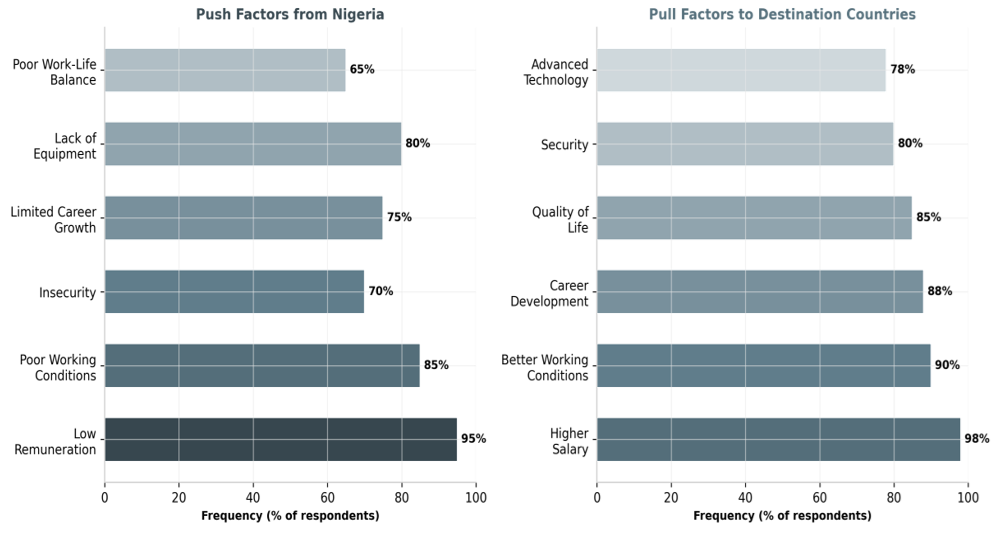
The push and pull factors driving migration from Nigeria align with the established literature on health worker brain drain. Economic factors, particularly the significant salary differentials between Nigeria and destination countries, are the primary drivers of emigration. A medical doctor in Nigeria typically earns between N300,000 and N800,000 monthly (approximately $200-$530), compared to starting salaries exceeding $3,000 monthly in the UK and significantly higher compensation in North America [26,27]. Non-economic factors including poor working conditions, inadequate equipment and supplies, limited career advancement opportunities, security concerns in certain regions, and the desire for better quality of life and professional development also contribute significantly to migration decisions.
4.3.1 Emigration by Professional Cadre
The disaggregation of emigration data by professional cadre and destination country reveals important patterns that inform targeted policy responses. Nurses represent the largest cohort of emigrating health workers, with approximately 26,000 migrating in 2024 alone, driven primarily by recruitment campaigns from the UK National Health Service and US healthcare systems. Medical laboratory scientists show the highest proportional migration to Canada, reflecting that country's targeted immigration pathways for this specific cadre. Doctors represent a smaller absolute number but carry the highest per-capita training investment, making their loss particularly costly to the health system. The differential migration patterns suggest that destination countries are strategically targeting specific cadres based on their own workforce needs, requiring Nigeria to develop cadre-specific retention strategies [8].
4.4 Retirement Demographics and Projected Attrition
The aging of Nigeria's health workforce presents a time-bound crisis that compounds the challenges of emigration. Analysis of workforce age distribution reveals that a significant proportion of senior health professionals, particularly consultants and specialists, are in the 55-59 year age bracket. The Medical and Dental Consultants Association of Nigeria reports that Nigeria currently has approximately 6,200 consultants, with an estimated 25-33% (1,550-2,050 professionals) expected to retire within the next five years under the previous retirement age of 60 [9]. This retirement wave occurs simultaneously with accelerated emigration among younger professionals, creating a demographic gap that threatens the continuity of specialized clinical services. The February 2025 retirement age extension from 60 to 65 years (and 70 years for consultants) provides temporary relief by deferring the retirement of experienced professionals for an additional five years [15]. This extension is estimated to retain approximately 1,200-1,600 consultants and several thousand other senior clinical staff who would otherwise have retired between 2025 and 2030. However, within the extended timeframe, a substantial cohort of professionals will still reach the new retirement age, requiring comprehensive replacement planning [16].
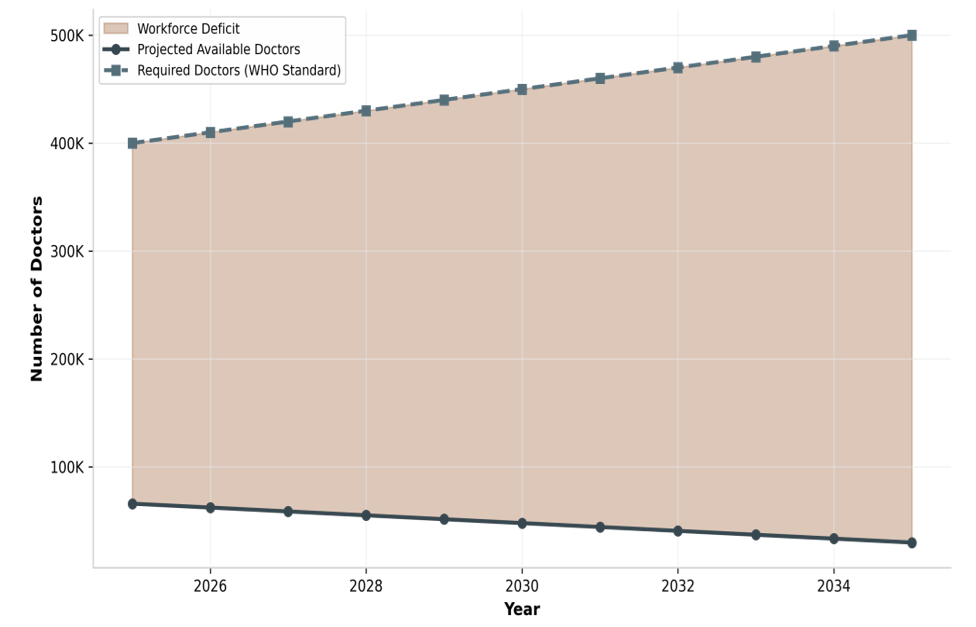
Projection modeling under different attrition scenarios reveals the scale of the workforce gap that Nigeria faces. Under a baseline scenario assuming continued emigration at 2024 levels and implementation of the retirement age extension, Nigeria's stock of practicing doctors is projected to decline from approximately 66,000 in 2025 to approximately 30,000 by 2035, while the population requiring care grows from 230 million to an estimated 270 million [3,67]. Even under an optimistic scenario that assumes a 50% reduction in emigration and doubling of medical school output, the doctor-to-population ratio would remain far below WHO recommendations throughout the projection period.
4.4.1 Workforce Age Structure and Retirement Risk
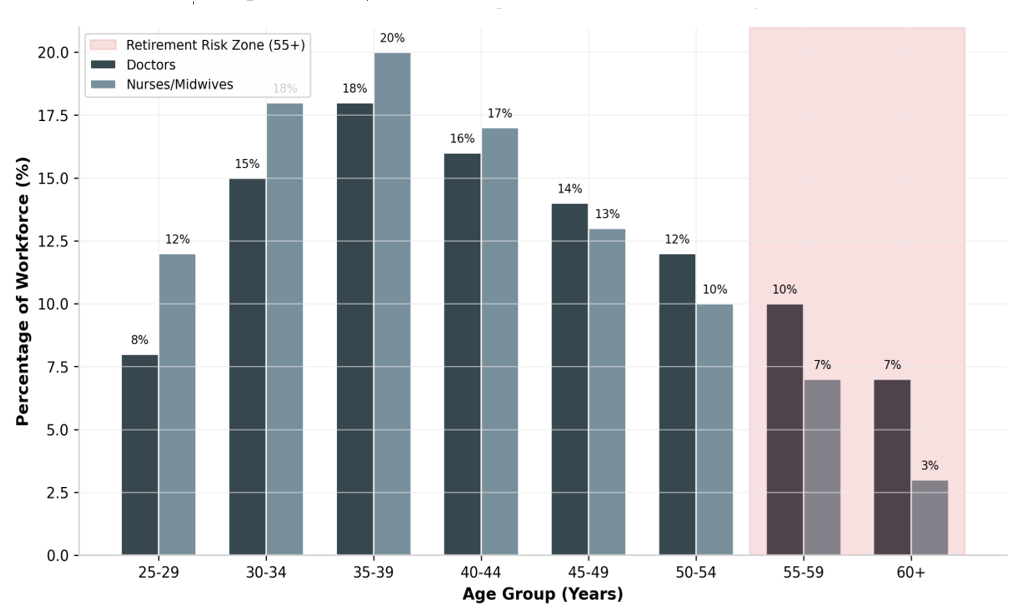
Analysis of the age distribution of Nigeria's health workforce confirms the demographic vulnerability of the system. Among doctors, 17% are aged 55 and above, placing them in the immediate retirement risk zone even after the age extension to 65. The peak age group for doctors is 35-39 years (18%), representing the mid-career professionals who are simultaneously most vulnerable to emigration and most critical for service delivery. Among nurses and midwives, the age distribution skews younger, with 38% below age 35, but the concentration in the 30-34 age group (20%) represents professionals who will reach emigration-prone mid-career stages within the next decade. The data reveal a concerning hollowing of the 45-54 age bracket among doctors, suggesting that professionals in this cohort have already emigrated, leaving a gap between senior consultants and junior medical officers that undermines mentorship and succession planning [9].
4.5 Assessment of Health System Resilience
Application of Kruk et al.'s (2017) resilience framework to Nigeria's health system reveals significant weaknesses across all five resilience dimensions. Table 3 presents the resilience assessment scoring for each dimension based on available evidence.
| Resilience Dimension | Assessment | Key Indicators |
|---|---|---|
| Awareness | Partial | Workforce profiling initiated; migration policies developed; retirement risks partially recognized |
| Diversity | Weak | 75% of workers in urban areas; 79% of facilities are PHCs but critically understaffed |
| Self-Regulation | Weak | Loss of experienced supervisors; training pipeline compromised; quality assurance gaps |
| Integration | Weak | Disconnect between training and service delivery; fragmented governance across tiers |
| Adaptability | Weak | Loss of innovation capacity; limited evidence of transformative responses |
The resilience assessment reveals that Nigeria's health system scores weak across four of five resilience dimensions and partial on the fifth (awareness). The diversity dimension is critically weak due to the extreme geographic concentration of health workers and the limited range of service delivery platforms with adequate staffing. Self-regulation is weak due to the loss of experienced supervisors and quality assurance officers. Integration is weak due to the disconnect between training and service delivery and the fragmentation of governance across federal, state, and local levels. Adaptability is weak due to the erosion of human capacity for innovation and the limited evidence of transformative policy responses to the workforce crisis [13,45,46,59,60].
4.6 Health Security Implications
The health security implications of Nigeria's workforce attrition crisis are severe and multifaceted. Nigeria's capacity to meet International Health Regulations core capacities is significantly constrained by workforce shortages, particularly in specialized fields required for disease surveillance, laboratory diagnostics, and emergency response [44]. The emigration of epidemiologists, laboratory scientists, and public health specialists to the UK, Canada, and other destinations directly undermines the country's epidemic preparedness capacity at a time of increasing zoonotic disease threats and climate change-associated health risks [42]. Universal Health Coverage, a core objective of the Sustainable Development Goals, is severely constrained by health workforce shortages. With a health worker density of 1.83 per 1,000 population against a threshold of 4.45 per 1,000 for meaningful UHC progress, Nigeria faces a substantial gap that cannot be bridged without dramatic workforce expansion [1]. The geographic concentration of health workers in urban areas means that rural populations, who often have the greatest health needs, face the most significant access barriers, perpetuating health inequities that UHC is intended to address [21].
Primary healthcare delivery, which forms the foundation of Nigeria's health system with 31,815 (79%) of the country's 40,184 health facilities operating at this level, is particularly affected by workforce attrition [7]. Only 21% of primary health facilities meet the criteria for functional Level 2 status, capable of providing 24/7 delivery services with adequate staffing, power, and infrastructure [58]. The shortage of Community Health Extension Workers, nurses, midwives, and primary care doctors in rural facilities limits the capacity to deliver essential services including maternal and child health, immunization, and disease surveillance.
| Health Security Domain | Impact of Workforce Attrition | Affected Population/Capacity |
|---|---|---|
| Disease Surveillance | Shortage of epidemiologists and disease detectives; reduced reporting from understaffed facilities | All 36 states + FCT |
| Laboratory Diagnostics | Loss of lab scientists to emigration; limited testing capacity for outbreaks | Reference labs and PHC facilities |
| Emergency Response | Insufficient trained rapid response personnel; delayed deployment to outbreak areas | High-risk LGAs and states |
| Universal Health Coverage | 1.83 workers/1,000 vs 4.45 threshold; rural populations severely underserved | ~126 million rural Nigerians |
| Maternal/Child Health | Shortage of midwives and CHOs in PHCs; 21% of PHCs functional for deliveries | Pregnant women and under-5 children |
| IHR Core Capacity | Insufficient specialists for JEE requirements; emigration of trained IHR personnel | National IHR compliance goals |
4.6.1 Primary Healthcare Functionality Analysis
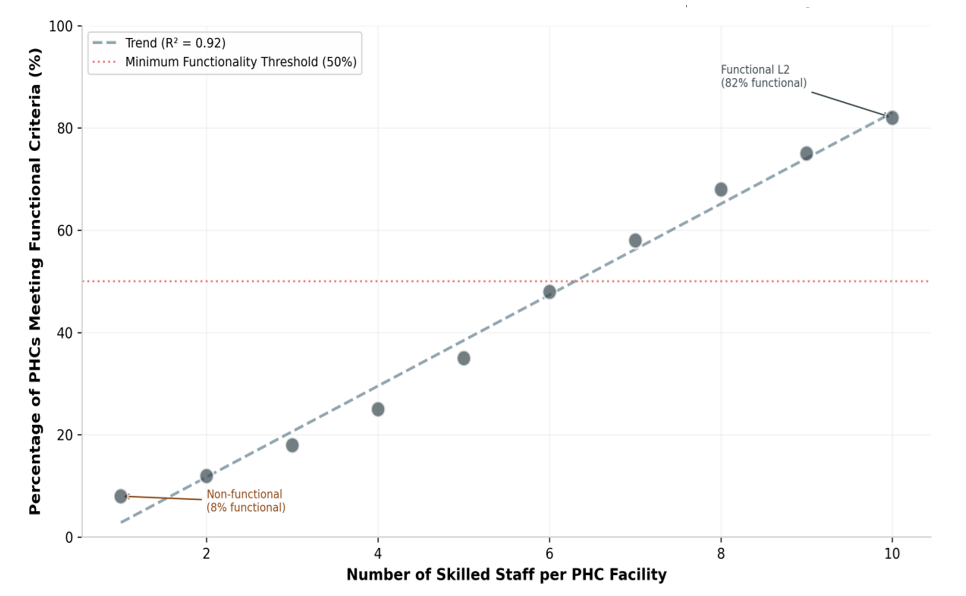
The relationship between health worker staffing levels and primary healthcare facility functionality demonstrates a strong positive correlation (R-squared = 0.92), underscoring the centrality of human resources to service delivery capacity. PHC facilities with fewer than two skilled staff report functionality rates below 12%, meaning that fewer than one in eight facilities can provide basic primary care services including outpatient consultations, immunization, and maternal health services. Facilities with six or more skilled staff approach the 50% functionality threshold, while those with ten or more staff achieve functionality rates exceeding 80%. Given that the majority of Nigeria's 31,815 PHC facilities operate with fewer than four skilled staff, the aggregate functionality deficit represents a critical barrier to Universal Health Coverage [58]. The data suggest that a minimum threshold of six skilled staff per PHC is required to achieve basic functionality, implying a need for approximately 95,000 additional primary care workers to bring all facilities to minimum operational standards.
4.6.2 Health Workforce Density and Health Outcomes
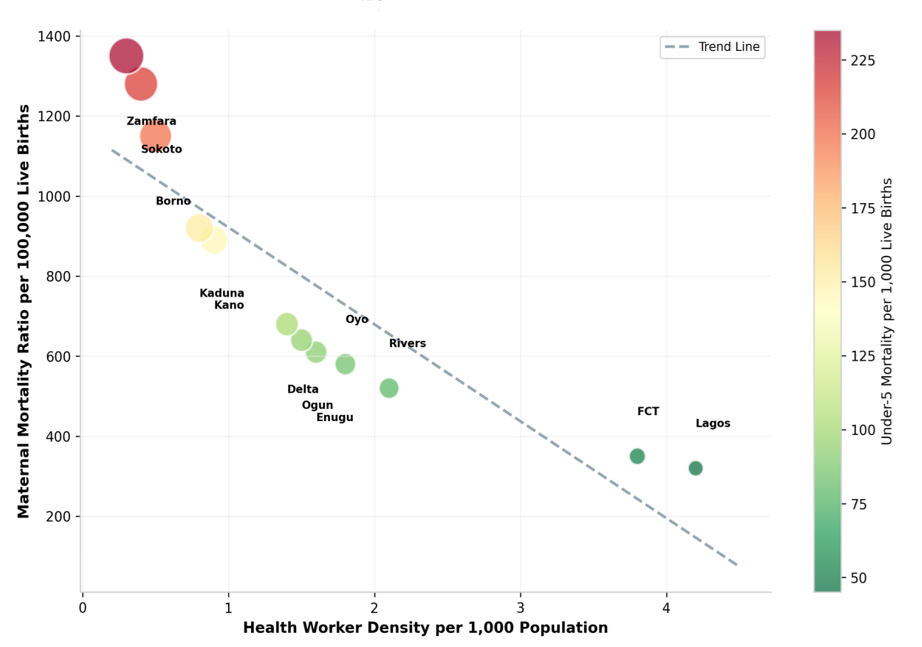
State-level analysis reveals a strong inverse relationship between health worker density and adverse health outcomes. States with higher health worker densities, such as Lagos (4.2 per 1,000) and the FCT (3.8 per 1,000), report maternal mortality ratios below 400 per 100,000 live births and under-5 mortality rates below 60 per 1,000 live births. In contrast, states with critically low health worker densities, such as Zamfara (0.3 per 1,000) and Sokoto (0.4 per 1,000), report maternal mortality ratios exceeding 1,200 and under-5 mortality rates above 200 per 1,000 live births [54]. This relationship persists even after controlling for socioeconomic factors such as poverty rates and educational attainment, suggesting that health workforce density exerts an independent effect on health outcomes. The analysis indicates that achieving a health worker density of 3.0 per 1,000 population, while still below the WHO UHC threshold, could reduce Nigeria's maternal mortality ratio by approximately 45% and under-5 mortality by approximately 50%, preventing an estimated 40,000 maternal deaths and 500,000 under-5 deaths annually [67].
4.6.3 Synthesis of Analytical Findings
The comprehensive data analysis presented in this section reveals the multidimensional nature of Nigeria's health workforce crisis. The convergence of four distinct but interconnected trends, emigration (4,193 doctors in 2024), retirement risk (25-33% of 6,200 consultants within five years), geographic maldistribution (75% urban concentration), and chronic underproduction (medical schools graduating approximately 4,400 doctors annually against a need for 25,000), creates a perfect storm that threatens the fundamental integrity of the health system. The economic analysis quantifies the magnitude of losses at $1.45 billion in training investment for 2024 alone, while the health outcomes analysis demonstrates that workforce shortages translate directly into preventable deaths. The strong correlation between PHC staffing and facility functionality (R-squared = 0.92) and the inverse relationship between workforce density and mortality ratios provide compelling evidence that workforce expansion is not merely a health systems issue but a matter of life and death for millions of Nigerians.
5. Discussion
5.1 Synthesis of Key Findings
This study highlights a severe health workforce crisis in Nigeria driven by rising emigration, increasing retirement rates, and inadequate workforce replacement. The 200% increase in health worker migration between 2023 and 2024, coupled with existing shortages, threatens the capacity of the health system to deliver essential services [7]. The simultaneous loss of younger professionals through migration and experienced workers through retirement creates a “double depletion” effect, weakening both current service delivery and future leadership capacity.
5.2 Implications for Health Security
Workforce attrition poses a major threat to Nigeria’s health security. Shortages of epidemiologists, laboratory scientists, and public health specialists undermine the country’s ability to meet International Health Regulations (IHR) requirements and respond effectively to disease outbreaks [10,44]. The COVID-19 pandemic demonstrated the importance of a strong workforce for surveillance, testing, treatment, and vaccination efforts [29]. In addition, the concentration of health workers in urban areas limits equitable access to care and hinders progress toward Universal Health Coverage (UHC) [7,63].
5.3 Implications for Institutional Resilience
Using Kruk et al.’s resilience framework, the findings indicate weaknesses across all dimensions of resilience, including diversity, self-regulation, integration, and adaptability [13]. Workforce losses reduce institutional memory, weaken supervision and quality assurance systems, and limit the health system’s capacity to adapt to emerging challenges. Although the 2025 retirement-age extension policy provides temporary relief, it cannot address workforce shortages unless accompanied by broader retention and recruitment strategies [15,37]. International experiences from countries such as Thailand and Malaysia show that successful workforce retention requires comprehensive policies that combine competitive compensation, improved working conditions, career development opportunities, and expanded training capacity [69-71].
5.4 Limitations and Strengths
This study relies largely on official workforce statistics, which may underestimate migration levels. Workforce projections are also subject to uncertainty due to changing migration patterns and policy developments. Despite these limitations, the study provides a comprehensive assessment of workforce attrition in Nigeria by integrating quantitative workforce data with policy and resilience analyses.
6. Policy Implications
Addressing Nigeria’s workforce crisis requires a coordinated strategy built around six key pillars.
6.1 Managed Migration Framework
Nigeria should strengthen implementation of its National Policy on Health Workforce Migration by improving migration monitoring, negotiating ethical recruitment agreements, and establishing bilateral partnerships with destination countries [24,57]. Greater engagement with the Nigerian health diaspora through telemedicine, training, and knowledge-sharing initiatives could also support domestic workforce development [28,72].
6.2 Enhanced Retention Strategies
Improving salaries, working conditions, security, and career progression opportunities is essential to reduce emigration. Full implementation of existing salary structures, rural service incentives, hazard allowances, and professional development programs should be prioritized [16,26].
6.3 Accelerated Training and Production
Expansion of medical, nursing, and allied health training programmes is necessary to address workforce shortages. The government’s plan to train 100,000 frontline health workers by 2027 should be accelerated, while structured mentorship programmes should leverage the expertise of senior professionals retained under the retirement-age extension policy [34,57,58].
6.4 Health Workforce Information Systems
A comprehensive National Health Workforce Registry should be fully operationalized to provide accurate, real-time data on workforce stocks, distribution, migration, and retirement trends. Improved data systems are critical for evidence-based workforce planning [64].
6.5 Primary Healthcare Strengthening
Strengthening the primary healthcare workforce should remain a priority. Incentives for rural service, targeted recruitment, bonding schemes, and task-shifting approaches can help improve workforce distribution and service coverage in underserved communities [58,73].
6.6 Sustainable Health Financing
Long-term workforce retention depends on increased investment in health. Nigeria should raise public health expenditure, expand health insurance coverage, and allocate dedicated funding for human resources for health. Sustainable financing is essential for maintaining competitive remuneration and improving working conditions [55].
7. Conclusion
Nigeria’s public health system faces a serious workforce crisis driven by rising health worker emigration, the impending retirement of experienced professionals, and the insufficient production of new personnel. The emigration of 4,193 doctors and dentists in 2024, alongside a 200% increase in health worker migration across all cadres between 2023 and 2024, shows that workforce attrition is no longer only a service delivery problem but a major threat to national health security and institutional resilience. Using Kruk et al.’s resilience framework, this study shows that workforce loss weakens Nigeria’s capacity to anticipate health threats, maintain service diversity, regulate quality, coordinate across levels of care, and adapt to changing population needs. These risks are worsened by the uneven distribution of health workers, which leaves rural and underserved communities with the greatest access barriers. The February 2025 retirement age extension for clinically skilled health workers is a useful but limited intervention. It may temporarily retain expertise, support mentorship, and create time for recruitment and training reforms. However, unless the underlying causes of emigration, including poor remuneration, difficult working conditions, weak career progression, and inadequate professional support, are addressed, the policy will only postpone deeper workforce decline. The consequences of inaction are severe. Continued attrition will undermine epidemic preparedness, weaken public trust, worsen health inequities, and limit Nigeria’s progress toward Universal Health Coverage, the Sustainable Development Goals, and International Health Regulations commitments. Infrastructure, financing, and technology cannot substitute for the skilled health workers needed to deliver care. Strengthening Nigeria’s health workforce must therefore be treated as a national security priority. A comprehensive response should include managed migration, stronger retention incentives, accelerated training, improved workforce information systems, primary healthcare strengthening, and sustainable financing. Achieving this will require strong political commitment, adequate resources, and coordinated action across all levels of government, professional bodies, the private sector, and international partners. Urgent action is needed before continued attrition further weakens Nigeria’s ability to meet the basic health needs of its population.
Declarations
Ethical Clearance
Not Applicable
Funding/ financial support
This research received no external funding.
Conflict of Interest
The authors declare no conflict of interest. The views expressed in this article are solely those of the authors and do not necessarily represent the views of their affiliated institutions.
Acknowledgments
The authors acknowledge the Federal Ministry of Health and Social Welfare of Nigeria for making health workforce data publicly available. We also thank the World Health Organization Regional Office for Africa, the International Organization for Migration, and the Organisation for Economic Co-operation and Development for their publicly accessible databases on health workforce and migration. The contributions of the Nigeria Medical Association, the Medical and Dental Consultants Association of Nigeria, and other professional bodies in documenting the health workforce crisis are recognized.