1. Background
The prevalence of obesity has dramatically increased over the past three decades and has become a major public health problem [1]. Bariatric surgery is now acknowledged as the most efficacious intervention for enduring weight reduction [2] and ameliorating obesity-related comorbidities, including diabetes and hypertension [3,4]. Evidence indicates a decrease in cancer incidence and overall mortality subsequent to bariatric surgery [5-7]. Despite these benefits, anesthesia and perioperative management in obese patients remain high-risk due to altered respiratory mechanics, difficult airways, and increased cardiovascular stress [8,9]. Reported risk factors for perioperative complications include age > 50 years, male sex, diabetes, obstructive sleep apnea (OSA), and BMI > 50 kg/m² [10-12]. Most studies have focused on surgical complications (leaks, bleeding, and strictures), while anesthesia-related complications are less well characterized. Anesthetic complications, including intraoperative hypotension, hypertension, tachycardia, and desaturation, correlate with prolonged PACU admissions and possible morbidity [13,14]. This study aimed to describe the incidence and patterns of anesthesia-related complications in obese patients undergoing longitudinal sleeve gastrectomy at Gonesse Hospital Center.
2. Methods
2.1. Study design and setting
This was a prospective descriptive observational study conducted at the Gonesse Hospital Center (Île-de-France, France) between January 2020 and June 2021. This structure is a referral hospital that performs approximately a hundred (100) bariatric procedures annually. The study design was intentionally descriptive, emphasizing the frequencies and distributions of peri-anesthetic complications rather than causal inference. The study adhered to the STROBE Reporting Guidelines for Observational Research [15].
2.2. Study population
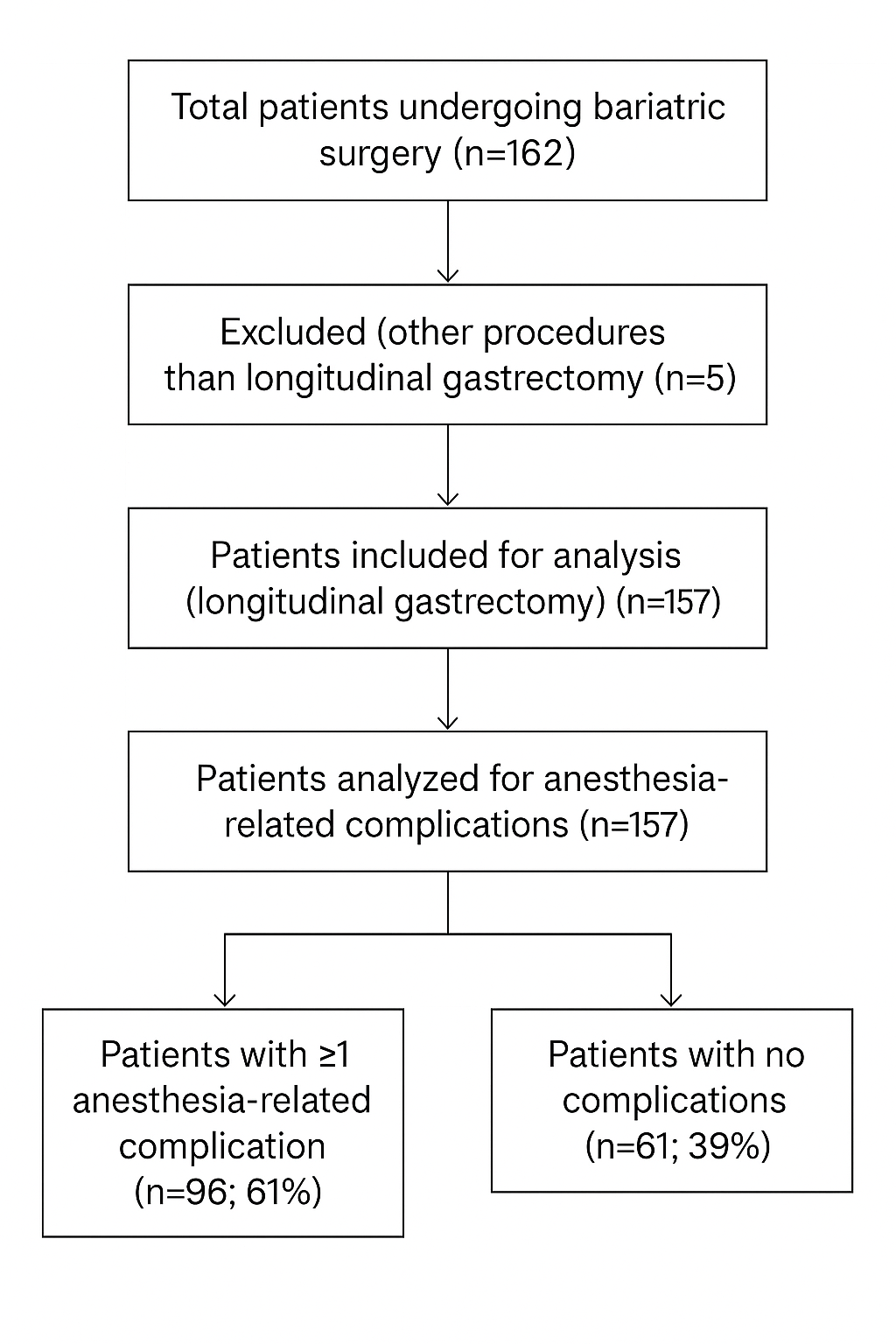
All consecutive adult patients who underwent longitudinal sleeve gastrectomy under general anesthesia during the study period were included. Patients receiving other bariatric procedures (e.g. gastric bypass or gastric banding) were excluded. A total of 162 patients were screened, of whom 157 met the inclusion criteria. All participants provided informed consent for the use of anonymized data (Figure 1).
2.3. Anesthetic management
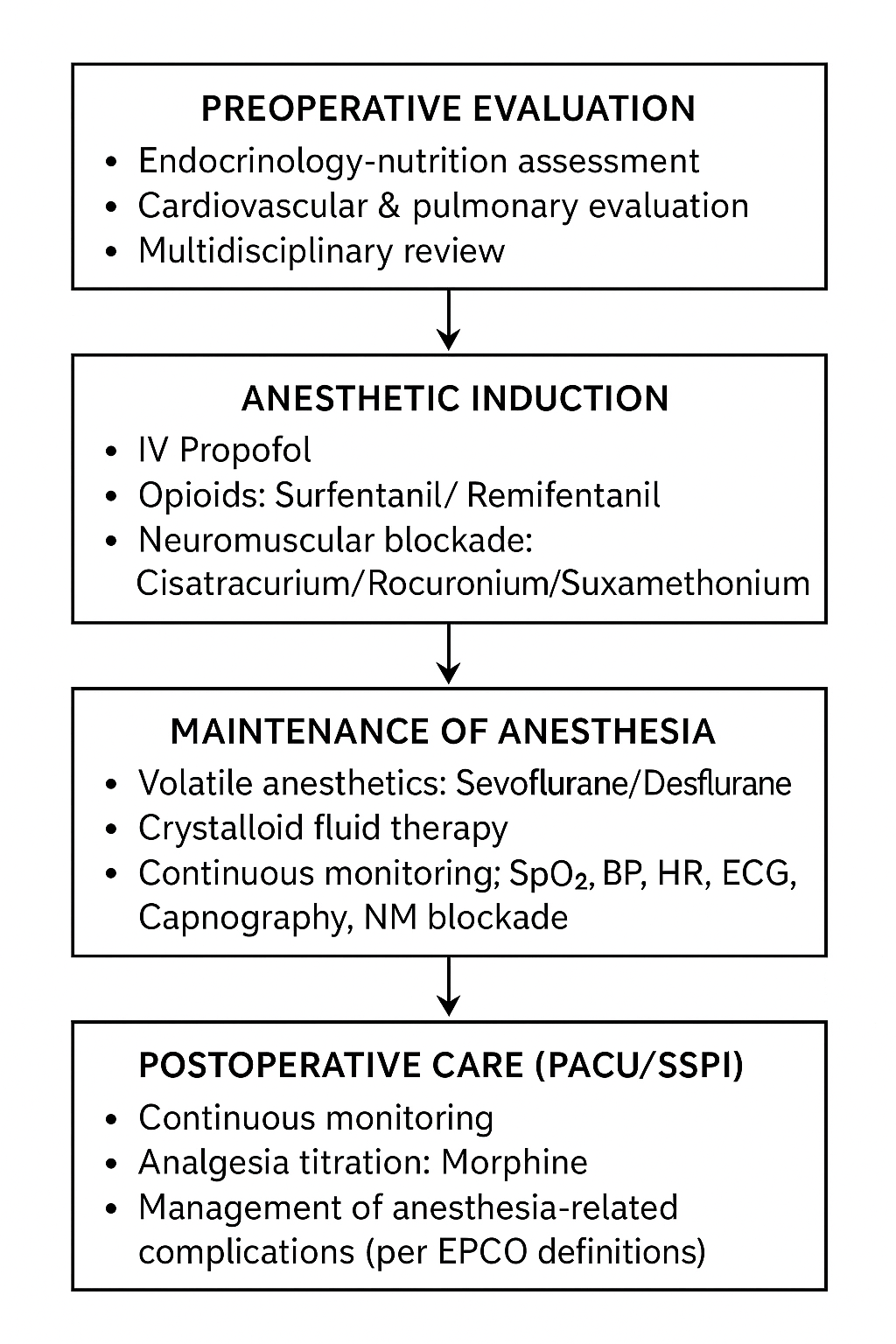
All patients underwent a standardized preoperative evaluation by a multidisciplinary bariatric team, including endocrinology, nutrition, and anesthesia specialists. The optimization of comorbidities, particularly hypertension, diabetes, and OSA, was mandatory before surgery. Intraoperative management followed a standardized anesthetic protocol, including
-
Induction with intravenous propofol and opioids (sufentanil :94%; remifentanil: 6%)
-
Neuromuscular blockade with cisatracurium (96.8%) or, rarely, rocuronium or suxamethonium
-
Maintenance with sevoflurane (79.6%) or desflurane (19.1%)
-
Standard monitoring including invasive arterial pressure, ECG, capnography, and temperature
-
Postoperative care in the PACU until complete recovery.
-
Difficult airway management was anticipated in patients with OSA, limited neck mobility, or a Mallampati score of ≥ 3 with systematic videolaryngoscopy and ramped positioning.
2.4. Data collection and definitions
Data were extracted from the institutional anesthesia registry and verified by a clinical research associate to ensure accuracy. The primary outcome was the incidence of any anesthesia-related complications, defined using the European Perioperative Clinical Outcome (EPCO) criteria [16]. Complications included:
-
Airway events (difficult intubation, desaturation, bronchospasm)
-
Hemodynamic events (hypotension, hypertension, arrhythmia)
-
Metabolic events (hypo-/hyperglycemia)
-
Postoperative nausea and vomiting (PONV)
-
Delayed awakening or death
Secondary data included demographic variables (age, sex, BMI, comorbidities, ASA classification), intraoperative details (anesthetic agents, duration, fluids), and postoperative parameters (PACU stay, morphine consumption).
2.5. Statistical analysis
Given the descriptive nature of the study, no regression modeling was performed. Quantitative variables were expressed as mean ± standard deviation (SD). Categorical variables were presented as frequencies and percentages with 95% confidence intervals (CI). Comparisons between groups (with vs. without complications) were performed using chi-square or Fisher’s exact tests for categorical variables and a t-test for continuous variables. Statistical significance was set at P < 0.05. The objective was not to identify independent predictors but to highlight incidence patterns across relevant clinical categories.
3. Results
The analysis included a total of 157 patients who underwent alternative bariatric procedures (Figure 1). All patients followed a standardized anesthesia protocol, as shown in Figure 2.
3.1. Patient characteristics
The baseline characteristics are presented in Table 1. Patients were 80.3% female, with a mean age of 40.7 ± 11.9 years and a mean BMI of 42.3 ± 4.8 kg/m². Comorbidities were present in 61% of the patients, most commonly OSA (42%), hypertension (23.6%), and diabetes (14.6%). Patients with ASA ≥ III had a higher observed frequency of complications compared to those with ASA I–II.
| Variable | Category | n | % |
| Sex | Male | 31 | 19.7 |
| Female | 126 | 80.3 | |
| BMI (kg/m²) | 35–39 | 39 | 24.8 |
| 40–49 | 88 | 56.1 | |
| ≥50 | 8 | 5.1 | |
| Comorbidities | Depression | 6 | 3.8 |
| Diabetes | 23 | 14.6 | |
| Dyslipidemia | 7 | 4.5 | |
| Hypothyroidism | 9 | 5.7 | |
| Hypertension | 37 | 23.6 | |
| GERD | 15 | 9.6 | |
| OSA | 66 | 42.0 | |
| ASA classification | I–II | 141 | 89.8 |
| III–IV | 16 | 10.2 |
Abbreviations: BMI = Body Mass Index; ASA = American Society of Anesthesiologists
3.2. Anesthetic and intraoperative characteristics
All patients received propofol induction (mean, 153 ± 50 mg). Sevoflurane was used as the primary maintenance agent (79.6%). Cisatracurium was given as the main neuromuscular blocker (96.8%). Suxamethonium was administered in 47.1% of the cases. Patients with complications had longer PACU stays and slightly higher morphine requirements (Table 2), consistent with a more challenging postoperative recovery.
| Variable | Category | n | % |
| IV hypnotic | Propofol | 157 | 100 |
| Inhalational agents | Sevoflurane | 125 | 79.6 |
| Desflurane | 30 | 19.1 | |
| Opioids | Sufentanil | 148 | 94.3 |
| Remifentanil | 9 | 5.7 | |
| Muscle relaxants | Cisatracurium | 152 | 96.8 |
| Rocuronium | 5 | 3.2 | |
| Suxamethonium | 74 | 47.1 | |
| Reversal agents | Neostigmine | 39 | 24.8 |
| Sugammadex | 5 | 3.2 |
Abbreviations: PACU = Post-Anesthesia Care Unit; SD = Standard Deviation
3.3. Incidence of Complications
Table 3 summarizes the complications. Overall, 61% of patients experienced at least one complication. The most frequent complications were intraoperative hypotension (41%) and postoperative nausea and vomiting (30%). Difficult intubation and desaturation occurred in 8% and 6% of the cases, respectively. No deaths or delayed awakening were reported in this study.
| Complication | n | % |
| DiffIntub | 11 | 8 |
| Desat | 8 | 6 |
| HypotensIO | 54 | 41 |
| HypertenPeri | 13 | 10 |
| Hypergly | 4 | 3 |
| Hypogly | 1 | 1 |
| PONV | 39 | 30 |
| DelAwake | 0 | 0 |
| Death | 0 | 0 |
Legend: DiffIntub: difficult intubation; Desat: desaturation; HypotensIO: intraoperative hypotension; HypertenPeri: perioperative hypertension. Hypergly: hyperglycemia. Hypogly: hypoglycemia PONV: postoperative nausea and vomiting; DelAwake: delayed awakening.
4. Discussion
In this prospective study of 157 patients who underwent bariatric surgery, the overall incidence of anesthesia-related complications was 61%, with intraoperative hypotension (41%) and postoperative nausea and vomiting (PONV, 30%) being the most frequent events. These findings are consistent with previous reports highlighting the high anesthetic risk profile of obese patients owing to their physiological, pharmacological, and technical characteristics [1,3,7].
4.1 Incidence and Nature of Complications
The predominance of intraoperative hypotension reflects the known hemodynamic effects of propofol and the vasodilatory properties of volatile anesthetics, particularly sevoflurane, which is used in nearly 80% of cases. This incidence is similar to those reported by Ogunnaike et al.,[8] and Schumann et al.,[10]. While these episodes are often transient, they can have clinical implications, particularly in patients with cardiovascular comorbidities.
PONV occurred in approximately one-third of patients, despite multimodal prophylaxis, remaining within the reported range for bariatric populations (25-35%) [9,14]. These events underline the challenge of balancing effective analgesia with the emetogenic potential of opioids and volatile anesthetics. Higher morphine consumption and longer PACU stay in patients with complications highlight the clinical impact of even minor perioperative effects.
4.2 Patient Characteristics and Observed Incidence
Complications were more frequent in patients with higher ASA scores, supporting clinical observations that the severity of comorbidities influences susceptibility to anesthesia-related events [2,8]. No significant variation in complication rates was observed according to age, sex, or BMI in our cohort.
Although OSA was common (42%), respiratory complications did not notably increase, likely reflecting improved preoperative evaluation, CPAP therapy, and optimized airway management protocols [5,12]. The more frequent use of suxamethonium in some patients likely reflects anticipation of difficult intubation rather than a causal factor for complications.
4.3 Airway Management and Anesthetic Strategy
Difficult intubation occurred in 8% of the cases, which is comparable to previously reported rates (5–10%) in obese populations [7,11]. Standardized preoxygenation, ramped positioning, and systematic use of videolaryngoscopy are likely to limit severe desaturation episodes (6%) [13,15].
The anesthesia protocol, based on propofol induction and sevoflurane maintenance, aligns with the current recommendations for bariatric surgery [1,3,8]. Sevoflurane allows rapid emergence and favorable hemodynamic control, although its emetogenic potential remains under consideration [14]. The limited use of desflurane (19%) may reflect availability or cost factors.
Cisatracurium is the primary neuromuscular blocker, offering predictable pharmacokinetics independent of fat mass [9]. Sugammadex was used in 3.2% of cases, providing an additional safety margin for prolonged blockade or unanticipated difficult airways [16].
4.4 Clinical Implications
Even minor anesthetic complications were associated with longer PACU stays and higher opioid consumption, emphasizing the importance of careful intraoperative management. Optimizing hemodynamics, reducing opioid use through multimodal analgesia, and implementing effective PONV prevention can improve postoperative recovery.
These findings provide a clear description of the incidence and patterns of anesthesia-related complications and may require future studies with larger cohorts to better evaluate the potential factors associated with these events.
4.5 Limitations
This study had several limitations. Being conducted at a single center may limit the generalizability of the findings. The observational design of this study precludes causal inferences. Underreporting may have occurred for some complications, particularly mild PONV or transient hemodynamic fluctuations. However, prospective data collection and standardized anesthesia protocols support the internal validity of the results. Importantly, this study was designed to describe the frequencies and patterns of complications rather than to identify independent predictors.
4.6 Conclusion
Hemodynamic disorders, as well as emetogenic symptoms, may be associated with anesthetic complications during bariatric surgery. Observed frequencies varied across ASA categories and comorbidities, providing descriptive information about perioperative risk. These findings emphasize the necessity of structured anesthetic protocols and vigilant monitoring. Further studies are needed to extensively characterize these patterns and assess the potential predictive factors.
List of Abbreviations
ASA: American Society of Anesthesiologists
BMI: Body Mass IndexCI: Confidence IntervalCPAP: Continuous Positive Airway PressureEPCO: European Perioperative Clinical Outcome
ECG: ElectrocardiogramGERD: Gastroesophageal Reflux Disease
OSA: Obstructive Sleep Apnea
PACU: Post-Anesthesia Care UnitPONV: Postoperative Nausea and VomitingSD: Standard Deviation
Declarations
Ethical Approval and Consent to Participate
The study was conducted in accordance with the Declaration of Helsinki and was approved by the Ethics Committee of Gonesse Hospital Center. All participants provided informed consent for the use of their anonymized clinical data for research purposes. Patient confidentiality and anonymity were strictly maintained throughout the study.
Consent for Publication
Not applicable.
Availability of Supporting Data
The datasets generated and analyzed during the current study are available from the corresponding author upon reasonable request.
Competing Interests
The authors declare that they have no competing interests. The authors have no financial or non-financial interests that could have influenced the design, conduct, analysis, or reporting of this study.
Funding
This research received no external funding. All study activities were supported by the participating institutions.
Acknowledgements
The authors express their sincere gratitude to the staff of the Department of Anesthesiology and Intensive Care and the Department of Surgery at the Hospital Center of Gonesse for their dedication to patients’ care.
Authors’ Contributions
John Bahati Tunda: Conceptualization, study design, data collection, statistical analysis, interpretation of results, and manuscript drafting.
Joseph Nsiala Makunza: Study design, patient management, data acquisition, and critical revision of the manuscript.
Arriel Makembi Bunkete: Supervision of the study, data verification, interpretation of findings, manuscript revision, and corresponding author responsibilities.
Roland Amathieu: Development of the anesthetic protocol, review of perioperative data, and critical revision of the manuscript.
Fajer Nassour: Surgical management of patients, provision and validation of operative data, and critical revision of the manuscript.
All authors read and approved the final manuscript and agree to be accountable for all aspects of the work.