Introduction
Anemia is a clinically significant complication of chronic kidney disease (CKD), with prevalence increasing as renal function declines. It is primarily caused by inadequate production of erythropoietin by the diseased kidneys, along with contributing factors such as iron deficiency, chronic inflammation, and reduced red blood cell survival. The burden of anemia in CKD is substantial, as it is associated with decreased quality of life, reduced exercise capacity, and increased cardiovascular morbidity and mortality [1].
The physiological role of erythropoietin in regulating erythropoiesis has been well established. It acts on erythroid progenitor cells in the bone marrow to promote proliferation, differentiation, and survival, thereby maintaining adequate hemoglobin levels. In CKD, impaired erythropoietin synthesis results in a hypoproliferative anemia, necessitating therapeutic intervention. The introduction of recombinant human erythropoietin (rhEPO) in the late 20th century marked a major advancement in the management of CKD-associated anemia, significantly reducing the need for blood transfusions and improving patient outcomes [2].
Erythropoiesis-stimulating agents (ESAs), including epoetin alfa and beta, have since become the cornerstone of anemia management in CKD. Clinical studies have demonstrated that these agents effectively increase hemoglobin levels and improve clinical symptoms. For instance, Singh et al. reported significant correction of anemia with epoetin alfa in CKD patients, although caution was advised regarding higher hemoglobin targets due to potential cardiovascular risks [3]. Similarly, comparative studies have shown that different erythropoietin formulations are effective in improving haematological parameters, with variations in pharmacokinetics and dosing frequency [4].
To address the limitations of short-acting ESAs, long-acting agents such as darbepoetin alfa were developed. These agents have an extended half-life, allowing less frequent dosing while maintaining efficacy. Large clinical trials have demonstrated that darbepoetin alfa effectively improves hemoglobin levels in CKD patients, although concerns regarding safety and cost persist [5]. Despite their clinical benefits, ESAs are associated with several challenges, including high treatment costs, need for parenteral administration, and variability in patient response.
Oral hypoxia-inducible factor proIyI hydroxylase (HIF-PH) inhibitors [11] like Daprodustat, Roxadustat and vadadustat are recently availabIe and approved by FDA. Vadadustat is an erythropoiesis-stimulating agent and has the potential for anemia treatment in chronic kidney disease available in oral single dose formulation for symptomatic anemia associated with chronic kidney disease (CKD) in adults on chronic maintenance dialysis. In recent years desidustat, which act by stabilising hypoxia-inducible factors, thereby stimulating endogenous erythropoietin production and enhancing iron metabolism. Clinical studies have demonstrated that HIF-PHIs are effective in increasing hemoglobin levels in both dialysis and non-dialysis CKD patients [12].
Recent comparative studies have suggested that desidustat provides efficacy comparable to erythropoietin, with potential advantages in cost-effectiveness and patient convenience [8,9]. Furthermore, the broader clinical relevance of erythropoietin therapy, including its widespread utilization and effectiveness across various indications, has been supported by long-term observational studies [10].
Despite the availability of multiple therapeutic options, real-world data on drug utilization patterns and cost-effectiveness remain limited. Therefore, the present study aims to evaluate the utilization pattern of various Rhepo formulations and other related drugs, assess their clinical effectiveness, and analyse cost-effectiveness in patients with CKD-associated anemia in a tertiary care hospital setting.
Materials and Methods
This study was designed as a retrospective cross-sectional observational study conducted at a tertiary care teaching hospital. The objective was to evaluate the drug utilization pattern, clinical effectiveness, and cost-effectiveness of recombinant human erythropoietin in various departments in the setting. The study period was from June 2023 to December 2023, during which patient data were retrieved from hospital medical records, including both inpatient and outpatient departments of Nephrology, General Medicine, and Medical Oncology.
Inclusion: All patients initiated on Erythropoietin or related therapies in 3 departments; Nephrology (in dialysis patients & CKD patients), Medical Oncology (patients with anemia as a result of cancer chemotherapy), General medicine (chronic infection/condition and geriatric cases) were included in this study.
Exclusion: Patients suffering from anemia due to stem cell diseases, Patients with defect in the bone marrow needing bone marrow transplantation, Excess blood loss due to injury needing blood transfusion, Anemia due to blood loss needing blood transfusion were excluded from the study.
A total of 225 patients diagnosed with anemia associated with CKD and receiving erythropoietin or related therapies were included in the study. Data were collected using a structured data extraction form. Variables recorded included demographic details (age and gender), department of admission, clinical diagnosis, severity of anemia, comorbid conditions, type of drug prescribed, dosage, frequency, route of administration, hemoglobin levels before and after treatment, and cost of therapy. The severity of anemia [as per national health programs in India (WHO, 2011; MoHFW 2018)] was categorised based on hemoglobin levels as mild (10–10.9 g/dL), moderate (7–9.9 g/dL), and severe (<7 g/dL). Comorbidities such as diabetes mellitus, hypertension, cardiovascular disease, cerebrovascular accident, seizure disorders, and hypothyroidism were also documented.
Drug utilization patterns were assessed by analysing the frequency and proportion of different erythropoietin formulations prescribed, including erythropoietin alpha, darbepoetin alpha (various strengths), and desidustat. The route of administration was categorised as oral or subcutaneous. Cost analysis was performed by recording the cost per dose and frequency of administration for each drug. The cost-effectiveness ratio (CER) was calculated by dividing the mean total cost of therapy by the mean increase in hemoglobin levels, expressed as cost per g/dL rise in hemoglobin. The primary outcome measure of the study was the change in hemoglobin levels before and after treatment over a period of two months. Secondary outcome measures included drug utilization patterns, route of administration, cost per dose, and cost-effectiveness of different therapies.
Statistical analysis was performed using appropriate statistical methods. Continuous variables such as hemoglobin levels were expressed as mean ± standard deviation (SD), while categorical variables were presented as frequencies and percentages. The comparison of hemoglobin levels before and after treatment was carried out using the Wilcoxon signed-rank test, as the data did not follow normal distribution. A p-value of less than 0.05 was considered statistically significant. Descriptive statistics were used to summarize drug utilization patterns and cost parameters.
Ethical approval for the study was obtained from the Institutional Ethics Committee prior to data collection. Patient confidentiality was strictly maintained, and all data were anonymized during analysis. As this was a retrospective study using existing medical records, no direct patient intervention was involved. This methodological approach enabled a comprehensive evaluation of real-world prescribing practices, clinical outcomes, and economic aspects of erythropoietin therapy in CKD-associated anemia within a tertiary care setting.
Results
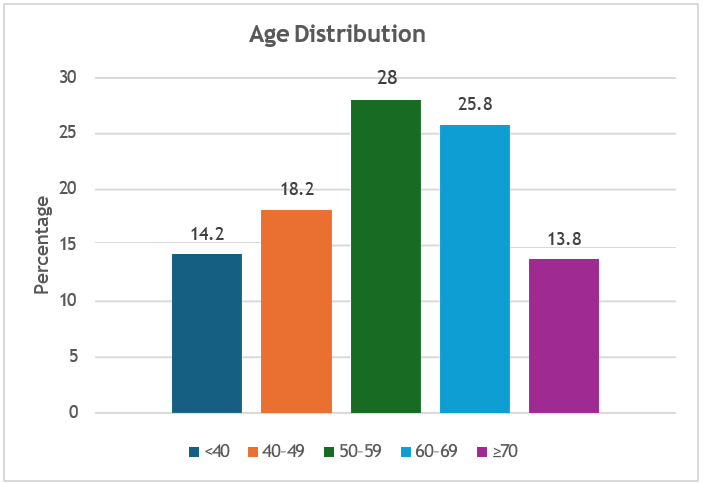
I. Age Distribution of Patients Prescribed with Erythropoietin
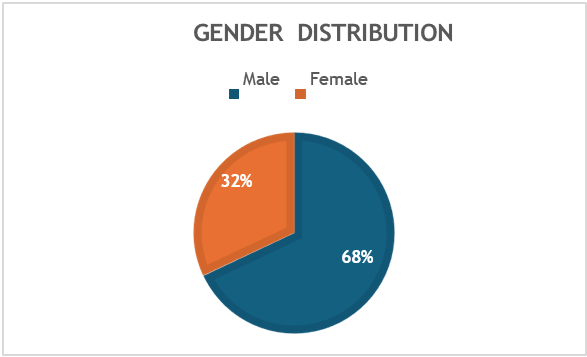
II. Gender-wise Distribution
III. Prescription Basis for Erythropoietin Use
| Condition | Percentage (%) |
| CKD on Hemodialysis | 59 |
| CKD (non-dialysis) | 41 |
| Severity of Anemia | Hb Range (g/dL) | Percentage (%) |
| Mild | 10–10.9 | 9 |
| Moderate | 7–9.9 | 66 |
| Severe | <7 | 25 |
| Comorbidity | Percentage (%) |
| Diabetes Mellitus | 63 |
| Hypertension | 78 |
| Cerebrovascular Accident | 17 |
| Cardiovascular Disease | 30 |
| Seizure Disorder | 12 |
| Hypothyroidism | 13 |
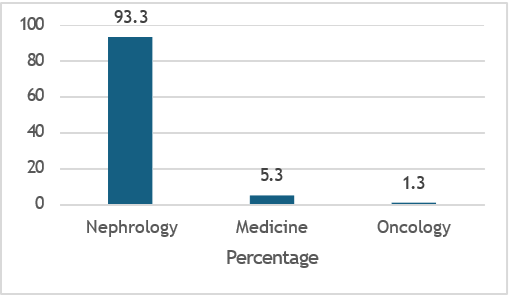
IV. Department-wise Usage
V. Department-wise Drug Utilization
| Drug (Generic + Brand) | Nephrology (%) | Medicine (%) | Oncology (%) |
| Desidustat (Tablet Oxemia 50 mg) | 16.2 | 16.7 | 0 |
| Erythropoietin Alpha (Injection Wepox 4000 IU) | 65.2 | 50 | 33.3 |
| Darbepoetin Alpha (Injection Cresp 40 mcg) | 14.8 | 25 | 66.7 |
| Darbepoetin Alpha (Injection Cresp 25 mcg) | 3.8 | 8.3 | 0 |
VI. Drug-wise Comparison Across Anemia Severity
| Severity | Desidustat (Tablet Oxemia 50mg) (%) | Erythropoietin Alpha (Injection Wepox4000IU) (%) | Darbepoetin Alpha (Injection Cresp40mcg) (%) | Darbepoetin Alpha (Injection Cresp25mcg) (%) |
| Mild | 16.7 | 7.6 | 5.6 | 11.1 |
| Moderate | 69.4 | 63.2 | 72.2 | 77.8 |
| Severe | 13.9 | 29.2 | 22.2 | 11.1 |
VII. Route of Administration
| Route | Percentage (%) |
| Oral | 16 |
| Subcutaneous | 84 |
VIII. Hemoglobin Improvement
| Variable | Mean (g/dL) | SD | p-value |
| Before | 7.84 | 1.4 | <0.001* |
| After (2 months) | 9.31 | 1.6 |
Test used: Wilcoxon Signed-Rank Test; *p <0.05 – Statistically significant difference present.
IX. Cost per Dose and Frequency
| Drug | Cost per Dose (Rs.) | Frequency |
| Darbepoetin Alpha25 mcg | 1923 | Once every 2 weeks |
| Darbepoetin Alpha40 mcg | 3321 | Once every 2 weeks |
| Erythropoietin Alpha 4000 IU | 1968 | Twice weekly |
| Desidustat 50 mg (1 strip contains 6 tablets) | 725 (per strip) | One tablet on Alternate days in a week |
X. Cost-Effectiveness Analysis
| Drug | Total Cost (Rs.) | Mean Hb Increase | CER (Rs./g/dL) |
| Darbepoetin Alpha 40 mcg | 13284 | 1.77 | 7505 |
| Erythropoietin Alpha 4000 IU | 31488 | 1.69 | 18632 |
| Darbepoetin Alpha 25 mcg | 7692 | 1.23 | 6254 |
| Desidustat 50 mg | 2900 | 1.35 | 2148 |
*CER= Total cost / Mean Hb increase
A total of 225 patients with chronic kidney disease (CKD)-associated anemia receiving erythropoiesis-stimulating therapy were included in the study. The median age of the study population was 59 years (interquartile range: 50–66 years). Males constituted the majority (68%), while females accounted for 32% of the participants. Most patients were managed in the Nephrology department (93.3%), followed by General Medicine (5.3%) and Oncology (1.3%). With respect to anemia severity, moderate anemia was the most common presentation (66%), followed by severe anemia (25%) and mild anemia (9%). Among the comorbid conditions, hypertension (78%) and diabetes mellitus (63%) were the most frequently observed, while cardiovascular disease (30%), cerebrovascular accident (17%), hypothyroidism (13%), and seizure disorders (12%) were less common.
Analysis of drug utilization patterns revealed that erythropoietin alpha (Injection Wepox 4000 IU) was the most commonly prescribed agent (64%), darbepoetin alpha 40 mcg (Injection Cresp 40 mcg) 16%, and darbepoetin alpha (Injection Cresp 25 mcg) 4% followed by desidustat (Tablet Oxemia 50 mg)16%. Subcutaneous administration was the predominant route (84%), whereas oral therapy accounted for (16%) of prescriptions. A statistically significant improvement in hemoglobin levels was observed following treatment. The mean hemoglobin increased from 7.84 ± 1.4 g/dL before treatment to 9.31 ± 1.6 g/dL after two months of therapy (p < 0.001), as assessed by the Wilcoxon signed-rank test.
Drug-wise comparison showed that darbepoetin alpha 40 mcg produced the highest mean hemoglobin increase (1.77 g/dL), followed by erythropoietin alpha (1.69 g/dL), desidustat (1.35 g/dL), and darbepoetin alpha 25 mcg (1.23 g/dL). Cost analysis demonstrated that desidustat had the lowest cost per dose (Rs. 725), whereas darbepoetin alpha 40 mcg had the highest (Rs. 3321). Cost-effectiveness evaluation indicated that desidustat had the most favourable cost-effectiveness ratio (Rs. 2148 per g/dL increase in hemoglobin), followed by darbepoetin alpha 25 mcg (Rs. 6254), darbepoetin alpha 40 mcg (Rs. 7505), and erythropoietin alpha (Rs. 18632). Overall, the results indicate significant clinical improvement with erythropoiesis-stimulating therapies, with variations observed in efficacy and cost-effectiveness among different formulations.
Discussion
The present study provides a comprehensive evaluation of the utilization pattern, clinical effectiveness, and cost-effectiveness of recombinant human erythropoietin (rhEPO) and various formulations in the management of anemia among patients with chronic kidney disease (CKD) and other clinical conditions that are mentioned in the inclusion criteria in a tertiary care setting. The findings highlight important clinical and pharmacoeconomic implications that are consistent with, and in some instances extend, the existing literature.
Anemia in CKD is predominantly attributed to inadequate erythropoietin production by the diseased kidneys, compounded by iron dysregulation and chronic inflammation. The role of erythropoietin as a key regulator of erythropoiesis has been well established, and its recombinant forms have been widely used for decades to correct anemia and reduce transfusion requirements. A large retrospective analysis by Guan et al. demonstrated that rhEPO significantly improves hemoglobin levels and reduces transfusion dependence, thereby reinforcing its central role in CKD management [1,13,14]. The current study aligns with these findings, as a statistically significant increase in hemoglobin levels was observed following erythropoietin therapy (p<0.001), confirming its clinical efficacy in real-world practice.
The demographic distribution in the present study showed a predominance of male patients (68%), which is comparable to the findings reported by Guan et al., where males constituted 53.1% of the study population [1]. This gender disparity may reflect a higher prevalence of CKD among males or differences in healthcare-seeking behaviour. Additionally, the majority of patients in this study belonged to the nephrology department (93.3%), which is expected given the strong association between CKD and anemia. Similar trends have been observed in other hospital-based studies, where nephrology units accounted for the majority of erythropoietin prescriptions [1,2,16].
In terms of disease severity, moderate anemia was the most prevalent category (66%) in the current study. This finding is consistent with previous studies that report moderate anemia as the most common presentation in CKD patients due to progressive decline in renal function [3]. The high burden of moderate and severe anemia underscores the need for timely diagnosis and appropriate therapeutic intervention to prevent complications such as cardiovascular morbidity and reduced quality of life [18].
Erythropoietin alpha emerged as the most commonly prescribed agent (64%) in this study, reflecting its widespread availability and established efficacy. This observation is in agreement with earlier studies, including that by Ahsan et al., where erythropoietin alpha was the primary agent used in haemodialysis patients [2]. The preference for erythropoietin alpha may be attributed to its long-standing clinical use, familiarity among clinicians, and inclusion in standard treatment protocols. However, its relatively short half-life necessitates frequent dosing, which may impact patient compliance and increase healthcare costs [21,22].
The introduction of long-acting erythropoiesis-stimulating agents such as darbepoetin alpha has addressed some of these limitations. In the present study, darbepoetin alpha (40 mcg) demonstrated the highest mean hemoglobin increase (1.77 g/dL), indicating superior efficacy compared to other agents. This finding is consistent with the results of the TREAT trial conducted by Pfeffer et al., which demonstrated that darbepoetin alfa effectively improves hemoglobin levels in patients with CKD and type 2 diabetes [7]. The enhanced efficacy of darbepoetin may be attributed to its longer half-life and sustained erythropoietic stimulation, allowing for less frequent dosing and improved patient adherence [34].
Despite its efficacy, the higher cost associated with darbepoetin remains a significant limitation, particularly in resource-constrained settings. In contrast, desidustat, a novel oral hypoxia-inducible factor prolyl hydroxylase inhibitor (HIF-PHI), has emerged as a cost-effective alternative. In the present study, desidustat exhibited the lowest cost-effectiveness ratio (Rs.2148 per g/dL increase), making it the most economical option among the studied drugs. These findings are in line with the study by Reddy et al., which reported that desidustat offers comparable efficacy to erythropoietin with improved cost-effectiveness in CKD patients undergoing haemodialysis [4].
The mechanism of action of desidustat differs from traditional erythropoiesis-stimulating agents. By stabilising hypoxia-inducible factors, desidustat enhances endogenous erythropoietin production and improves iron metabolism. This dual mechanism not only increases hemoglobin levels but also optimises iron utilization, potentially reducing the need for iron supplementation. Similar benefits have been observed with other HIF-PHIs such as roxadustat and vadadustat, which have demonstrated efficacy in both dialysis and non-dialysis CKD populations [8,9]. Though the efficacy is proven, in this study the usage of this drug in anemia severity varies and shows predominance in mild and moderate anemias, where injectables was used in moderate and severe anemias.
The route of administration is another important factor influencing drug utilization. In the present study, subcutaneous administration was predominant (84%), reflecting the widespread use of injectable erythropoietin formulations. However, the availability of oral agents such as desidustat offers significant advantage in terms of patient convenience and adherence. Oral therapy eliminates the need for injections, reduces the burden on healthcare facilities, and may improve patient quality of life. This is particularly relevant in outpatient settings and in regions with limited healthcare infrastructure.
The significant improvement in hemoglobin levels observed in this study is consistent with previous clinical trials evaluating erythropoiesis-stimulating agents. For instance, Singh et al. demonstrated that epoetin alfa effectively increases hemoglobin levels in CKD patients, although concerns have been raised regarding the risk of cardiovascular events at higher hemoglobin targets [6]. Similarly, Sharma et al. reported significant hemoglobin improvement with both desidustat and erythropoietin, with no significant difference in efficacy between the two agents [3]. These findings support the use of both ESAs and HIF-PHIs as effective therapeutic options for CKD-associated anemia.
Comorbid conditions such as hypertension (78%) and diabetes mellitus (63%) were highly prevalent in the study population. These findings are consistent with the known epidemiology of CKD, where diabetes and hypertension are the leading causes of renal impairment. The presence of these comorbidities not only contributes to the development of anemia but also influences treatment outcomes and overall prognosis. Previous studies have shown that patients with diabetes are more likely to develop severe anemia and may require higher doses of erythropoietin [7]. Therefore, comprehensive management of comorbid conditions is essential for optimising anemia treatment in CKD patients.
From a pharmacoeconomic perspective, the findings of this study highlight the importance of cost-effectiveness in guiding therapeutic decisions. While darbepoetin offers superior efficacy, its higher cost may limit its use in low-resource settings. In contrast, desidustat provides a more affordable option with comparable efficacy, making it an attractive alternative for long-term therapy. These observations are supported by previous studies demonstrating the economic advantages of HIF-PHIs over traditional ESAs [4].
Another important consideration is the variability in patient response to erythropoietin therapy. Approximately 10% of patients may exhibit hypo responsiveness to ESAs, necessitating higher doses and increasing the risk of adverse effects [10]. In such cases, alternative therapies such as HIF-PHIs may be beneficial. The ability of desidustat to stimulate endogenous erythropoietin production and improve iron metabolism may help overcome resistance to ESAs, although further studies are needed to confirm this hypothesis [26,27].
Despite its strengths, the present study has certain limitations. Being a retrospective study, it is subject to inherent biases such as incomplete data and lack of randomization. Additionally, the study was conducted at a single centre, which may limit the generalizability of the findings. Nevertheless, the study provides valuable real-world evidence on drug utilization and cost-effectiveness in a tertiary care setting. Though desidustat shows both improvement in hemoglobin values and cost effectiveness, its use in clinical setting is restricted to mild to moderate anemias in this study.
In conclusion, the findings of this study reaffirm the effectiveness of recombinant human erythropoietin as a primary therapy in improving hemoglobin levels in CKD-associated anemia. Darbepoetin alpha (Injection Cresp 40 mcg) offers superior efficacy. The choice of therapy should be individualized based on patient characteristics, clinical response, and economic considerations. Future prospective, multicentre studies are warranted to further evaluate the long-term efficacy, safety, and cost-effectiveness of these therapeutic options.
Conclusion
Erythropoietin therapy significantly improves hemoglobin levels in CKD-associated anemia. While erythropoietin alpha remains the most commonly used drug, darbepoetin alpha demonstrates superior efficacy, and desidustat offers the most cost-effective option particularly relevant in outpatient settings and in regions with limited healthcare infrastructure. Rational drug selection should balance efficacy, cost, and patient compliance.
Declarations
Acknowledgements
None
Conflict of Interest
None declared
Funding
Nil
Ethical Clearance
Yes, Approved by Institutional Ethics Committee.