Introduction
Umbilical hernias (UHs) are a common condition in adults, with a reported prevalence ranging from 3% to 8.5% [1]. They account for approximately 6% to 14% of all abdominal wall hernias [2]. A UH occurs as a result of a defect in the ventral abdominal fascia at or near the umbilicus. According to the European Hernia Society, umbilical hernias are classified within the group of midline abdominal wall hernias, encompassing the region from 3 cm above to 3 cm below the umbilicus [3]. They can be congenital or acquired. Many neonates have a small UH, but most of these close spontaneously during infancy or childhood [4]. Most adult UHs are acquired. They are more common in individuals with conditions causing increased intra-abdominal pressure, such as obesity, metabolic syndrome, ascites, and multiple pregnancies. UHs are also more common in women due to the effects of pregnancy and childbirth [5].
In addition to physical examination, diagnostic tools include imaging modalities such as ultrasonography (US), computed tomography (CT), and magnetic resonance imaging (MRI). Because the clinical findings of UH are related to the size of the defect, physical examination may be inadequate for diagnosing asymptomatic patients. When physical examination is inconclusive, radiological imaging such as US, CT, or MRI can be used for evaluation. While US has several advantages, its limitations include operator dependence and the inability to obtain accurate evaluations in obese patients or patients with intra-abdominal gas [6]. Studies support the use of US as a safe, rapid, and easy method that requires a short duration, making it suitable as a primary imaging technique. However, large hernias with a large defect are weakly evaluated by ultrasound due to insufficient probe coverage, and therefore, the size of the defect and the contents of the hernia sac are not properly assessed when compared to ultrasound [7,8]. MRI can help distinguish hernias from musculoskeletal and soft-tissue pathologies; disadvantages include long examination time, susceptibility to respiratory artifacts, claustrophobia in some patients, and higher cost [9].
With the introduction of multidetector CT (MDCT) devices, which provide multiplanar imaging capabilities and rapid acquisition, the anatomical details of the abdominal wall can be visualized three-dimensionally. Correct identification of abdominal wall hernias and their contents, distinguishing hernias from other abdominal masses (tumors, hematomas, abscesses), and detecting complications that may develop before or after surgery are ensured. It is very valuable because conveying these findings to clinicians in a timely manner provides the chance for early diagnosis and treatment. However, disadvantages such as radiation exposure, potential contrast media allergies, and nephrotoxicity must be considered [10].
Clinicians may not consider UH as a preliminary diagnosis in patients presenting to healthcare facilities with abdominal complaints. However, even when UHs are asymptomatic, they can be easily recognized by their characteristic CT findings. Reporting UHs in radiology reports is crucial because it allows early diagnosis of potentially serious complications such as strangulation, compression, and trauma [11]. Failure to detect UHs in radiology reports can have significant impacts on patient management and outcomes. UHs can enlarge and become symptomatic over time, leading to life-threatening complications requiring urgent surgical intervention. This leads to more complex surgical procedures and increased patient morbidity. Therefore, early diagnosis is crucial for shorter recovery times, preventing complications, and reducing costs for the healthcare system [12].
The primary objective of this study was twofold: (1) to estimate the prevalence of incidental umbilical hernias (UH) on abdominal CT and (2) to evaluate the rate of their documentation in routine radiology reports. The secondary objective was to identify independent predictors of non-reporting, with a focus on clinical context (emergency vs. outpatient) and hernia morphology. We hypothesized that UH reporting frequency is not only a function of hernia size but is also significantly influenced by the clinical setting and reporting prioritization in high-volume environments.
Materials and Methods
Ethical Approval
This single-center retrospective study was approved by the Non-Interventional Clinical Research Ethics Committee of Istanbul Okan University on May 7, 2025 (approval number: 14). The study conformed to the principles of the Declaration of 1964 Helsinki and current ethical regulations. All authors declare that the principles and recommendations of the Committee on Publication Ethics (COPE) have been acknowledged and carefully considered in the preparation of this manuscript.
Study Population
This study included 1706 adult patients (783 females, 923 males) who underwent abdominal CT examinations for various reasons at our center between October 2024 and March 2025. In none of the cases was UH considered in the clinical preliminary diagnosis by the requesting clinician. Patients' demographic data (age, gender) and clinical information were obtained from the hospital's electronic record system.
Radiological Protocol
All abdominal CT examinations were performed using a 64-slice CT scanner (Optima CT 660, General Electric Medical Systems, Milwaukee, Wisconsin, USA). Patients were scanned in the supine position. The protocol included spiral scanning with a tube voltage of 120 kV and a tube current of 70-120 mAs. The slice thicknesses were set to 1.25, 2.5, and 5 mm, and multiplanar reconstructions were obtained. In contrast-enhanced examinations, a water-soluble non-ionic high-iodine concentration contrast agent (300-350 mg/ml) was administered intravenously via an 18-gauge catheter placed in the antecubital vein using an automatic dual-injector system at a dose of 1 ml/kg (90-100 ml) at a rate of 3-5 ml/s. Imaging was initiated after a 65-second delay.
Evaluation Criteria
All CT images were retrospectively reviewed by a single radiologist (D.D.) experienced in abdominal wall hernias, and all measurements were performed in a standardized manner using multiplanar reconstructions to ensure consistency. While a single-reader design was preferred to maintain measurement consistency, interobserver variability could not be assessed, which represents a limitation of the study. UH was defined as a fascial defect located within 3 cm above or below the umbilicus, in accordance with the American and European Hernia Societies guidelines. The transverse and craniocaudal lengths were measured as the widest points of the fascial defect on axial and sagittal images, respectively. Hernias were categorized as small (<1 cm), medium (1–4 cm), and large (≥4 cm) based on the largest measured fascial defect length. In addition, the anteroposterior (AP) length was defined as the distance between the hernia sac fundus and the aponeurosis, measured on sagittal reconstructions. Hernia contents were recorded as fluid, fat, bowel, or mixed (a combination of bowel and fat).
Statistical Analysis
The data were analyzed using SPSS version 27.0 (IBM Corp., Armonk, NY, USA). Descriptive statistics were expressed as mean ± standard deviation, median (minimum–maximum), and frequency (percentage), as appropriate. The normality of continuous variables was assessed using the Kolmogorov–Smirnov and Shapiro–Wilk tests. Comparisons between groups were performed using the Mann–Whitney U test for non-normally distributed continuous variables and the chi-square test or Fisher’s exact test for categorical variables. The diagnostic performance of documentation in the original radiology reports for detecting umbilical hernias was evaluated using sensitivity, specificity, positive predictive value (PPV), and negative predictive value (NPV). To identify factors associated with non-documentation of umbilical hernias, univariate logistic regression analyses were first performed. Variables that were statistically significant in univariate analysis and considered clinically relevant were then included in a multivariable logistic regression model using a forward likelihood ratio (LR) method. Odds ratios (ORs) with 95% confidence intervals (CIs) were reported. Receiver operating characteristic (ROC) curve analysis was performed to evaluate the ability of anteroposterior (AP) diameter to differentiate documented and non-documented cases. The area under the curve (AUC) was calculated, and the optimal cut-off value was determined based on Youden’s index. The results of ROC analysis were interpreted cautiously due to the modest discriminatory performance. A p-value < 0.05 was considered statistically significant.
Results
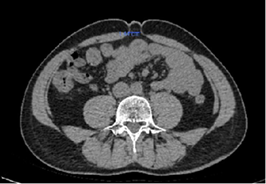
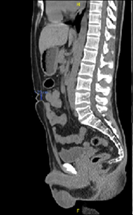
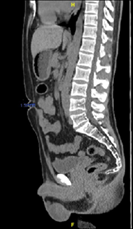
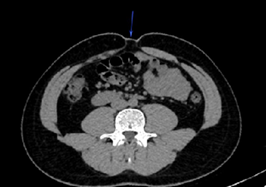
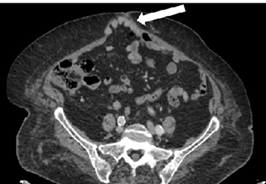
Of the 1706 adult patients who underwent abdominal CT, 783 were female and 923 were male, the age range was 18-95 years (mean 38.5 ± 13.3; median 36.0). Of the CT examinations, 1386 were emergency and 320 were outpatient. Contrast was used in 309 examinations, and 1397 were not. When the images were examined, UH was not present in 1184 (69.4%) and UH was present in 522 (30.6%). In the radiology reports, UH was absent in 1637 (96.0%) and UH was present in 69 (4.0%). The overlook rate was 87.7%. In 5 cases, false-positive results were reported, with UH reported as present when it was actually absent (0.4%). Hernia dimensions were measured in three dimensions: transverse, anteroposterior, and craniocaudal (Figure 1). The mean transverse length was 11.3±5.6, the mean anteroposterior length was 14.5±5.2, and the mean craniocaudal length was 10.2±4.1. Hernias were categorized as small (<1 cm), medium (1–4 cm), and large (≥4 cm) according to the largest measured fascial defect length. 104 (19.9%) were small, 415 (79.5%) were medium, and 3 (0.6%) were large. Hernia contents were classified as omental fat, intestine, fluid, and mixed. All cases contained omental fat (Figure 2). Four (0.8%) were mixed and contained both omental fat and intestine (Figure 3) (Table 1).
| Min | Max | Median | Mean ± SD | n (%) | ||||
| Age | 18 | - | 95 | 36 | 38.5 | ± | 13.3 | |
| Gender | Female | 783 | 45.9% | |||||
| Male | 923 | 54.1% | ||||||
| Emergency Department/Policlinic | Emergency Department | 1386 | 81.2% | |||||
| Polyclinic | 320 | 18.8% | ||||||
| Reported | (-) | 1637 | 96.0% | |||||
| (+) | 69 | 4.0% | ||||||
| Contrast | (-) | 1397 | 81.9% | |||||
| (+) | 309 | 18.1% | ||||||
| Transverse length, mm | 5 | - | 75 | 10 | 11.3 | ± | 5.6 | |
| AP length, mm | 5 | - | 58 | 13 | 14.5 | ± | 5.2 | |
| CC length, mm | 3 | - | 60 | 10 | 10.2 | ± | 4.1 | |
| Fluid only | 0 | 0.0% | ||||||
| Fat only | 518 | 99.2% | ||||||
| Mixed (fat + bowel) | 4 | 0.8% | ||||||
| Hernia Size | Small (<1 cm) | 104 | 19.9% | |||||
| Medium (≥1 cm - <4 cm) | 415 | 79.5% | ||||||
| Large (≥4 cm) | 3 | 0.6% | ||||||
| Umbilical Hernia | (-) | 1184 | 69.4% | |||||
| (+) | 522 | 30.6% | ||||||
| UH (+) Overlook in the Report | (-) | 64 | 12.3% | |||||
| (+) | 458 | 87.7% |
Patients in the UH (+) group were significantly older than those in the UH (-) group (p < 0.0001). The proportion of male patients was significantly higher in the UH (+) group compared to the UH (-) group (p < 0.0001). There was no significant difference in the distribution of emergency/outpatient referrals between the UH (+) and UH (-) groups (p > 0.05). The rate of hernia reporting was significantly higher in the UH (+) group than in the UH (-) group (p < 0.0001). There was no significant difference in the contrast usage rate between the UH (+) and UH (-) groups (p > 0.05) (Table 2).
| Umbilical Hernia (-) (n=1184) | Umbilical Hernia (+) (n=522) | p | |||||||||
| Mean ± SD | n (%) | Median | Mean ± SD n (%) | Median | |||||||
| Age | 37.1 | ± | 13.2 | 34.0 | 41.6 | ± | 13.0 | 40.0 | 0.000 | † | |
| Gender | Female | 577 | 48.7% | 206 | 39.5% | 0.000 | ‡ | ||||
| Male | 607 | 51.3% | 316 | 60.5% | |||||||
| Emergency Department | 975 | 82.3% | 411 | 78.7% | 0.078 | ‡ | |||||
| Policlinic | 209 | 17.7% | 111 | 21.3% | |||||||
| Reported | (-) | 1179 | 99.6% | 458 | 87.7% | 0.000 | ‡ | ||||
| (+) | 5 | 0.4% | 64 | 12.3% | |||||||
| Contrast | (-) | 976 | 82.4% | 421 | 80.7% | 0.379 | ‡ | ||||
| (+) | 208 | 17.6% | 101 | 19.3% | |||||||
| † Mann-Whitney U test / ‡ Chi-square test (Fischer test) |
The sensitivity of UH presence in differentiating UH (+) and UH (-) patients was 12.3%, with a positive predictive value of 92.8%, specificity of 99.6%, and negative predictive value of 72.0 (Table 3).
| Umbilical Hernia (-) | Umbilical Hernia(+) | Sensitivity | Positive PV | Specificity | Negative PV | P | ||
| Reported | (-) | 1179 | 458 | 12.3% | 92.8% | 99.6% | 72.0% | 0.156 |
| (+) | 5 | 64 | ||||||
| K Kappa test |
In UH patients, the age of the group with missed UH in the report was significantly lower than the group without missed UH (p < 0.0001). The distribution of gender between the UH patients with and without missed UH was not significantly different (p > 0.05). The rate of emergency department visits in the group with missed UH in the report was significantly higher than in the group without missed UH (p < 0.0001). The contrast usage rate was significantly lower in the group with missed UH compared to the group without missed UH (p < 0.0001). In UH patients, transverse, AP, and CC lengths were significantly smaller in the group with missed UH compared to the group without missed UH (p < 0.0001). The rate of bowel content was significantly lower in the group with missed UH compared to the group without missed UH (p < 0.0001). The rate of mixed content was also significantly lower in the group with missed UH compared to the group without missed UH (p < 0.0001). There was no significant difference in hernia size between the groups with and without missed UH (p > 0.05) (Table 4).
| Not missed in report (n=64) | Missed in report (n=458) | P | |||||||||
| Mean ± SD | n (%) | Median | Mean ± SD | n (%) | Median | ||||||
| Age | 49.1 | ± | 14.9 | 47.0 | 40.6 | ± | 12.3 | 39.0 | 0.000 | † | |
| Gender | Female | 23 | 35.9% | 183 | 40.0% | 0.538 | ‡ | ||||
| Male | 41 | 64.1% | 275 | 60.0% | |||||||
| Emergency Department | 22 | 34.4% | 389 | 84.9% | 0.000 | ‡ | |||||
| Polyclinic | 42 | 65.6% | 69 | 15.1% | |||||||
| Contrast | (-) | 33 | 51.6% | 388 | 84.7% | 0.000 | ‡ | ||||
| (+) | 31 | 48.4% | 70 | 15.3% | |||||||
| Transverse length, mm | 14.9 | ± | 11.5 | 12.5 | 10.8 | ± | 4.0 | 10.0 | 0.000 | † | |
| AP length, mm | 17.2 | ± | 8.2 | 16.0 | 14.1 | ± | 4.6 | 13.0 | 0.002 | † | |
| CC length, mm | 12.3 | ± | 7.4 | 11.5 | 9.9 | ± | 3.3 | 9.0 | 0.001 | † | |
| Bowel | (-) | 61 | 95.3% | 457 | 99.8% | 0.006 | ‡ | ||||
| (+) | 3 | 4.7% | 1 | 0.2% | |||||||
| Mixed | (-) | 62 | 96.9% | 457 | 99.8% | 0.041 | ‡ | ||||
| (+) | 2 | 3.1% | 1 | 0.2% | |||||||
| Hernia Size | Small (<1 cm) | 10 | 15.6% | 94 | 20.6% | 0.354 | ‡ | ||||
| Medium (≥1 - <4cm) | 51 | 79.7% | 363 | 79.4% | |||||||
| Large (≥4 cm) | 3 | 4.7% | 0 | 0.0% | |||||||
| † Mann-Whitney U test / ‡ Chi-square test (Fischer test) |
In the univariate model, age, emergency department/outpatient referral, contrast usage, transverse length, AP length, CC length, bowel content, and mixed content had a significant effect (p < 0.0001) in differentiating patients with and without missed UH in the report within the UH group.
In the multivariate model, only the emergency department/outpatient referral and AP length had a significant and independent effect (p < 0.0001) in differentiating patients with and without missed UH in the report within the UH group (Table 5).
| Univariate Model | Multivariate Model | |||||||||
| OR | %95 GA | p | OR | %95 GA | p | |||||
| Age | 0.957 | 0.939 | - | 0.975 | 0.000 | |||||
| Emergency Department/Policlinic | 0.093 | 0.052 | - | 0.165 | 0.000 | 0.081 | 0.044 | - | 0.148 | 0.000 |
| Contrast | 0.192 | 0.111 | - | 0.334 | 0.000 | |||||
| Transverse length, mm | 0.902 | 0.855 | - | 0.951 | 0.000 | |||||
| AP length, mm | 0.916 | 0.876 | - | 0.957 | 0.000 | 0.900 | 0.855 | - | 0.948 | 0.000 |
| CC length, mm | 0.893 | 0.836 | - | 0.952 | 0.001 | |||||
| Bowel | 0.044 | 0.005 | - | 0.435 | 0.007 | |||||
| Mixed | 0.068 | 0.006 | - | 0.759 | 0.029 | |||||
| Logistic Regression (Forward LR) |
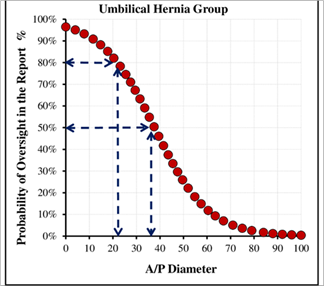
In the UH group, an AP length cut-off of 16.5 mm demonstrated modest discriminatory power in differentiating overlooked from reported cases [AUC 0.628, 95% CI 0.550–0.697]. At the AP length cut-off of 16.5 mm, the sensitivity, positive predictive value, specificity, and negative predictive value for distinguishing patients with and without missed UH were 77.1%, 91.5%, 48.4%, and 22.8%, respectively. ROC analysis demonstrated limited discriminatory performance of AP diameter (AUC: 0.628) (Figure 4).
Discussion
Advances in CT technology, particularly the widespread use of multislice imaging (MDCT), have enabled more frequent and detailed detection of abdominal wall hernias [13]. The literature on reporting rates of these findings is relatively limited. In a study evaluating the prevalence of UH in MDCT, 67.6% of UH-positive cases were not reported in official reports [14]. Similarly, another study reported that approximately 64.8% of all abdominal wall hernias were underreported [15]. In our study, a significantly higher underreporting rate of 87.7% was found. This difference is thought to be due to methodological differences. In our study, a detailed and systematic retrospective reassessment focusing specifically on the umbilical region was performed, and this approach may have allowed for the detection of more small and asymptomatic defects that might be missed during routine and high-volume clinical reporting. Regarding hernia contents, our findings are highly consistent with the existing literature. In a study by Ramos-Morales et al., fat tissue was identified as the most common hernia component, occurring in 87.5% of cases [14]. Similarly, a multicenter study conducted by Alvarez-Lozada et al. reported the presence of fat tissue in 93.3% of their cases [15]. A noteworthy finding in that recent study was that fat content was even more predominant in non-reported cases (96.8%) compared to those that were correctly reported (86.8%) [15]. In our series, omental fat was present in all cases (100%). Specifically, fat tissue was an isolated component in 99.2% of cases, while it was associated with bowel loops (mixed content) in only 0.8%. When our results are evaluated alongside the literature, it can be concluded that umbilical defects containing omental fat represent the vast majority of the hernia population. Due to this characteristic, they constitute the group most susceptible to being overlooked in routine radiological reporting.
According to the classification of European and American hernia societies [16], 19.9% small, 79.5% medium, and 0.6% large hernias were observed in our study. This suggests that mostly small, asymptomatic, and fatty contents could be overlooked. Hernias with bowel content or mixed content are larger in size and can be clinically more symptomatic, making them easier to notice.
The incidence of UH increases in women between 31 and 40 years of age and in men between 61 and 70 years of age. Although the incidence is higher in women, 70% of UH surgical repairs are performed in men [12]. It is the second most common hernia repaired surgically in the United States [17]. In our study, UH was significantly higher in the male sex. Abdominal wall weakness, anatomical structure differences, and increased intraabdominal pressure in men may contribute to this difference. In addition, the higher rate of overlooked UHs in patients with a younger average age suggests that it may be more difficult to recognize small and asymptomatic hernias in young individuals.
It has been stated in the literature that clearer detection and characterization of suspected abdominal wall hernias is observed in CT scans performed with the Valsalva maneuver [18]. In our study, since abdominal CT scans of adult patients admitted with various abdominal complaints were retrospectively screened, the Valsalva maneuver was not performed and other imaging methods were not used. In terms of contrast agent use, it was observed in our study that the rate of overlooking was significantly higher in non-contrast CT examinations.
In overlooked UH cases in our study, hernia lengths (transverse, AP, and CC) were found to be significantly smaller. Especially when the AP length was evaluated with the ROC curve, a sensitivity of 77.1% and a positive predictive value of 91.5% were determined with a threshold value of 16.5 mm. This result is statistically significant. These findings reveal that small-sized hernias are more easily overlooked in reporting. In cases in which umbilical hernias were not documented in the report, hernia dimensions (transverse, AP, and CC) were significantly smaller. When AP length was evaluated using ROC analysis, a threshold value of 16.5 mm was associated with a sensitivity of 77.1% and a positive predictive value of 91.5%. However, the relatively low AUC value indicates limited discriminatory performance, and this threshold should therefore be interpreted with caution. These findings suggest that smaller hernias are less likely to be documented in routine reporting.
In our study, umbilical hernias were less frequently documented in emergency department examinations. This likely reflects reporting prioritization in high-volume settings, where radiologists focus primarily on clinically urgent findings related to the indication of the examination. This may be related to the prioritization of clinically urgent findings, high workload, and the focus on the primary indication of the examination in emergency settings. This may be explained by radiologists focus on primary pathology, their heavy workload, and clinicians' expectations of urgent reporting. Not reporting UH can lead to surgical complications [19]. Strangulation and incarceration (3-5%) are serious complications of UH and require emergency surgical intervention [20]. One study found a mortality rate of 4.9% for incarcerated abdominal wall hernias. Factors affecting mortality included a symptomatic period lasting longer than 8 hours, the presence of concomitant diseases, a high American Society of Anesthesiology (ASA) score, general anesthesia, strangulation, and necrosis. Incarcerated abdominal wall hernias require urgent surgical intervention before bowel necrosis develops [21].
Early diagnosis is very important to prevent complications that may adversely affect the patient's quality of life and to avoid more complicated and risky surgical procedures. In addition, with early diagnosis, patients' recovery time is shorter, the progression of the disease is stopped, and economic burdens are reduced. These and similar studies emphasize the current shortcomings of radiological evaluations and reporting, and contribute to the development of sustainable health policies in terms of both clinical and patient timely diagnosis [22].
In treatment, small and asymptomatic cases are usually followed up, while large or symptomatic ones may require surgical intervention. Manual reduction may be attempted in incarcerated cases. If reduction is successful and the patient is well, elective surgery can be planned. However, if the hernia cannot be reduced or if there are emergency conditions such as trauma, incarceration, or strangulation, it requires emergency surgical intervention. [23]. Preoperative planning reduces hernia recurrence and overall morbidity and mortality. Investigation of preoperative planning and possible complications can be easily performed with MDCT [24].
Conclusions
Undiagnosed umbilical hernias are often initially asymptomatic but may enlarge over time, cause pain, and carry a risk of strangulation and incarceration. These complications can be life-threatening if left untreated. Therefore, early diagnosis and treatment are critical to prevent such serious outcomes. Advances in multidetector CT technology allow multiplanar imaging that provides highly detailed visualization of abdominal anatomy, optimally depicts abdominal wall defects, and offers valuable information for treatment planning. When a hernia is detected, its location, size, content, shape, and potential complications should always be documented in the radiology report. In our study, small umbilical hernias, particularly those containing only omental fat, were frequently overlooked. They were also more often missed in patients presenting to the emergency department and in non-contrast CT examinations. We found that the likelihood of reporting UH increased when the AP length exceeded 16.5 mm, suggesting that this threshold may improve diagnostic accuracy. Our findings highlight the importance of systematically evaluating the umbilical region in CT examinations and consistently reporting UH in routine radiology practice.
Strengths and Limitations
The inclusion of a large cohort of 1,706 consecutive adult patients enhances the robustness and reliability of the study findings regarding the prevalence and reporting patterns of umbilical hernias on abdominal CT. In contrast to prior studies that primarily focused on prevalence, the present study provides a comprehensive evaluation of reporting rates and systematically investigates factors associated with underreporting, including emergency department admission, contrast administration, and precise hernia measurements obtained in three orthogonal planes.
Moreover, the application of multivariate logistic regression and ROC curve analyses allowed for the identification of independent predictors of overlooked hernias and the determination of a clinically relevant cut-off value (16.5 mm), which may serve as a practical reference point in routine radiological assessment. Notably, the demonstration of significantly higher underreporting rates in emergency department settings offers important, practice-oriented implications and highlights the need for structured and systematic evaluation protocols in high-workload clinical environments.
This study has several limitations. It was conducted as a single-center, retrospective study, and all evaluations were performed by a single radiologist. Although this ensured consistency in measurements, it limited the generalizability of the findings and prevented assessment of interobserver variability. All CT scans were obtained only in the supine position; prospective studies using maneuvers such as the Valsalva maneuver, which increase intra-abdominal pressure, may yield different results. In addition, patients’ clinical prognosis and whether surgical intervention was performed could not be assessed in this study. This limitation was due to the retrospective design focusing primarily on radiological evaluation. Future prospective studies including clinical and surgical follow-up data may address this issue.
Declarations
Availability of Data and Materials
The data that support the findings of this study are available from the corresponding author upon reasonable request.
Compliance with Ethical Standards
This study was conducted with the approval of the Non-Interventional Clinical Research Ethics Committee of Istanbul Okan University (meeting no. 189, decision no. 14, dated 07/05/2025), following institutional and ethical guidelines. The study conformed to the principles of the Declaration of 1964 Helsinki and current ethical regulations. All authors declare that the principles and recommendations of the Committee on Publication Ethics (COPE) have been acknowledged and carefully considered in the preparation of this manuscript.
Informed Consent
Our study is retrospective, and informed consent was not obtained since only CT images of the patients were used. No personal identifiers were included.
Conflict of Interest
The authors declare no conflicts of interest related to the authorship or publication of this article.
Consent for publication
The authors agreed to have their study published in this journal.
Funding Declaration
The authors received no financial support or grant for the research and/or authorship of this article