Introduction
Traumatic brain injury (TBI) continues to be a major global contributor to morbidity, long-term disability, and mortality, affecting individuals across all age groups. It typically results from rapid acceleration–deceleration forces, direct head impact, or a combination of both, leading to disturbances in cerebral blood flow, neuronal metabolism, and intracranial dynamics. Among the various categories of brain injury, mild traumatic brain injury (mTBI), commonly referred to as concussion, accounts for the majority of cases and is frequently associated with sports-related injuries, road traffic accidents, and occupational trauma [1-3].
Despite being classified as “mild” based on the Glasgow Coma Scale, mTBI is increasingly recognized as a clinically relevant condition due to the persistence of functional symptoms in a considerable proportion of patients. These manifestations may include physical, cognitive, emotional, and behavioural disturbances that can adversely affect academic performance, occupational productivity, and overall quality of life. Epidemiological data from the Centers for Disease Control and Prevention reported approximately 61,000 deaths related to traumatic brain injury in 2019, underscoring the ongoing public health burden of this condition [4,5].
Visual disturbances constitute one of the most frequently reported and functionally limiting consequences of mild traumatic brain injury. Affected individuals commonly experience blurred vision, diplopia, reading difficulty, headaches, photophobia, visual fatigue, and reduced visual efficiency, particularly during near-vision tasks. Importantly, these symptoms may persist even in the absence of detectable abnormalities on conventional neuroimaging, indicating that functional disruption of neural pathways plays a significant role in post-concussion visual dysfunction [6,7].
The ocular motor system relies on a highly integrated network involving cortical, subcortical, and brainstem structures responsible for maintaining binocular vision and visual stability. Diffuse axonal injury, a characteristic pathological feature of mild traumatic brain injury, can disrupt these neural connections and lead to abnormalities in convergence, accommodation, saccadic eye movements, and smooth pursuit. Such impairments may compromise reading ability, visual attention, and visuomotor coordination, thereby contributing to persistent post-concussion symptoms [8,9].
Although multiple observational studies have documented a high prevalence of convergence insufficiency, accommodative dysfunction, and saccadic abnormalities following mild traumatic brain injury, the reported rates vary considerably across studies. This variability may be attributed to differences in diagnostic criteria, assessment methodologies, study populations, and the timing of visual evaluation after injury. As a result, the true prevalence and clinical profile of ocular motor dysfunction following mTBI remain insufficiently defined [10-12].
Therefore, the present systematic review was undertaken to critically evaluate the prevalence and clinical characteristics of ocular motor dysfunction following mild traumatic brain injury across different age groups, with the aim of providing a clearer evidence base and emphasizing the need for standardized diagnostic approaches in clinical practice.
Methodology
This systematic review was conducted in accordance with the PRISMA 2020 guidelines. A comprehensive literature search was performed using electronic databases including PubMed, Scopus, and Web of Science. Only peer-reviewed articles published in the English language were considered.
Studies were included if they evaluated visual and ocular motor outcomes in patients with mild traumatic brain injury. Both observational and clinical studies reporting convergence insufficiency, accommodative dysfunction, saccadic abnormalities, smooth pursuit deficits, and binocular vision disorders were included. Review articles that provided clinically relevant data were also considered to support the interpretation of findings. Studies focusing exclusively on moderate or severe traumatic brain injury, animal studies, case reports, and non-English publications were excluded.
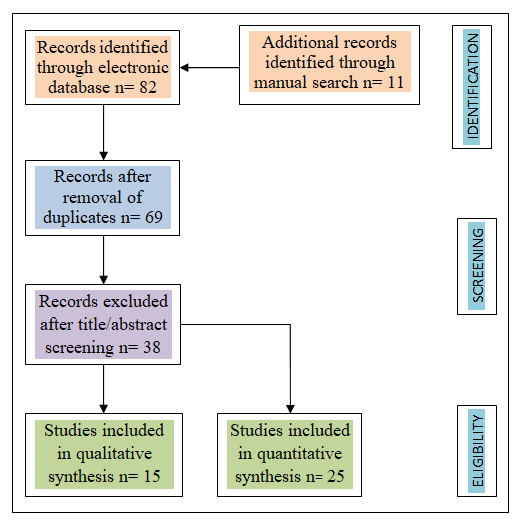
Preference was given to studies published after 2015, as recent advances in concussion research, eye-tracking technology, and binocular vision assessment have significantly improved the understanding of ocular motor dysfunction following mild traumatic brain injury. After removal of duplicate records and screening of titles and abstracts, full-text articles were assessed for eligibility. Finally, 15 studies were included in the qualitative synthesis, and a total of 25 references were selected for the final manuscript. (Fig.-1, Table1)
| S.No | Author (Year) | Study Design | Study Focus | Population | Main Findings |
| 1 | Merezhinskaya et al.,(2021) [3] | Systematic review | Photophobia after TBI | Mixed population | Visual system dysfunction is common after a concussion. |
| 2 | Armstrong (2018)[4] | Review | Visual problems associated with TBI | Adults | High prevalence of visual and oculomotor symptoms after mTBI. |
| 3 | DiCesare et al.,(2017) [5] | Observational / Experimental | Saccadic and smooth pursuit analysis | Adults | Objective quantification of oculomotor deficits after brain injury. |
| 4 | Reddy et al.,(2020) [6] | Observational | Reading eye movements in TBI | Mixed population | Significant abnormalities in reading-related eye movements. |
| 5 | Rauchman et al.,(2022) [7] | Review | Visual system in mild–moderate TBI | Mixed population | Visual dysfunction is frequently underdiagnosed after a concussion. |
| 6 | Capizzi et al.,(2020) [8] | Clinical / Narrative review | Epidemiology and pathophysiology of TBI | Mixed TBI population | TBI involves focal and diffuse injury; diffuse axonal damage contributes to persistent visual symptoms. |
| 7 | Humble et al.,(2018) [9] | Observational prognostic study | Prognosis of diffuse axonal injury | Patients with diffuse axonal injury | Diffuse axonal injury is strongly associated with persistent neurological and oculomotor deficits. |
| 8 | Rasiah et al.,(2021) [10] | Clinical review | Visual deficits after TBI | Mixed population | Convergence and accommodative abnormalities are frequently reported. |
| 9 | Ellis et al.,(2016) [11] | Clinical observational study | Traumatic optic neuropathy after concussion | Sports-related concussion | Visual dysfunction may occur even after mild TBI. |
| 10 | Saliman et al.,(2021) [12] | Observational / Clinical review | Afferent visual manifestations of TBI | Mixed population | Wide spectrum of visual dysfunction, including oculomotor abnormalities. |
| 11 | Ciuffreda et al.,(2017) [13] | Clinical study | Visual motion sensitivity and oculomotor dysfunction | Adults with mTBI | Oculomotor dysfunction is frequently associated with post-concussion symptoms. |
| 12 | Padula et al.,(2017) [14] | Observational study | Spatial visual processing dysfunction | Adults | TBI is associated with significant binocular and visual processing abnormalities. |
| 13 | Bigler et al.,(2018) [15] | Neuroimaging study | Structural brain changes after concussion | Adults | Diffuse axonal injury affects visual pathways. |
| 14 | Froment-Tilikete et al.,(2022) [16] | Clinical review | Assessment of eye movements | Adults | Standardised oculomotor testing is essential in neurological patients. |
| 15 | Yadav & Tandon et al.,(2019) [21] | Clinical review | Comprehensive eye examination in TBI | Mixed population | Emphasises the importance of detailed binocular vision evaluation. |
Results
A total of 15 studies met the inclusion criteria and were included in the qualitative synthesis. These studies consisted of clinical observational studies, experimental investigations, and systematic or narrative reviews focusing on visual and ocular motor dysfunction following mild traumatic brain injury (mTBI). Most of the included studies involved adult populations, although a few studies included mixed age groups and sports-related concussion cohorts.
The analysis demonstrated that ocular motor dysfunction is one of the most frequently reported visual consequences of mTBI. Convergence insufficiency and accommodative dysfunction were the most consistently reported findings across the included studies. In addition, several studies reported significant abnormalities in saccadic eye movements, smooth pursuit, and reading-related eye movement performance following mild traumatic brain injury.
Photophobia, visual fatigue, difficulty in reading, and reduced binocular coordination were also commonly reported symptoms among patients with mTBI. Neuroimaging-based studies further suggested that diffuse axonal injury affecting the visual pathways may contribute to persistent ocular motor and visual dysfunction following mild traumatic brain injury.
Overall, the findings of the included studies indicate that visual and ocular motor dysfunction is highly prevalent after mTBI but often remains underdiagnosed due to the absence of standardised clinical assessment protocols.
Mechanism of Injury
Traumatic brain injury (TBI) may occur as a result of direct blunt trauma to the head, penetrating injury, or non-impact forces such as rapid acceleration–deceleration of the brain within the cranial cavity. The initial biomechanical insult produces a primary injury characterised by disruption of cerebral blood flow and alterations in cellular homeostasis. Based on the pattern of tissue involvement, primary brain injury is broadly classified into focal and diffuse injury [7].
Focal traumatic brain injury most commonly affects the frontal and temporal lobes due to their anatomical proximity to the bony ridges of the skull. These injuries are frequently associated with clinical manifestations such as subdural hematoma, epidural hematoma, and hemorrhagic contusions. In addition to direct tissue damage, focal injury may disrupt the blood–brain barrier (BBB), resulting in increased vascular permeability, extracellular fluid accumulation, and cerebral oedema. Alterations in cerebral blood flow, including hypoperfusion or hyperperfusion, may further contribute to neuronal damage, tissue necrosis, and the formation of cavities within the brain due to glial cell reactivity [8].
Focal traumatic brain injury may also involve a specific mechanism known as contrecoup injury, in which major cerebral contusions occur at a site opposite to the point of impact. These coup–contrecoup mechanisms may result in widespread neuronal damage and may contribute to a broad spectrum of neurological and visual symptoms in affected individuals.
Diffuse brain injury, in contrast, occurs primarily due to rapidacceleration–deceleration forces acting on the head and is commonly associated with axonal and vascular injury as well as cerebral swelling. Diffuse damage is frequently associated with disorders of consciousness and is often identified through radiological investigations [8,9].
Pathophysiological Basis of Ocular Motor Dysfunction after mTBI
Mild traumatic brain injury results primarily from rapid acceleration–deceleration forces acting on the brain, which may occur even in the absence of direct impact. These forces produce both focal and diffuse neural damage, with diffuse axonal injury considered the principal mechanism responsible for persistent functional symptoms following concussion. The shearing forces generated during trauma disrupt neuronal axons, particularly in regions responsible for higher visual and ocular motor control [1-4].
The ocular motor system relies on a complex neural network involving the frontal eye fields, parietal cortex, cerebellum, and brainstem ocular motor nuclei. Even minor disruption within this network may result in significant abnormalities in eye-movement control. Damage to these neural pathways may impair convergence, accommodation, saccadic eye movements, and smooth pursuit, which are essential for maintaining binocular single vision and efficient near-vision tasks [5-7].
Diffuse axonal injury affecting the frontal and parietal lobes is particularly relevant to post-concussion visual dysfunction. The frontal eye fields play a major role in voluntary saccadic eye movements, whereas the parietal cortex is essential for visuospatial integration and smooth pursuit eye movements. Injury to these cortical regions may therefore result in functional visual symptoms even when structural neuroimaging appears normal [8-10].
In addition to cortical involvement, traumatic brain injury may also affect subcortical and brainstem structures responsible for ocular motor coordination. Disruption of these pathways may lead to convergence insufficiency, accommodative dysfunction, reduced saccadic accuracy, and impaired smooth pursuit. These abnormalities frequently manifest clinically as blurred vision, diplopia, reading difficulty, visual fatigue, and headache, which are among the most commonly reported symptoms following mild traumatic brain injury. [11-13].
The persistence of ocular motor dysfunction despite normal radiological findings suggests that functional neural disruption rather than gross structural damage plays a major role in post-concussion visual impairment. This pathophysiological understanding provides a strong scientific basis for the increasing clinical focus on binocular vision and ocular motor assessment in patients with mild traumatic brain injury [13].
Visual Impairment
Permanent visual impairment is one of the most serious complications of head and facial trauma. Early identification and management of ocular and neuro-visual damage are therefore essential to prevent long-term visual disability. The optic nerve from each eye transmits visual impulses from retinal ganglion cells to the brain through the optic chiasm, where partial decussation occurs. Each optic tract contains fibres from the ipsilateral temporal retina and the contralateral nasal retina, ensuring binocular visual integration [10-12].
The optic nerve and associated visual pathways may sustain either primary or secondary injury due to the transmission of mechanical forces during traumatic brain injury, even when the initial impact appears relatively minor. Compression of the optic nerve, axonal disruption, and compromised vascular supply are considered the principal mechanisms responsible for traumatic optic neuropathy. These pathological changes may result in a broad spectrum of visual deficits ranging from impaired colour vision and reduced visual acuity to sudden and complete visual loss [10-12].
In addition to active medical management, spontaneous visual recovery has been reported in several cases, and careful clinical observation remains an accepted management strategy in selected patients. Beyond the optic nerve, traumatic brain injury may also impair visual function through damage to higher cortical centres involved in visual processing. The posterior parietal cortex, located anterior to the occipital lobe, plays a critical role in visuospatial processing and visual integration [13].
The parietal lobes are essential for visuomotor coordination, spatial navigation, decision-making, and short-term visual memory. Damage to these regions may therefore result in significant functional visual impairment even in the absence of primary ocular pathology. Furthermore, surgical intervention in the parietal region following traumatic brain injury has been associated with an increased risk of language impairment and visual field defects in some patients [14-16].
Clinical Significance of Ocular Motor Dysfunction after mTBI :
Visual dysfunction following mTBI has important implications for daily functioning, particularly in activities that require sustained near vision. Difficulties in reading, reduced visual efficiency, and impaired eye-movement control may significantly affect academic performance, occupational productivity, and quality of life. Studies evaluating reading eye movements and visual performance after traumatic brain injury have demonstrated measurable functional deficits even in patients classified as having mild injury [5,6].
Ocular motor dysfunction represents a clinically significant yet frequently overlooked consequence of mild traumatic brain injury. A substantial proportion of patients continue to experience persistent visual symptoms despite normal findings on routine neuroimaging and standard ophthalmic examinations. As highlighted in previous studies, many individuals with mTBI remain undiagnosed or do not receive appropriate follow-up care, which may contribute to prolonged functional impairment [17-20].
Another clinically important observation is that ocular motor abnormalities are often associated with additional post-concussion symptoms such as headache, photophobia, visual fatigue, and sleep disturbance. These factors may further delay functional recovery and reduce the effectiveness of rehabilitation if visual dysfunction is not addressed early. Evidence suggests that comprehensive neuro-visual assessment, including binocular vision and ocular motor evaluation, is therefore essential in the clinical management of patients with mild traumatic brain injury [21-24].
Furthermore, several studies have emphasised the role of interdisciplinary rehabilitation strategies in improving visual outcomes following mTBI. The use of prism correction, tinted lenses, and structured visual rehabilitation programs has been reported to reduce visual symptoms and improve functional performance in affected individuals. These findings highlight the importance of early identification and appropriate management of ocular motor dysfunction in optometric and neuro-rehabilitation practice [25].
Visual Consequences of mTBI
Visual dysfunction represents one of the most frequently reported functional consequences following mild traumatic brain injury. Although mTBI is classified as a mild neurological condition based on the Glasgow Coma Scale, a large proportion of patients experience persistent visual symptoms that significantly interfere with daily activities. These symptoms commonly include blurred vision, diplopia, photophobia, visual fatigue, headaches during near work, and difficulty in reading, even in patients with normal neuroimaging findings [1-5].
In addition to subjective symptoms, several studies have reported measurable visual functional deficits following mTBI. These include reduced reading speed, poor fixation stability, difficulty in sustaining near visual tasks, and decreased visual efficiency during academic and occupational activities. Such functional limitations often persist beyond the acute phase of injury and may significantly affect the quality of life of affected individuals [6-8].
The visual consequences of traumatic brain injury are closely related to the involvement of higher cortical centres responsible for visual processing and ocular motor control. The frontal lobes play a critical role in voluntary eye movements, particularly saccadic control, whereas the parietal lobes are essential for visuospatial processing and visual attention. Injury to these cortical regions may therefore result in significant visual dysfunction even in the absence of primary ocular pathology. In addition, disruption of neural pathways connecting the cortex, cerebellum, and brainstem may further contribute to visual disturbances following mTBI [9-13].
Another important aspect of post-concussion visual dysfunction is that it frequently remains underdiagnosed. Routine ophthalmic examinations often focus primarily on visual acuity and ocular health, while binocular vision and ocular motor functions may not be assessed in detail. As a result, many patients continue to experience persistent visual symptoms despite apparently normal clinical findings. These observations highlight the importance of a comprehensive neuro-visual assessment in patients with mild traumatic brain injury [14-16, 21-23].
Discussion
The findings of the present systematic review demonstrate that ocular motor dysfunction represents one of the most consistent and clinically significant visual consequences of mild traumatic brain injury. The majority of the included studies reported a high prevalence of convergence insufficiency, accommodative dysfunction, and abnormalities in saccadic and smooth-pursuit eye movements following mTBI [6,7,15,20,21,24]. These findings support previous clinical and review-based studies, which have emphasised that visual and ocular motor disturbances are frequently under-recognised despite their substantial impact on functional vision and quality of life in patients with concussion [3,4,8,17].
Another important observation emerging from the present review is the variability in the reported prevalence of visual dysfunction after mTBI. This variation may be attributed to differences in study design, diagnostic criteria, patient populations, and the absence of standardised ocular motor assessment protocols across clinical settings [4,8,23]. Some studies have used symptom-based screening tools, whereas others have relied on detailed binocular vision assessment, which may explain the differences in reported prevalence rates [15,20,21,24]. This lack of uniformity highlights the need for standardised clinical guidelines for the evaluation of visual and ocular motor dysfunction following mild traumatic brain injury.
The pathophysiological basis of ocular motor dysfunction after mTBI is also supported by several studies included in this review. Diffuse axonal injury affecting the visual pathways, particularly those involving the brainstem and cortical ocular motor control centres, may contribute to persistent abnormalities in eye movements and binocular vision function [13,22]. In addition, disruption of neural pathways responsible for accommodation, convergence, and saccadic control may explain the high frequency of convergence insufficiency and accommodative dysfunction reported in patients with concussion [6,20,21]. These findings suggest that even mild traumatic brain injury may lead to subtle but clinically significant neuro-visual dysfunction.
From a clinical perspective, the results of this review emphasise the importance of comprehensive visual and ocular motor evaluation in patients presenting with post-concussion symptoms. Several studies have reported that visual dysfunction may remain undiagnosed when routine ophthalmic examination alone is performed, particularly in patients with mild traumatic brain injury [3,8,17]. Early identification of ocular motor dysfunction is essential because these abnormalities may significantly affect reading performance, visual comfort, academic activities, and overall functional recovery after concussion [7,15,20].
The present systematic review also highlights the need for increased awareness among clinicians regarding visual and ocular motor complications of mild traumatic brain injury. Although mTBI is often considered a transient condition, a substantial proportion of patients may continue to experience persistent visual symptoms due to underlying binocular and ocular motor dysfunction [4,8,23]. Therefore, incorporation of structured binocular vision and ocular motor assessment into routine post-concussion evaluation may improve diagnosis and management outcomes in these patients.
Despite the important findings of this review, certain limitations should be acknowledged. The included studies varied in terms of study design, sample size, and diagnostic criteria, which may have influenced the reported prevalence of visual dysfunction. In addition, only English-language articles were included, and the number of studies included in the qualitative synthesis was relatively limited. However, the use of recent studies and a systematic review approach strengthens the clinical relevance of the present findings.
Overall, the findings of this systematic review indicate that ocular motor dysfunction is highly prevalent after mild traumatic brain injury and represents an important but frequently underdiagnosed clinical problem. Future studies with standardised diagnostic criteria and larger sample sizes are required to better understand the prevalence, pathophysiology, and clinical implications of visual dysfunction following mTBI.
Limitations
The present systematic review has several limitations that should be considered while interpreting the findings. First, the included studies demonstrated considerable heterogeneity in terms of study design, diagnostic criteria, and assessment protocols for ocular motor and binocular vision dysfunction. Second, most of the available studies were observational in nature and included relatively small sample sizes, which may limit the generalizability of the findings. Third, differences in the duration of follow-up and variability in the definition of post-concussion visual symptoms may have influenced the reported prevalence rates. In addition, only studies published in selected databases and within a defined time period were included, which may have resulted in the exclusion of potentially relevant literature. Therefore, further large-scale, well-designed studies using standardised clinical assessment protocols are required to strengthen the existing evidence.
Conclusion
Ocular motor dysfunction represents one of the most common and clinically significant visual consequences of mild traumatic brain injury. The present systematic review highlights that convergence insufficiency, accommodative dysfunction, and abnormalities in saccadic and smooth-pursuit eye movements are frequently reported even after mild forms of traumatic brain injury. Despite their high prevalence, these visual disturbances often remain underdiagnosed, particularly when comprehensive binocular vision and ocular motor assessment are not routinely performed.
The findings of this review emphasise the need for early identification and systematic evaluation of visual and ocular motor dysfunction in patients with mild traumatic brain injury. Incorporating structured binocular vision and ocular motor assessment into routine post-concussion evaluation may improve clinical diagnosis, guide appropriate management, and enhance functional visual recovery in affected patients.
Further well-designed studies with standardised diagnostic criteria and larger sample sizes are required to better understand the prevalence, mechanisms, and long-term clinical impact of ocular motor dysfunction following mild traumatic brain injury.
Declarations
Data Availability Statement
Data supporting the findings of this manuscript are available from the corresponding author upon reasonable request.
Acknowledgement
The Authors would like to thank the Department of Optometry of Dr STM Hospital and Government Medical College, Haldwani, their faculties, students and the participants for their support. The author is also grateful to the authors, editors and publishers of all those articles and journals from which the literature for this article has been reviewed and discussed.
Ethical Considerations
None declared
Funding
None declared
Conflict of Interest
None declared