Abstract
Background: Sepsis is a significant global health issue and a predominant cause of death in ICU patients. Traditionally, serum lactate and albumin have been utilized as prognostic biomarkers. However, emerging research indicates that the lactate-to-albumin ratio (LAR) may provide enhanced predictive accuracy by merging assessments of tissue hypoperfusion and systemic inflammation. The aim of this study is to evaluate the prognostic efficacy of the LAR compared to serum lactate and albumin levels individually, specifically regarding mortality prediction in ICU patients suffering from sepsis. Methods: This prospective, interventional, double-blind study was conducted over one year at the Department of Anaesthesiology, SRN Hospital, MLN Medical College, Prayagraj. A total of 61 adult patients diagnosed with sepsis were enrolled. Serial measurements of lactate, albumin, and their ratio were taken over six days. Primary outcome was in-hospital mortality. Diagnostic performance was evaluated using sensitivity, specificity, positive predictive value (PPV), negative predictive value (NPV), and area under the ROC curve (AUC). Results: Among the 61 sepsis patients, 18 (29.5%) succumbed during ICU stay. The LAR on Day 1 demonstrated superior predictive accuracy (cut-off: 1.1; sensitivity: 94.4%; specificity: 67.4%; AUC: 0.862, p<0.001) compared to lactate alone (cut-off: 1.8 mmol/L; AUC: 0.739, p=0.003) and albumin alone (cut-off: 1.6 g/dL; AUC: 0.543, p=0.602). The LAR remained significantly elevated in non-survivors throughout the 6-day ICU stay (p<0.001). Additionally, higher SOFA scores and prolonged hospital stay were associated with increased mortality (p<0.05). Conclusion: The lactate/albumin ratio serves as a more reliable and sensitive biomarker compared to lactate or albumin individually for early risk stratification in sepsis. Integrating this ratio into standard ICU sepsis protocols could enhance prognostic assessment and support early intervention strategies.
Keywords: Sepsis, lactate-to-albumin ratio (LAR), ICU.
Introduction
Sepsis is a severe condition resulting from the body’s inflammatory response to infection, leading to organ failure and high mortality, especially in ICUs. The WHO reports over 48.9 million cases and nearly 11 million deaths annually. Early detection and management are essential despite treatment advances. Identifying high-risk patients remains a challenge, with traditional biomarkers like blood lactate and serum albumin used for severity assessment. Recent findings suggest that the L/A ratio, which combines these biomarkers, may enhance mortality predictions compared to using them independently [1-3].
Sepsis is characterized by an abnormal host reaction to infection, leading to inflammatory responses and microvascular damage, resulting in tissue hypoperfusion, organ failure, and increased mortality. Key laboratory tests to evaluate sepsis severity include total leukocyte count, platelet count, blood glucose, serum lactate, albumin, C-reactive protein, and procalcitonin. Serum lactate serves as a crucial prognostic marker, reflecting tissue hypoxia and the risk of increased mortality, with rapid lactate normalization associated with better survival outcomes [4-6].
Serum albumin, produced by the liver, plays a crucial role in maintaining oncotic pressure and is often low in sepsis due to capillary leakage, inflammation, and inadequate liver production. While decreased albumin is correlated with poorer outcomes in critically ill patients, factors such as malnutrition and fluid resuscitation limit its predictive value. Consequently, researchers have explored the lactate-to-albumin (L/A) ratio as a potentially superior biomarker, combining metabolic and inflammatory responses for a more comprehensive risk assessment [7-9]. Recent studies suggest that a higher L/A ratio correlates with increased mortality rates in septic patients, with the ratio proving a better predictor than initial serum lactate [10]. Integrating albumin levels with lactate measurements may improve risk assessment in sepsis management.
During sepsis, lactic acidosis occurs due to increased anaerobic glycolysis linked to poor tissue oxygenation and metabolic stress, with high lactate levels indicating inadequate oxygen to tissues. However, lactate levels can be influenced by various factors, including medication and liver function. Concurrently, systemic inflammation reduces albumin levels, making hypoalbuminemia indicative of illness severity. Elevated lactate and lowered albumin together can enhance predictive accuracy regarding tissue hypoxia and inflammation [11-13]. Studies show the lactate/albumin (L/A) ratio is valuable in identifying high-risk sepsis patients; a high L/A ratio is associated with increased mortality and multiorgan dysfunction. Additionally, it may improve the Sequential Organ Failure Assessment (SOFA) score's predictive capability for sepsis outcomes [14,15].
This study evaluates the predictive value of the lactate/albumin (L/A) ratio in ICU sepsis patients for risk stratification, comparing its effectiveness in predicting mortality against lactate and albumin alone. It analyzes the L/A ratio's sensitivity and specificity and its potential role in clinical decision-making and management strategies.
Aim
To Investigate the lactate-to-albumin ratio as a prognostic biomarker in sepsis and septic shock.
Primary Objective: To compare this ratio's prognostic capability against serum lactate and albumin in sepsis patients. Secondary
Objectives: To assess correlation with CRP, examine relationships with severity scores (qSOFA and APACHE), explore variations by infection source, analyze treatment impacts on the ratio and mortality, evaluate correlations with hospital stay duration, and conduct a cost-effectiveness analysis of monitoring the ratio in sepsis management.
Methods
The Prospective, Randomized, Interventional, double blind, non-placebo study, conducted in the Department of Anaesthesiology at SRN Hospital, MLN Medical College in Prayagraj, is a prospective, randomized, interventional, double-blind, non-placebo trial set to last one year. Total 61 Patients with sepsis, between the age of 18 years to 60 years were included, excluding those with preexisting infections, non-infectious inflammatory disorders, chronic drug use, or chronic alcoholism.
During the study, clinical examinations and interviews will be carried out using a standardized form. The participants' demographic, social, and medical information was carefully documented. Data on sepsis were collected from patients admitted to the medical ICU ward of the facility. Various biochemical investigations were conducted on the first and third day of admission. These tests include complete blood count, liver function tests, renal function tests, serum electrolytes, blood glucose, electrocardiogram, arterial blood gases, lactate level, serum C-reactive protein level, erythrocyte sedimentation rate, blood culture, urine culture, and sputum culture. Patients were closely monitored throughout their hospital stay, and the data collected will be carefully analyzed using advanced statistical software. The typical range for serum lactate is 0.5–1 mmol/L, while the serum albumin level usually falls between 3.5–5.5 g/dl. For the standard cutoff values, we will consider a higher serum lactate level of over 2 mmol/L and a lower serum albumin level of less than 3.4 g/dl. If the ratio between serum lactate and serum albumin is 0.58 or higher, it was considered significantly elevated.
Risk from the study is minimal, and patient confidentiality will be strictly maintained. Participants have the right to inquire about any study aspect and may withdraw from the study at any time if they choose to do so.
Operational Definitions
The typical serum lactate range is 0.5–1 mmol/L, and serum albumin levels range from 3.5–5.5 g/dl. Elevated serum lactate is indicated by levels over 2 mmol/L, while low serum albumin is defined as less than 3.4 g/dl. A serum lactate to albumin (L/A) ratio of 0.58 or more is significantly elevated. This L/A ratio is a critical tool for risk stratification in septic patients, correlating better with mortality predictions and hospital stay than lactate or albumin individually. An increased L/A ratio indicates worse long-term outcomes and serves as a surrogate marker of disease severity, making it essential for effective risk assessment.
Statistical Analysis
The statistical analysis utilized SPSS version 25.0, presenting data as mean (standard deviation) for continuous variables and frequency (percentage) for categorical variables. Comparisons of categorical variables were conducted using the chi-square test, while the independent Student’s t-test assessed differences in continuous variables between groups. The Receiver Operating Characteristic (ROC) curve analysis evaluated the discriminatory ability of variables, with diagnostic performance measured by Sensitivity, Specificity, Positive Predictive Value (PPV), and Negative Predictive Value (NPV). A p-value < 0.05 was deemed statistically significant.
Results
Out of 61 patients studied, 43 (70.49%) non-mortality group (survived sepsis), while 18 (29.51%) non-mortality group (succumbed to the illness). The mean age for survivors was 40.93 years, and for those who succumbed, it was 35.00 years, with no significant age difference (t = 1.77, p = 0.082). Gender distribution was similar in both groups, with 51.16% males in the non-mortality group and 50% in the mortality group, showing no significant association (Chi-square = 0.01, p = 0.934). The non-mortality group had a mean hospitalization of 4.69 days, versus 5.56 days for the mortality group, with this difference being statistically significant (t = -2.05, p = 0.046) (Table 1).
| Non- mortality (n=43) | Mortality (n=18) | Chi Sq. | p-Value | ||||
| N | % | n | % | ||||
| Gender | Male | 22 | 51.16 | 9 | 50.00 | 0.01 | 0.934 |
| Female | 21 | 48.84 | 9 | 50.00 | |||
| Age (Years) (mean±SD) | 40.93±12.36 | 10.79±1.77 | t=1.77 | 0.082 | |||
| Length of Hospital stay (days) (mean±SD) | 4.69±0.98 | 5.56±2.23 | t=-2.05 | 0.046 |
Total leukocyte count (TLC) trends differ significantly between sepsis patients' mortality and non-mortality groups from Day 1 to Day 6. On Day 1, TLC was similar (21727.81 vs. 20513.33; p = 0.568). Starting Day 2, TLC in the mortality group increased but not significantly (p = 0.139). From Day 3 to Day 6, TLC was significantly higher in the mortality group with p-values < 0.001, reaching 29744.70 by Day 6. Elevated TLC indicates poor prognosis, while declining levels suggest improved outcomes. Lactate levels also showed significant differences; on Day 1, the mortality group had higher levels (3.39 ± 1.63 vs. 2.20 ± 1.55 mmol/L; p = 0.009), with sustained elevation noted in subsequent days (all p < 0.001). Albumin levels were significantly lower in the mortality group on Day 1 (2.17 ± 0.14 vs. 2.68 ± 0.85 g/dL; p = 0.025), but differences became statistically insignificant on following days, indicating no significant variations in albumin levels post-Day 1.( Table 2)
| Non- mortality (n=43) | Mortality (n=18) | t | p-Value | ||||
| Mean | ±SD | Mean | ±SD | ||||
| TLC count | Day 1 | 21727.81 | 7350.68 | 20513.33 | 7991.85 | 0.574 | 0.568 |
| Day 2 | 21007.93 | 5364.04 | 23387.72 | 6292.64 | -1.501 | 0.139 | |
| Day 3 | 17195.65 | 4178.96 | 23899.38 | 8143.83 | -4.157 | <0.001 | |
| Day 4 | 15263.68 | 3903.25 | 25456.00 | 5859.08 | -7.209 | <0.001 | |
| Day 5 | 13529.38 | 4885.92 | 27276.33 | 8287.86 | -6.628 | <0.001 | |
| Day 6 | 14007.92 | 8643.26 | 29744.70 | 8549.38 | -4.273 | <0.001 | |
| Lactate levels | Day 1 | 2.20 | 1.55 | 3.39 | 1.63 | -2.70 | 0.009 |
| Day 2 | 1.86 | 1.32 | 3.59 | 1.37 | -4.64 | <0.001 | |
| Day 3 | 1.38 | 0.94 | 3.91 | 2.22 | -2.25 | 0.029 | |
| Day 4 | 1.17 | 0.89 | 3.40 | 0.69 | -8.48 | <0.001 | |
| Day 5 | 1.20 | 0.96 | 3.92 | 1.01 | -8.13 | <0.001 | |
| Day 6 | 1.34 | 1.57 | 4.65 | 0.71 | -6.16 | <0.001 | |
| Albumin levels | Day 1 | 2.68 | 0.85 | 2.17 | 0.14 | -0.92 | 0.025 |
| Day 2 | 3.32 | 0.66 | 3.41 | 0.76 | -0.48 | 0.636 | |
| Day 3 | 3.17 | 0.59 | 3.38 | 0.87 | -1.02 | 0.312 | |
| Day 4 | 3.23 | 0.53 | 3.45 | 0.66 | -1.22 | 0.230 | |
| Day 5 | 3.04 | 0.86 | 3.40 | 0.63 | -1.32 | 0.195 | |
| Day 6 | 3.45 | 0.36 | 3.22 | 0.65 | 1.05 | 0.307 |
The comparison of the Lactate/Albumin Ratio (LAR) in ICU patients with sepsis reveals significant differences between non-survivors and survivors. On Day 1, mean LAR was 1.68 ± 0.41 in non-survivors, compared to 1.06 ± 0.58 in survivors. By Day 2, LAR increased to 1.16 ± 0.63 in the mortality group versus 0.63 ± 0.42 in survivors (p < 0.001). From Day 3 through Day 6, the mortality group consistently showed elevated LAR values, peaking at 1.53 ± 0.54 on Day 6, all statistically significant (p < 0.001), while non-mortality group values remained below 0.7 (Table 5).
| Non- mortality (n=43) | Mortality (n=18) | t | p-Value | ||||
| Mean | ±SD | Mean | ±SD | ||||
| LAR Ratio | Day 1 | 1.06 | 0.58 | 1.68 | 0.41 | -4.10 | <0.001 |
| Day 2 | 0.63 | 0.42 | 1.16 | 0.63 | -3.84 | <0.001 | |
| Day 3 | 0.45 | 0.28 | 1.16 | 0.79 | -5.16 | <0.001 | |
| Day 4 | 0.39 | 0.25 | 0.99 | 0.39 | -6.37 | <0.001 | |
| Day 5 | 0.43 | 0.27 | 1.12 | 0.52 | -5.60 | <0.001 | |
| Day 6 | 0.45 | 0.46 | 1.53 | 0.54 | -5.05 | <0.001 |
A comparison of Sequential Organ Failure Assessment (SOFA) scores in ICU patients with sepsis showed significant differences between non-mortality and mortality groups from Day 1 to Day 6. On Day 1, the mortality group's mean SOFA score was 5.28 ± 2.35, significantly higher than the non-mortality group's 2.64 ± 1.72 (t = -4.86, p < 0.001). This gap widened over the days, with the mortality group reaching a score of 6.28 ± 2.49 by Day 2, while non-mortality scores remained static. By Day 3 to Day 5, mortality scores increased from 7.38 to 8.58, in contrast to non-mortality scores dropping from 1.76 to 1.07. On Day 6, the non-mortality group slightly increased to 2.17 ± 3.76 due to outliers, while the mortality group maintained a high score of 9.00 ± 1.33 (p < 0.001). These results validate SOFA as an effective marker for organ dysfunction and poor prognosis in sepsis patients (Table 6).
| Non- mortality (n=43) | Mortality (n=18) | t | p-Value | ||||
| Mean | ±SD | Mean | ±SD | ||||
| SOFA Score | Day 1 | 2.64 | 1.72 | 5.28 | 2.35 | -4.86 | <0.001 |
| Day 2 | 2.64 | 1.56 | 6.28 | 2.49 | -6.86 | <0.001 | |
| Day 3 | 1.76 | 1.46 | 7.38 | 2.80 | -9.91 | <0.001 | |
| Day 4 | 1.03 | 1.78 | 7.93 | 2.70 | -10.58 | <0.001 | |
| Day 5 | 1.07 | 2.20 | 8.58 | 2.61 | -9.42 | <0.001 | |
| Day 6 | 2.17 | 3.76 | 9.00 | 1.33 | -5.45 | <0.001 |
| At days 1 | Cut-off | Sensitivity | Specificity | Area | 95% CI | p-Value | |
| Lower | Upper | ||||||
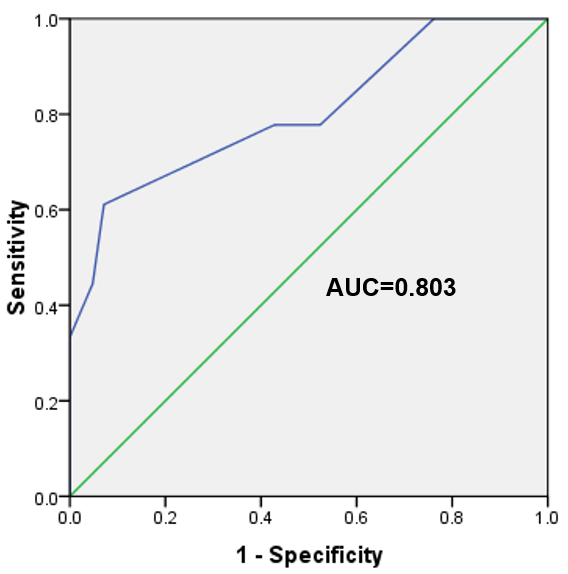
| SOFA | 3.5 | 77.8 | 57.1 | 0.803 | 0.672 | 0.934 | <0.001 |
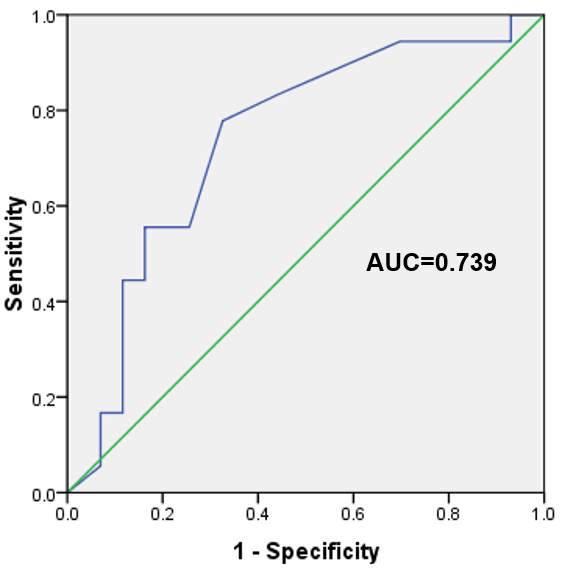
| Lactate levels | 1.8 | 83.3 | 65.8 | .739 | .604 | .874 | 0.003 |
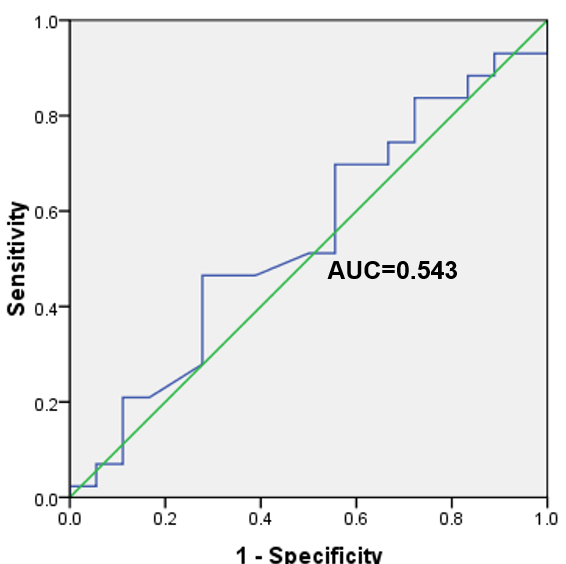
| Albumin levels | 1.60 | 69.8 | 44.4 | 0.543 | 038 | 0.70 | 0.602 |
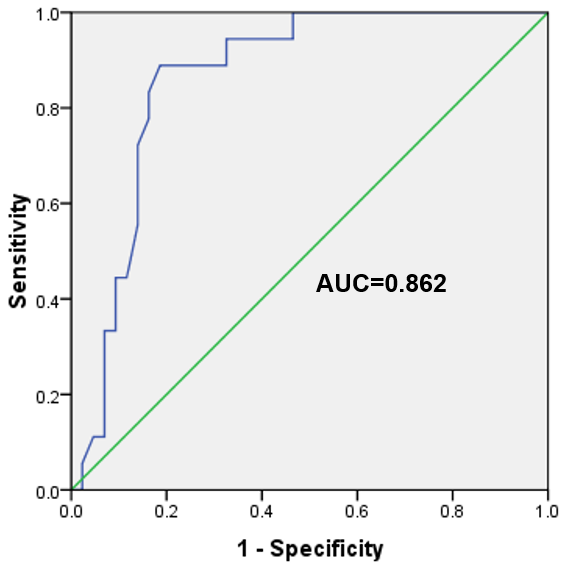
| LAR ratio | 1.1 | 94.4 | 67.4 | 0.862 | 0.769 | 0.956 | <0.001 |
Receiver Operating Characteristic (ROC) curve analyses were conducted on several biomarkers for predicting mortality in ICU patients with sepsis on Day 1. The Sequential Organ Failure Assessment (SOFA) score demonstrated a cut-off of 3.5, showing a sensitivity of 77.8% and specificity of 57.1%, with an AUC of 0.803 and significant p-value (< 0.001). Lactate levels at 1.8 mmol/L provided a better sensitivity of 83.3% and specificity of 65.8%, resulting in an AUC of 0.739 (p = 0.003). In contrast, albumin levels at 1.6 g/dL displayed poor discriminative ability (AUC of 0.543, p = 0.602), indicating limited reliability for mortality prediction. The Lactate/Albumin Ratio (LAR) at a cut-off of 1.1 showed the highest sensitivity of 94.4% and an AUC of 0.862 (p < 0.001), confirming its significance as a mortality predictor in this cohort. (Figure 1-4).
Discussion
In the study, the mean age of sepsis survivors was 40.93 years, compared to 35.00 years for non-survivors, with no statistically significant difference (p = 0.082), suggesting age may not be a reliable predictor of mortality in ICU sepsis patients, despite contrasting results from earlier studies. Angus et al. reported increased mortality rates with advancing age, particularly in those over 65, and Martin et al. supported this trend in sepsis patients [4,16]. However, the younger demographic in this study raises concerns about demographic and referral bias. Liu et al.,[17] argued that factors such as physiological reserve and comorbidities might impact outcomes more significantly than age in younger cohorts. Regarding gender distribution, the study found no significant association with mortality, aligning with mixed literature findings on gender differences in sepsis outcomes. While some studies suggested men may exhibit a higher inflammatory response leading to increased mortality, others indicated females might experience better outcomes due to hormonal influences. Overall, this study reinforces prior research indicating that neither age nor gender serves as a definitive prognostic factor in sepsis mortality.
In the study, patients who died had longer average hospital stays (5.56 ± 2.23 days) compared to survivors (4.69 ± 0.98 days), with a statistically significant difference (t = -2.05, p = 0.046). This trend suggests that prolonged hospital stays correlate with higher mortality rates in sepsis, often due to ongoing organ issues, delayed treatment responses, or complications like secondary infections and multiple organ failure. Previous research supports this, indicating that longer stays often reflect disease severity rather than treatment success [4,18,19]. For instance, prior studies highlight that patients who did not survive sepsis were typically in the ICU longer due to organ failure or hospital-acquired infections [20]. The findings advocate for interpreting length of stay in the context of patient conditions and clinical interventions rather than as an isolated measure.
In our study, we examined the relationship between total leukocyte count (TLC) and mortality in sepsis patients through serial monitoring from Day 1 to Day 6. Initially, the mean TLC did not differ significantly between non-mortality (21727.81 ± 7350.68) and mortality groups (20513.33 ± 7991.85) on Day 1 (p = 0.568). However, significant increases in TLC were noted from Day 3 onward, with the mortality group exhibiting elevated values: Day 3 (23899.38 ± 8143.83 vs. 17195.65 ± 4178.96, p < 0.001), Day 4 (25456.00 ± 5859.08 vs. 15263.68 ± 3903.25, p < 0.001), Day 5 (27276.33 ± 8287.86 vs. 13529.38 ± 4885.92, p < 0.001), and Day 6 (29744.70 ± 8549.38 vs. 14007.92 ± 8643.26, p < 0.001). These results suggest that sustained high or increasing TLC after Day 3 is closely linked to poor outcomes and higher mortality. Our findings endorse TLC trend analysis as a valuable prognostic marker for early detection of high-risk sepsis patients, consistent with literature indicating leukocytosis and leukopenia relate to increased mortality. Previous studies noted that a high initial TLC might not predict good prognosis due to factors like antibiotic therapy or stress [21]. A biphasic immune response in sepsis, with initial hyperinflammation leading to immune suppression, may explain this, while dynamic TLC changes are more indicative of ICU outcomes. Elevated white blood cell counts can signify ineffective inflammatory responses correlating with organ failure and mortality [22]. Monitoring TLC trends within 72-96 hours post-admission is suggested for better mortality risk assessment [3].
In the study, lactate levels were significantly higher in non-survivors compared to survivors, starting on Day 1 with values of 3.39 ± 1.63 mmol/L versus 2.20 ± 1.55 mmol/L (p-value 0.009). This trend intensified on Day 2, where non-survivors had an average lactate level of 3.59 ± 1.37 mmol/L, while survivors dropped to 1.86 ± 1.32 mmol/L (p-value < 0.001). From Day 3 to Day 6, non-survivors consistently exhibited elevated lactate levels, indicating continued tissue hypoperfusion and anaerobic metabolism. These findings reinforce prior studies showing that multiple lactate measurements enhance prognostic accuracy for ICU mortality compared to a single value. Elevated lactate levels (>2 mmol/L) correlate with increased mortality in sepsis, and failure to normalize within 6–12 hours signals a high risk of death. Lactate levels indicate tissue hypoperfusion and systemic hypoxia [105][106]. The Surviving Sepsis Campaign Guidelines recommend lactate monitoring to guide therapy, stressing normalization as a resuscitation goal [13]. However, elevated lactate can also arise from liver dysfunction and other factors, suggesting that its combination with the lactate/albumin ratio (LAR) may improve diagnostic accuracy.
In this study, Day 1 serum albumin levels were significantly lower in non-survivors (2.17 ± 0.14 g/dL) versus survivors (2.68 ± 0.85 g/dL), with a p-value of 0.025, suggesting that low albumin may predict sepsis outcomes in ICU patients. However, this significance was not present on subsequent days (Day 2: p = 0.636; Day 3: p = 0.312; Day 4: p = 0.230; Day 5: p = 0.195; Day 6: p = 0.307). The observed trend of lower albumin in the mortality group may be impacted by medical interventions such as albumin supplements, fluid changes, or nutritional support affecting serum levels over time. A review of over 90 clinical studies revealed that low albumin levels indicate poor outcomes in seriously ill patients, particularly in septic shock and multiple organ failure [20]. Studies indicated that a serum albumin level below 2.5 g/dL upon ICU admission is associated with a higher mortality rate within 30 days from sepsis [9]. It was noted that single-point albumin measurements may lose prognostic value over time, highlighting the need for composite markers like the lactate/albumin ratio (LAR), which better reflect inflammatory status and metabolic stress [23]. Low albumin on admission correlates with disease severity and increased mortality among septic patients, as albumin is affected by systemic inflammation and vascular permeability changes during sepsis. Findings suggest that LAR offers superior prognostic accuracy compared to standalone albumin levels.
In our study, the Lactate/Albumin Ratio (LAR) was identified as a sensitive biomarker for predicting mortality in ICU sepsis patients. On Day 1, the average LAR was significantly higher in the mortality group (1.68 ± 0.41) compared to survivors (1.06 ± 0.58). This trend intensified on Day 2, with non-survivors reporting a mean LAR of 1.16 ± 0.63 and survivors at 0.63 ± 0.42 (p < 0.001). Higher LAR values persisted in non-survivors through Days 3 to 6, with significant differences noted (p < 0.001), while survivor values remained under 0.7. Existing evidence indicates that a high LAR (Lactate to Albumin Ratio) in the first 48 hours is strongly associated with early death, showcasing its role beyond metabolic issues to reflect the body's weakened response [23]. Initially proposed by Zhang et al.,[24] LAR combines lactate, a metabolic stress marker, and albumin, a nutritional/inflammatory marker, proving to be more predictive of in-hospital mortality than either marker alone, with an AUC of 0.84. Hao et al.,[25] further validated LAR as an independent predictor of 28-day mortality in ICU sepsis patients, particularly when assessed serially, where an LAR > 1.2 significantly increases death risk. LAR is effective in capturing both hemodynamic and inflammatory disturbances, thereby serving as a superior composite marker.
Our study analyzed the Sequential Organ Failure Assessment (SOFA) scores from Day 1 to Day 6 in ICU patients with sepsis, revealing a significant distinction between survivors and non-survivors. On Day 1, non-survivors had a higher SOFA score (5.28 ± 2.35) compared to survivors (2.64 ± 1.72, t = -4.86, p < 0.001). This difference intensified daily, with non-survivors showing a steep increase in scores by Day 5 (8.58), while survivors demonstrated clinical recovery, reflected in declining scores (1.07). By Day 6, non-survivors had scores dramatically elevated (9.00 ± 1.33, p < 0.001). These findings confirm a strong correlation between high or rising SOFA scores and poor patient outcomes, consistent with prior research. Research shows that the SOFA score, developed by Vincent et al. is crucial for tracking organ dysfunction and guiding treatment [20]. Ferreira et al. found that changes in SOFA scores over time predict outcomes better than single scores, with high scores linked to mortality [26]. Jones et al. highlighted that a decrease of ≥2 points in SOFA over 48 hours correlated with lower mortality among septic patients [28]. Raith et al.,[27] confirmed that higher SOFA scores within 24 hours of ICU admission predicted increased hospital mortality, underlining its early prognostic value.
In this study, ROC curve analysis of the SOFA score on Day 1 for ICU sepsis patients yielded an AUC of 0.803, indicating excellent diagnostic accuracy. A cut-off of 3.5 identified 77.8% of patients at risk of death, though it was only moderately effective at distinguishing survivors (57.1%). The statistical significance (p < 0.001) is backed by a confidence interval of 0.672–0.934. While the SOFA score is a reliable early warning tool, the Lactate/Albumin Ratio (LAR) may offer superior mortality prediction. Previous studies, including those by support these findings, indicating the importance of monitoring SOFA score changes over time [24]. Nevertheless, the SOFA score's strong performance reaffirms its clinical relevance in early ICU prognostication.
In our study, the ROC curve analysis identified a cut-off value of 1.8 mmol/L for serum lactate on Day 1 to predict mortality in sepsis patients, resulting in a sensitivity of 83.3% and specificity of 65.8%. The area under the curve (AUC) was 0.739, indicating acceptable diagnostic accuracy, supported by a 95% confidence interval (0.604–0.874) and a significant p-value of 0.003, confirming lactate's role as an early prognostic marker. While sensitivity is high, the moderate specificity suggests limitations in identifying survivors. Previous studies support lactate as a critical biomarker of tissue hypoperfusion [29]. However, lactate's sensitivity does not guarantee specificity, particularly in cases of liver issues or non-infectious low blood flow. The study advocates for composite markers like the lactate/albumin ratio (LAR), which showed a superior AUC of 0.862.
ROC curve analysis of serum albumin on Day 1 indicated an optimal cut-off of 1.6 g/dL, demonstrating 69.8% sensitivity and 44.4% specificity for predicting mortality in sepsis patients. The area under the curve (AUC) was 0.543, showing a non-significant result (p-value = 0.602) and poor discriminative ability, marginally better than random chance. This suggests that albumin levels are not reliable prognostic indicators in sepsis. Previous studies also reported low AUC values for albumin, highlighting its non-specific nature and the influence of confounding factors [10,30]. Comparatively, hypoalbuminemia showed correlation with poor outcomes but was less predictive than lactate or the lactate/albumin ratio. In larger cohorts, albumin alone performed suboptimally against composite markers.
In the study, the Lactate/Albumin Ratio (LAR) on Day 1 was found to be highly effective in predicting mortality in ICU patients with sepsis. At a cut-off value of 1.1, LAR demonstrated a sensitivity of 94.4%, accurately identifying most at-risk patients, while exhibiting a specificity of 67.4%, indicating moderate effectiveness in excluding survivors. The area under the curve (AUC) was 0.862, with a 95% confidence interval of 0.769–0.956, reinforcing its statistical robustness. A p-value of less than 0.001 underscores the strong relationship between elevated LAR and increased mortality risk, establishing LAR as a crucial early indicator for sepsis outcomes. This aligns with previous studies, including research by Kim et al.,[31], which showed that combining LAR with scoring systems like SOFA improved prognostic accuracy, and findings from Zhang et al.,[24] that reported LAR's AUC as 0.87, indicating its superiority to other individual measures. Additionally, Huang et al.,[32] noted an LAR threshold >1.2 with similar sensitivity and specificity to the current study. LAR's efficacy is attributed to its ability to reflect both low blood flow (via lactate) and the body’s nutritional/inflammation levels (via albumin), marking it as a dual indicator of physical stress. Unlike SOFA, which requires multiple tests, LAR can be rapidly calculated from standard blood tests, facilitating timely decisions in busy ICU settings. Thus, Day 1 LAR > 1.1 emerges as a powerful predictor of sepsis-related mortality and may complement or outperform conventional scoring systems.
The study's limitations include a small sample size of 61 patients, which may affect the generalizability of the findings. As a single-center observational study, its external validity is constrained. Key factors such as the timing and frequency of sample collection, comorbidities, type of infection, and treatment modalities were not controlled. Furthermore, there was no standardization of nutritional status or liver function, which could impact albumin levels. The study also lacked an assessment of long-term outcomes beyond ICU mortality, hindering a comprehensive understanding of prognostic markers in sepsis.
Conclusion
This study reveals that the lactate/albumin ratio (LAR) is a superior predictor of mortality in ICU patients with sepsis compared to lactate or albumin alone. On Day 1, LAR exhibited the best sensitivity at 94.4% and an AUC of 0.862, outperforming lactate (AUC = 0.739) and the SOFA score (AUC = 0.803). LAR remained elevated in non-survivors, highlighting its reliability as a dynamic marker of disease severity. Persistently high lactate and low albumin levels, along with elevated total leukocyte counts, further indicate clinical deterioration in non-survivors. Thus, integrating LAR with clinical scoring systems like SOFA enhances risk assessment and facilitates timely treatment decisions in sepsis management.
Declarations
Ethics approval and consent to participate
Taken.
Data Availability
All data available on corresponding author on responsible request.
Conflict of Interest
None
Funding
None
Acknowledgments
None
Author Contributions
All authors contributed equally, and final approval of the version to be published.