
Abstract
The maritime industry is fundamental to global trade but remains a significant contributor to greenhouse gas emissions, necessitating a transition toward cleaner energy sources. This study evaluates the feasibility and potential benefits of adopting alternative fuels in Tanzania’s maritime sector within the broader East African context. A mixed-methods approach was employed, integrating quantitative survey data from maritime professionals with qualitative insights from key stakeholders. In addition, Life Cycle Assessment (LCA) and Cost–Benefit Analysis (CBA) were applied to assess the environmental and economic performance of liquefied natural gas (LNG), hydrogen, methanol, and biofuels. The findings indicate increasing awareness and generally positive perceptions of alternative fuels, with LNG and methanol emerging as the most viable short- to medium-term options due to their technological maturity and favorable economic performance. However, widespread adoption is constrained by high capital investment requirements, limited bunkering infrastructure, inadequate fuel availability, and low compatibility of existing vessels. While regulatory frameworks are perceived as increasingly supportive, implementation remains constrained by technical and institutional limitations. The study concludes that structural barriers, rather than stakeholder resistance, are the primary impediments to adoption. It recommends targeted policy incentives, infrastructure development, and capacity-building initiatives to accelerate the transition toward sustainable maritime energy systems and support progress toward net-zero emissions.
Keywords
Maritime decarbonization Alternative fuels Liquefied natural gas (LNG) Methanol Tanzania
1. Introduction
International shipping is the connective tissue of the global economy. It moves approximately ninety per cent of world merchandise trade by volume (UNCTAD, 2024) and, in so doing, contributes an estimated 2.9–3.1 per cent of global anthropogenic greenhouse-gas emissions (IMO, 2023). Were the sector a sovereign state, it would rank among the world's ten largest emitters. The political consequence of this scale has been a convergence of regulatory ambition. The 2023 IMO Strategy on the Reduction of GHG Emissions from Ships commits member states to net-zero emissions by or around 2050, with indicative checkpoints of at least 20 per cent reduction by 2030 and 70 per cent by 2040, against a 2008 baseline. These commitments are aligned with the Paris Agreement and with Sustainable Development Goals 13 and 14 (IPCC, 2023; World Bank, 2022).
The principal technical pathway to those targets — across the IMO, IRENA, and IEA roadmaps — runs through low- and zero-carbon alternative fuels: liquefied natural gas (LNG), methanol, hydrogen, and advanced biofuels (IEA, 2023; IRENA, 2023). The environmental case for these fuels is, in broad terms, established. The diffusion case is not. Empirical evidence on adoption to date has been concentrated in Northern Europe, East Asia, and North America (Bouman et al., 2017; Brynolf et al., 2014; Gilbert et al., 2018; van Hoecke et al., 2021), with the consequence that the developing maritime economies which will host the marginal tonne of avoided emissions over the next two decades remain comparatively under-studied.
The East African corridor — anchored by the Port of Dar es Salaam and connected through Mombasa, Beira, and the inland markets of the Great Lakes — exemplifies this lacuna. The corridor is a strategic transit route for landlocked Eastern and Central African economies, yet its decarbonisation pathway is constrained by limited bunkering infrastructure, fragmented regulatory harmonisation across littoral states, an ageing vessel fleet, and a thin supply of concessional finance for retrofit (UNCTAD, 2024; World Bank, 2022). The literature on maritime diffusion has not yet adequately specified the binding constraint in such settings — that is, whether adoption is held back primarily by stakeholder perceptions and knowledge, by technological compatibility, by institutional architecture, or by capital availability. Without such specification, policy instruments risk being mis-targeted.
It is in this context that the present study asks: Which technical, economic, and institutional determinants govern the adoption of alternative marine fuels in Tanzania's maritime sector, and how do these determinants compare with the conditions identified in the global diffusion literature? The study draws on a convergent parallel mixed-methods design that integrates a structured survey of thirty maritime professionals, fifteen semi-structured stakeholder interviews, a well-to-wake life-cycle assessment of four candidate fuels relative to heavy fuel oil, and a twenty-year cost–benefit analysis at a 7 per cent discount rate. The Diffusion of Innovation Theory (Rogers, 2003) provides the principal analytical frame, complemented by the Technology–Organisation–Environment (TOE) framework (Tornatzky & Fleischer, 1990) and Institutional Theory (Scott, 2014).
This paper contributes by demonstrating empirically — through the convergence of perceptual, environmental, and financial evidence — that the binding constraints upon alternative-fuel diffusion in a representative East African maritime economy are structural (capital intensity, bunkering availability, retrofit capacity) rather than attitudinal, and by deriving from this distinction a regional Maritime Energy Transition Framework that maps each binding constraint to an actionable policy instrument. In so doing, it extends the Diffusion of Innovation literature to a Global South maritime setting and complements the technical-feasibility scholarship that has hitherto been dominated by high-income corridors.
The remainder of the paper is organised as follows. Section 2 develops the theoretical framework. Section 3 sets out the mixed-methods design, including the LCA and CBA procedures. Section 4 presents the findings. Section 5 discusses these findings against the prior literature and the diffusion framework. Section 6 derives theoretical and practical implications. Section 7 sets out the study's limitations and an agenda for further research, and Section 8 concludes.
2. Theoretical Framework
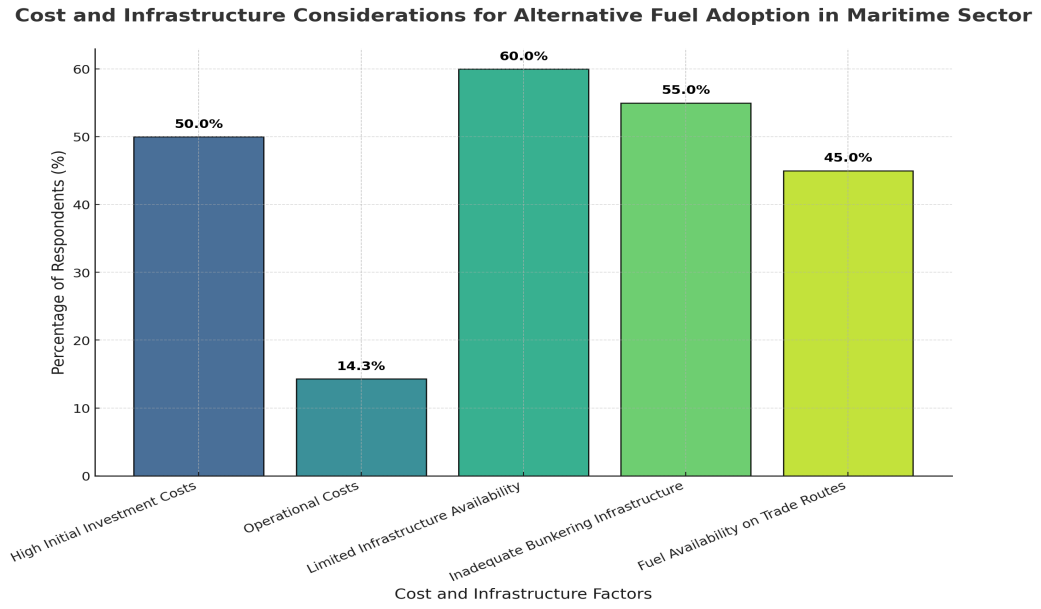
The study is grounded in three complementary theoretical traditions which, taken together, account for both the decision properties of the innovation and the macro-environmental forces that condition them. Diffusion of Innovation Theory (Rogers, 2003) supplies the principal analytical lens. The Technology–Organisation–Environment (TOE) framework (Tornatzky & Fleischer, 1990) and Institutional Theory (Scott, 2014) extend it to account for the macro-environmental and institutional pressures that are particularly salient in a developing maritime economy.
Rogers (2003) proposes that the rate of diffusion of an innovation through a social system is governed by five attributes of the innovation itself — relative advantage, compatibility, complexity, trialability, and observability — operating through communication channels over time. In maritime fuel transitions, relative advantage is typically expressed through emission performance, regulatory compliance, and unit operating cost (Bouman et al., 2017; Brynolf et al., 2014). Compatibility captures the alignment between the candidate fuel and existing port, vessel, and regulatory infrastructure — a dimension on which East African ports score relatively low (UNCTAD, 2024). Complexity refers to the perceived difficulty of implementation, which is heightened where fuel-handling protocols and engineer skill sets must be acquired ab initio (Psaraftis & Kontovas, 2022). Trialability and observability bear upon the existence of pilot projects and visible success cases; their absence delays the movement from persuasion to decision.
The TOE framework supplements Rogers' attributes with three contextual layers — technological, organisational, and environmental — that condition adoption decisions inside the firm. In the maritime setting, the environmental layer is occupied by IMO instruments, regional regulators, and the financing environment. Institutional Theory (Scott, 2014) reminds us, moreover, that adoption is shaped by regulative pressure (mandates), normative pressure (professional and industry expectations), and mimetic pressure (the visible behaviour of comparable ports and operators). Taken together, these frameworks predict that in settings where regulative pressure is rising faster than technological and financial capacity, observable adoption will lag the underlying environmental case.
Figure 1 reproduces the conceptual model, in which Rogers' five attributes are linked to adoption intention and behavioural adoption, alongside the adopter categories and the external regulatory and infrastructural influences that the TOE and Institutional-Theory perspectives bring into view. The following section operationalises this framework through the four analytical strands that compose the study's research design.
3. Methodology
3.1 Research Design
The study adopts a convergent parallel mixed-methods design (Creswell & Plano Clark, 2018; Tashakkori & Teddlie, 2020), in which quantitative and qualitative strands are collected concurrently, analysed independently, and integrated at the interpretation stage. The design is appropriate where the phenomenon of interest is simultaneously measurable (perception scores, emission factors, financial flows) and interpretive (stakeholder reasoning about risk, legitimacy, and capability), as is the case in maritime fuel transitions (Fetters et al., 2013).
3.2 Quantitative Strand
Structured questionnaires were administered between January and June 2025 to thirty maritime professionals purposively sampled from three Tanzanian agencies: the Tanzania Ports Authority (TPA), the Marine Services Company Limited (MSCL), and the Tanzania Shipping Agencies Corporation (TASAC). Respondents represented ship engineers, port environmental officers, logistics managers, and policymakers, thereby ensuring occupational heterogeneity. The instrument used five-point Likert items (1 = strongly disagree, 5 = strongly agree) to measure perceptions of bunkering infrastructure, vessel-engine compatibility, fuel accessibility, cost-effectiveness, and regulatory support. The instrument was pilot-tested and reviewed by two external maritime academics; internal-consistency reliability across the multi-item constructs was acceptable (Cronbach's α = 0.87). Data were analysed in SPSS v29 using descriptive statistics.
The sample size (n = 30) is consistent with the highly specialised population of senior maritime professionals in the Tanzanian setting and is sufficient for descriptive analysis; its implications for inferential generalisation are addressed in Section 7.
3.3 Qualitative Strand
Fifteen semi-structured interviews were conducted with maritime regulators, port administrators, fuel suppliers, and policy experts, identified through purposive sampling and snowball referral. Interviews lasted between forty-five and sixty minutes, were recorded with informed consent, and were transcribed verbatim. Coding and theme generation followed Braun and Clarke's (2019) six-phase reflexive thematic analysis in NVivo 14. Dependability was supported by inter-coder agreement checks; credibility was strengthened through member validation with five of the fifteen interview participants, who reviewed the preliminary thematic structure and confirmed the fidelity of the interpretation. Three dominant themes emerged: technical and infrastructural constraints; regulatory coherence and institutional support; and financial and market feasibility.
3.4 Life-Cycle Assessment
A well-to-wake life-cycle assessment was conducted in accordance with ISO 14040 and ISO 14044 (ISO, 2006) for four alternative fuel pathways — LNG, hydrogen, methanol, and biofuels — benchmarked against conventional heavy fuel oil. System boundaries encompassed production, transport, storage, and combustion. Inventory data were drawn from TPA energy audits and from the Ecoinvent v3.8, IEA (2023), and IRENA (2023) databases. Impact assessment used ReCiPe 2016 in SimaPro 9.5 across three categories: Global Warming Potential (kg CO₂-eq/MJ, GWP100 metric; IPCC, 2023), energy intensity (MJ/ton-km), and air-pollutant emissions (SO₂ and NOₓ). Sensitivity analysis varied production efficiency and transport distance by ±25 per cent; uncertainty was quantified by Monte Carlo simulation with ten thousand iterations.
3.5 Cost–Benefit Analysis
A twenty-year cost–benefit model was constructed in accordance with World Bank (2022) and OECD (2020) guidance. Cost components comprised retrofit capital, bunkering and storage infrastructure, crew training, operations and maintenance, and compliance. Benefit components comprised fuel-efficiency savings, avoided carbon penalties, environmental-compliance gains, and prospective carbon-credit revenue. Discounting employed a 7 per cent rate. Cost and benefit components were appraised on a comparative basis across the four fuel pathways under baseline conditions and under stylised sensitivity scenarios at ±10 per cent, ±25 per cent, and ±40 per cent variation, drawing on parameter ranges reported in the IEA (2023), IRENA (2023), and OECD (2020) source literature.
3.6 Integration, Triangulation, and Ethical Assurance
The four strands were integrated through joint-display matrices that compared perception scores, interview themes, LCA outputs, and CBA indicators across the four determinants of interest (Fetters et al., 2013). Convergence, complementarity, and divergence were identified systematically. Expert validation workshops with TASAC and MSCL reviewed the analytical assumptions and refined contextual interpretation. Ethical approval was obtained from the Institute's Research and Ethics Committee; all participants provided informed consent, and identifying information has been anonymised. Analytical datasets, SPSS syntax, NVivo codebooks, and SimaPro models are archived and available from the corresponding author on reasonable request, consistent with open-science principles (OECD, 2021).
4. Results
This section reports the empirical findings in six parts. Sections 4.1 to 4.4 present the perceptual evidence from the survey and interviews, organised around the four determinants identified in Section 2. Section 4.5 reports the life-cycle and cost–benefit analyses. Section 4.6 synthesises the four strands through the joint-display matrix, providing the empirical foundation for the discussion that follows.
4.1 Sample Composition and Familiarity with Alternative Fuels
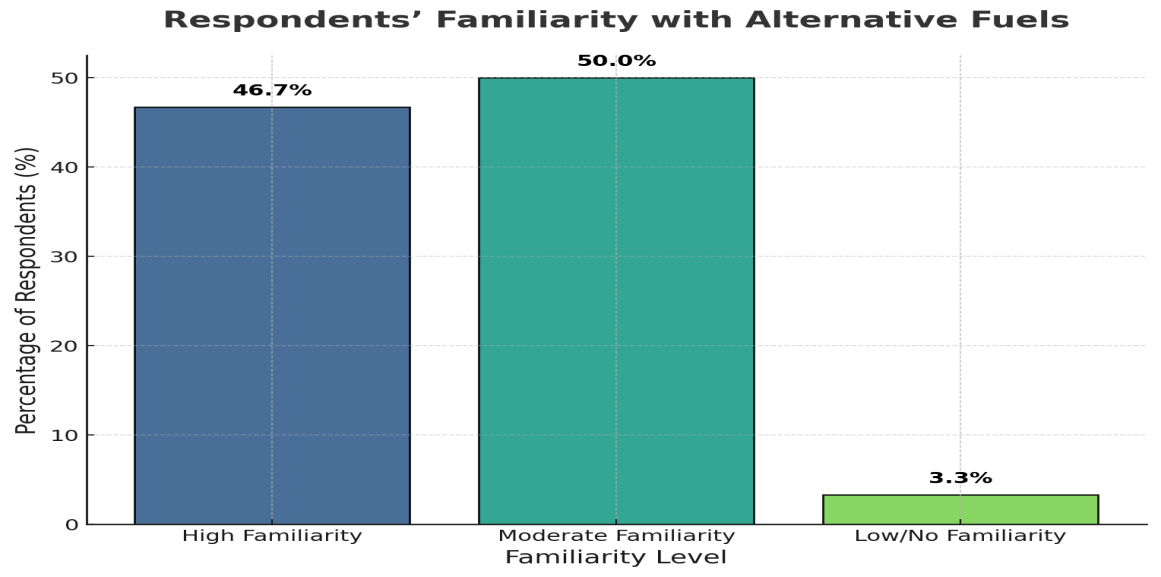
The thirty survey respondents comprised academics (50.0 per cent), seafarers (30.0 per cent), policymakers (13.3 per cent), shipbuilders (3.3 per cent), and maritime-affairs officers (3.3 per cent). A clear majority — 83 per cent — rated the reduction of GHG emissions from shipping as “extremely important.” Familiarity with alternative fuels was distributed as follows: 46.7 per cent high, 50.0 per cent moderate, and 3.3 per cent low or none (Figure 2).
4.2 Stakeholder Perceptions of Fuel Options
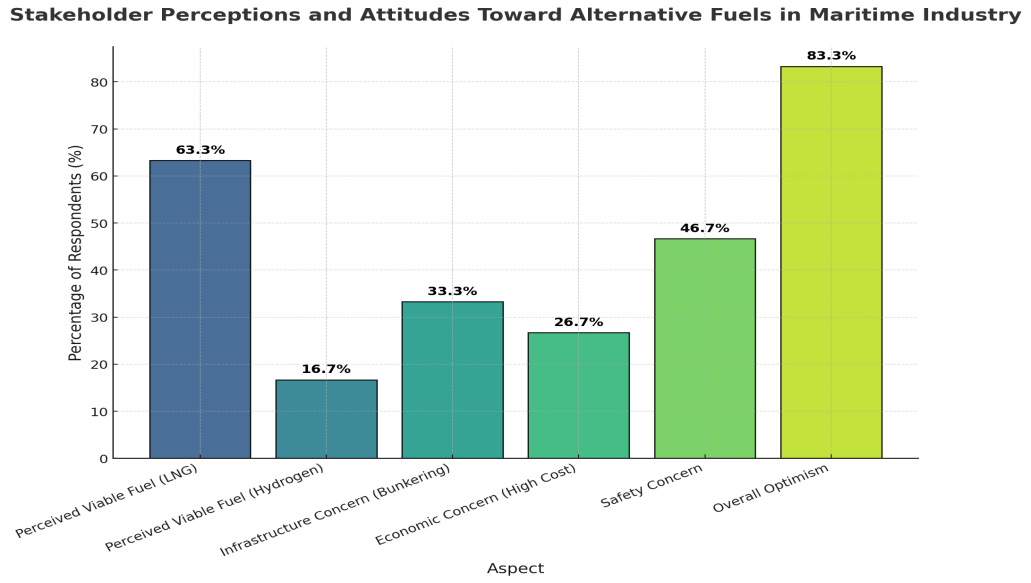
LNG was identified as the most viable alternative fuel by 63.3 per cent of respondents, followed by hydrogen (16.7 per cent), methanol (13.3 per cent), and biofuels (6.7 per cent). Safety concerns relating to handling and storage were expressed by 46.7 per cent of respondents. The absence of adequate bunkering infrastructure was cited as a major impediment by 33.3 per cent, and 26.7 per cent emphasised high initial investment and operating cost. The distribution is shown in Figure 3, and the perceptual rankings are consolidated in Table 1.
| Perception variable | LNG | Methanol | Hydrogen | Biofuels |
|---|---|---|---|---|
| Identified as most viable alternative fuel | 63.3% | 13.3% | 16.7% | 6.7% |
| Perceived technological maturity | High | Medium–High | Low | Low–Medium |
| Perceived compatibility with current fleet | Partial | Partial | Limited | Limited |
Note. Percentages reflect the proportion of respondents identifying the fuel as the most viable. Categorical descriptors are summarised from interview testimony.
4.3 Cost and Infrastructure
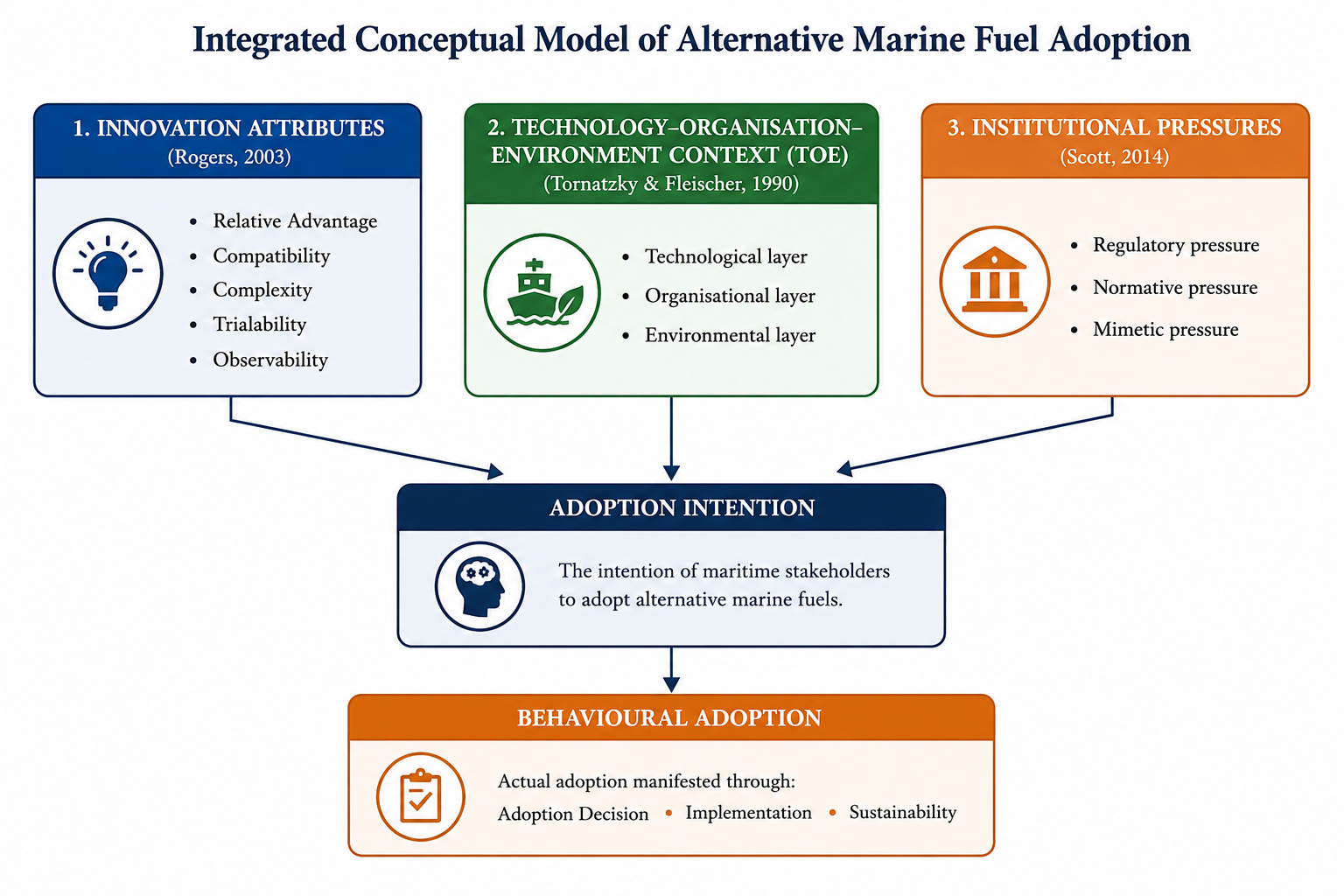
Half of all respondents (50.0 per cent) identified high initial investment cost as the single most critical constraint upon alternative-fuel adoption, against only 14.3 per cent for recurrent operational cost. Infrastructural barriers were reported by 60.0 per cent of respondents (limited general infrastructure), 55.0 per cent (inadequate bunkering), and 45.0 per cent (fuel availability along primary maritime trade routes). The full distribution of reported barriers is presented in Figure 4 and consolidated in Table 2.
| Barrier | Respondents reporting (%) |
|---|---|
| Limited general port infrastructure | 60.0 |
| Inadequate bunkering facilities | 55.0 |
| High initial investment cost | 50.0 |
| Safety concerns (handling and storage) | 46.7 |
| Fuel availability along primary trade routes | 45.0 |
| Substantial vessel-engine modification required | 60.0 |
| Recurrent operational cost | 14.3 |
Note. Multiple-response items; columns do not sum to 100 per cent.
4.4 Technical Feasibility and Regulatory Support
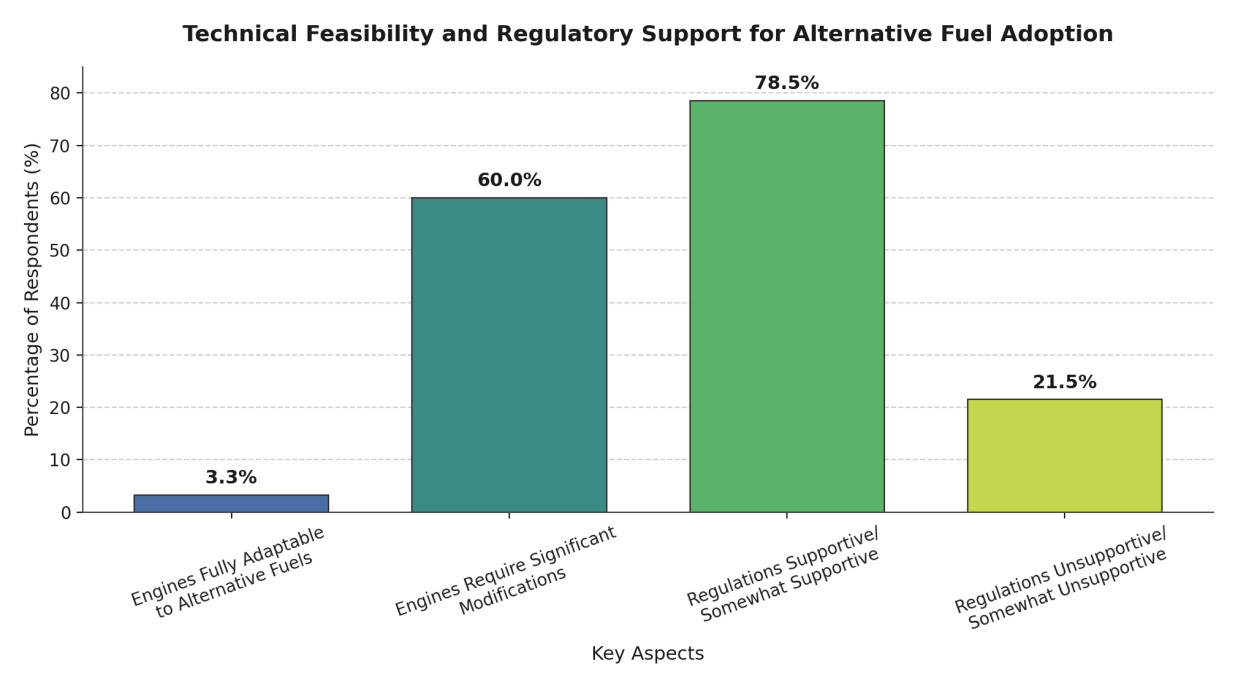
Only 3.3 per cent of respondents considered existing ship engines fully adaptable to alternative fuels, while 60.0 per cent indicated that substantial technical modification would be required. Regulatory perceptions were, by contrast, considerably more favourable: 78.5 per cent of respondents described the prevailing regulatory framework as supportive or somewhat supportive of alternative-fuel adoption, against 21.5 per cent who considered it unsupportive or only marginally aligned (Figure 5).
4.5 Life-Cycle and Cost–Benefit Findings
Whereas Sections 4.1 to 4.4 reported the perceptual evidence from the survey and interviews, this section turns to the analytical evidence from the life-cycle and cost–benefit modelling. Relative to heavy fuel oil, the well-to-wake LCA indicated GHG reductions of approximately 25–35 per cent for LNG, 30–40 per cent for methanol, and larger reductions for hydrogen and biofuels under favourable production-pathway assumptions. Sensitivity analysis (±25 per cent variation in production efficiency and transport distance) and Monte Carlo simulation confirmed the stability of the rank ordering across all three impact categories. Over a twenty-year horizon, the comparative cost–benefit appraisal indicates that LNG and methanol present positive value propositions under moderate-investment scenarios, with benefits exceeding costs across the principal categories examined. Hydrogen and biofuels, by contrast, do not reach financial viability under baseline conditions and emerge as viable only where targeted policy incentives — carbon credits, subsidies, or concessional finance — close the structural cost gap. The comparative ranking is robust to ±10, ±25, and ±40 per cent sensitivity in the underlying cost and benefit assumptions. A qualitative synthesis of the LCA and CBA outputs is presented in Table 3.
| Fuel pathway | Well-to-wake GHG reduction vs. HFO | CBA outcome (baseline; 20 years; 7%) |
|---|---|---|
| LNG | 25–35% | Positive NPV; BCR > 1 |
| Methanol | 30–40% | Positive NPV; BCR > 1 |
| Hydrogen | Larger reductions (favourable pathways) | Negative NPV at baseline; viable with subsidies / carbon credits |
| Biofuels | Larger reductions (favourable pathways) | Negative NPV at baseline; viable with subsidies / carbon credits |
Note. Ranges derived from the LCA conducted in SimaPro 9.5 using ReCiPe 2016. CBA outcomes derived from the twenty-year cost–benefit model described in Section 3.5.
4.6 Integrated (Joint-Display) Findings
The joint-display matrix indicates strong convergence across the four strands on three substantive points: (i) LNG and methanol are the most viable transition fuels on both perceptual and analytical grounds; (ii) the binding constraint upon adoption is capital and bunkering rather than awareness or regulatory hostility; and (iii) hydrogen and biofuels are environmentally desirable but financially contingent upon policy support.
5. Discussion
The findings invite three principal interpretations, each of which is set against the prior literature and against the diffusion frameworks set out in Section 2. Each interpretation engages with a distinct theoretical mechanism: the first with relative-advantage and observability under Rogers (2003); the second with complexity-as-structural-cost; and the third with the layer-level asymmetry that the TOE and Institutional-Theory frameworks render visible.
First, the high salience of LNG and methanol in stakeholder perception is consistent with the relative-advantage and compatibility dimensions of Rogers (2003). LNG's perceptual primacy (63.3 per cent) tracks its lower complexity — bunkering and engine technology already exist at scale in comparable ports — and its observability through visible adoption in North-Sea and East-Asian fleets (Bouman et al., 2017). The empirical 25–40 per cent GHG reduction relative to HFO observed in the LCA gives this perception an environmental warrant. The literature has, however, previously raised methane-slip concerns regarding LNG's lifecycle credentials (Brynolf et al., 2014; Gilbert et al., 2018), and interview testimony confirmed that informed respondents distinguish near-term from long-term sustainability. The convergence of perception, LCA evidence, and prior literature is therefore strong, and the contribution of the present study at this point is to extend that convergence to an East African maritime corridor in which it has not previously been documented.
Second, the much weaker uptake of hydrogen (16.7 per cent in perception; not financially viable under baseline conditions in the CBA) is consistent both with Rogers' complexity attribute and with the international hydrogen-shipping literature (Bouman et al., 2017; van Hoecke et al., 2021). The CBA result clarifies a point that has been treated qualitatively in earlier work: hydrogen's diffusion gap is not a perception gap to be closed by communication and training, but a structural cost gap to be closed by policy instruments — carbon pricing, capital subsidies, and concessional finance. Biofuels exhibit the same pattern. This finding sharpens the policy diagnosis in a way the perception data alone could not.
Third, the divergence between favourable regulatory perception (78.5 per cent supportive) and unfavourable technical readiness (3.3 per cent fully adaptable; 60.0 per cent requiring substantial retrofit) is the central diagnostic finding of the study. In TOE terms (Tornatzky & Fleischer, 1990), the environmental layer has advanced ahead of the technological and organisational layers. In Institutional-Theory terms (Scott, 2014), regulative pressure is outpacing the system's mimetic and normative capacity to respond. This pattern is consistent with the structural lag identified in maritime regulatory-adoption studies elsewhere (Acciaro et al., 2014; Solakivi et al., 2019). It implies, moreover, that further regulatory tightening, in the absence of concurrent capital and infrastructure investment, will widen rather than close the implementation gap.
Two alternative explanations were considered and tested. The first — that the observed perception–practice gap reflects stakeholder resistance to change — is not supported: 83 per cent of respondents endorsed GHG reduction as “extremely important,” and qualitative testimony emphasised willingness conditional upon financing. The second — that the gap reflects insufficient awareness — is also not supported: 96.7 per cent of respondents reported at least moderate familiarity with the candidate fuels. The remaining and best-supported explanation is therefore the structural one set out above.
The boundary conditions of these findings are worth stating. The diagnosis applies most directly to maritime economies that share three characteristics with Tanzania: an ageing fleet dominated by HFO-fired vessels, a single dominant port handling the greater part of national traffic, and a regulatory environment that has signalled international commitment to the IMO trajectory but has not yet financed the corresponding domestic instruments. Within those boundary conditions, the diagnosis should travel.
6. Implications
6.1 Theoretical Implications
The present study advances the diffusion-of-innovation literature on maritime fuel transitions in two distinct respects. First, by triangulating perceptual data against LCA and CBA evidence, it operationalises Rogers' (2003) relative-advantage attribute in measurable environmental and financial terms rather than in self-reported terms alone. Second, by demonstrating that in a developing maritime economy the binding constraint sits within the TOE technological and organisational layers rather than at the level of innovation attributes per se, the study supports the integration of Rogers' framework with the TOE and Institutional-Theory frameworks. A theoretical implication of some weight is that diffusion studies in Global South maritime settings should adopt this combined frame as the default, rather than treating Rogers in isolation.
6.2 Practical and Policy Implications
Three concrete policy instruments follow from the findings.
-
Prioritise LNG and methanol as transition fuels, supported by targeted infrastructure investment at Dar es Salaam, Tanga, and Mtwara. These two fuels deliver positive NPV under moderate-investment scenarios and 25–40 per cent well-to-wake GHG reductions, and they exploit a technological maturity that hydrogen and biofuels do not yet possess at scale.
-
Close the structural cost gap for hydrogen and biofuels through carbon-credit eligibility, concessional capital, and time-limited operating subsidies — instruments whose effect on the CBA returns has been quantified in the present study.
-
Establish a regional Maritime Energy Transition Framework co-developed by the East African Community member states to harmonise fuel standards, share bunkering investments, and pool training capacity. Regional harmonisation directly addresses the compatibility and observability dimensions of diffusion that the present study identifies as binding.
For ship operators and port authorities, the immediate implication is that capacity-building — fuel-handling safety, retrofit specification, and digital emissions monitoring — should be sequenced before fleet replacement decisions, since the LCA and CBA confirm that retrofit-with-LNG/methanol is financially superior to deferred replacement under most scenarios tested.
7. Limitations and Future Research
Four limitations should temper interpretation of these findings. First, the survey sample (n = 30) is small in absolute terms; while it is consistent with the highly specialised population of senior maritime professionals in the Tanzanian setting and supports descriptive analysis, it constrains formal inferential generalisation. Further work should extend the survey across Mombasa, Beira, and Maputo to capture the full East African corridor.
Second, the LCA inventory drew partly upon international databases (Ecoinvent, IEA, IRENA) calibrated against high-income production pathways. The well-to-tank component for biofuels in particular is sensitive to local feedstock assumptions; sub-regional inventory work would refine the biofuel result.
Third, the CBA discount rate (7 per cent) is appropriate for East African maritime risk profiles, but financial-flow timing under uncertain carbon pricing remains a known source of model fragility. Stress-testing under explicit carbon-price scenarios is a useful extension.
Fourth, the study is a single-country case. Notwithstanding the boundary conditions specified in Section 5, comparative case work — Tanzania alongside one comparable West African and one comparable South Asian maritime economy — would test transferability empirically.
8. Conclusion
The maritime sector's decarbonisation trajectory will be decided as much in the developing maritime economies of East Africa, West Africa, and South Asia as in the high-income corridors that have hitherto dominated the empirical literature. The present study has examined Tanzania as a strategic node of the East African corridor and has shown, through the convergence of survey, interview, life-cycle, and cost–benefit evidence, that the sector is cognitively and institutionally prepared for transition yet structurally under-resourced. The binding constraints upon alternative-fuel diffusion are capital intensity, bunkering availability, and retrofit capacity; they are neither stakeholder resistance nor regulatory hostility nor an awareness deficit. LNG and methanol emerge as the financially and environmentally viable transition fuels for the short to medium term, while hydrogen and biofuels remain contingent upon targeted fiscal instruments. A regional Maritime Energy Transition Framework that operationalises this diagnosis would, on the evidence presented here, accelerate the transition without overstating what the data are able to support. The case for action is therefore neither rhetorical nor speculative: it is empirical, quantified, and ready to be costed into the policy instruments that the next decade will require.
Declarations
Funding
The authors received no specific funding for this work.
Conflict of Interest
The authors declare that they have no known competing financial interests or personal relationships that could have appeared to influence the work reported in this paper.
Ethical Approval and Informed Consent
Ethical approval was obtained from the Research and Ethics Committee of the National Institute of Transport. All participants provided written informed consent prior to data collection. Identifying information has been anonymised.
Data Availability
Analytical datasets, SPSS syntax files, NVivo codebooks, and SimaPro project files supporting the findings of this study are archived by the authors and are available from the corresponding author on reasonable request.
Author Contributions (CRediT)
E. M. Burchard: Conceptualisation, Methodology, Investigation, Formal analysis, Writing — original draft, Writing — review & editing, Supervision. E. C. Haule: Investigation, Data curation, Formal analysis, Writing — review & editing. R. S. Mzee: Methodology, Investigation, Validation, Writing — review & editing.
Acknowledgements
The authors gratefully acknowledge the Tanzania Ports Authority, the Marine Services Company Limited, and the Tanzania Shipping Agencies Corporation for facilitating access to industry stakeholders, and the participants who generously gave their time to the survey and interviews. The authors also thank the National Institute of Transport for institutional support throughout the conduct of this research.
Disclosure of AI-Assisted Editing
During the preparation of this manuscript, the authors used an AI-based large language model (Claude, Anthropic) to assist with language editing, structural revision, and proofreading. After using this tool, the authors reviewed and edited the content as required and take full responsibility for the content of the publication. The data, sample, methodology, analytical procedures, and findings were not generated or altered by this tool.
References
- Acciaro, M., Vanelslander, T., Sys, C., Ferrari, C., Roumboutsos, A., Giuliano, G., Lam, J. S. L., & Kapros, S. (2014). Environmental sustainability in seaports: A framework for successful innovation. Maritime Policy & Management, 41(5), 480–500. DOI ↗ Google Scholar ↗
- Bouman, E. A., Lindstad, E., Rialland, A. I., & Strømman, A. H. (2017). State-of-the-art technologies, measures, and potential for reducing greenhouse gas emissions from shipping — A review. Transportation Research Part D: Transport and Environment, 52, 408–421. DOI ↗ Google Scholar ↗
- Braun, V., & Clarke, V. (2019). Reflecting on reflexive thematic analysis. Qualitative Research in Sport, Exercise and Health, 11(4), 589–597. DOI ↗ Google Scholar ↗
- Brynolf, S., Fridell, E., & Andersson, K. (2014). Environmental assessment of marine fuels: Liquefied natural gas, liquefied biogas, methanol and bio-methanol. Journal of Cleaner Production, 74, 86–95. DOI ↗ Google Scholar ↗
- Creswell, J. W., & Plano Clark, V. L. (2018). Designing and conducting mixed methods research (3rd ed.). SAGE Publications. DOI ↗ Google Scholar ↗
- Fetters, M. D., Curry, L. A., & Creswell, J. W. (2013). Achieving integration in mixed methods designs — Principles and practices. Health Services Research, 48(6), 2134–2156. DOI ↗ Google Scholar ↗
- Gilbert, P., Walsh, C., Traut, M., Kesieme, U., Pazouki, K., & Murphy, A. (2018). Assessment of full life-cycle air emissions of alternative shipping fuels. Journal of Cleaner Production, 172, 855–866. DOI ↗ Google Scholar ↗
- Hair, J. F., Black, W. C., Babin, B. J., & Anderson, R. E. (2020). Multivariate data analysis (8th ed.). Cengage Learning. DOI ↗ Google Scholar ↗
- Intergovernmental Panel on Climate Change. (2023). Climate change 2023: Synthesis report. DOI ↗ Google Scholar ↗
- International Energy Agency. (2023). Energy technology perspectives 2023. DOI ↗ Google Scholar ↗
- International Maritime Organization. (2023). 2023 IMO strategy on reduction of GHG emissions from ships (Resolution MEPC.377(80)). DOI ↗ Google Scholar ↗
- International Organization for Standardization. (2006). ISO 14040: Environmental management — Life cycle assessment — Principles and framework; ISO 14044: Environmental management — Life cycle assessment — Requirements and guidelines. ISO. DOI ↗ Google Scholar ↗
- International Renewable Energy Agency. (2023). Renewable energy for shipping: A roadmap. IRENA. DOI ↗ Google Scholar ↗
- Kontovas, C. A., & Psaraftis, H. N. (2021). Economic analysis of maritime decarbonization measures. Transportation Research Part D: Transport and Environment, 94, 102807. DOI ↗ Google Scholar ↗
- OECD. (2020). Cost–benefit analysis and the environment: Further developments and policy use. OECD Publishing. DOI ↗ Google Scholar ↗
- OECD. (2021). Open science: Making research more accessible. OECD Publishing. DOI ↗ Google Scholar ↗
- Psaraftis, H. N., & Kontovas, C. A. (2022). Decarbonization pathways in shipping. Maritime Economics & Logistics, 24(3), 345–360. DOI ↗ Google Scholar ↗
- Rogers, E. M. (2003). Diffusion of innovations (5th ed.). Free Press. DOI ↗ Google Scholar ↗
- Scott, W. R. (2014). Institutions and organizations: Ideas, interests, and identities (4th ed.). SAGE Publications. DOI ↗ Google Scholar ↗
- Solakivi, T., Laari, S., & Kiiski, T. (2019). How shipowners have adapted to sulphur regulations — evidence from Finnish seaborne trade. Case Studies on Transport Policy, 7(2), 338–345. DOI ↗ Google Scholar ↗
- Tashakkori, A., & Teddlie, C. (2020). Handbook of mixed methods in social and behavioral research (2nd ed.). SAGE Publications. DOI ↗ Google Scholar ↗
- Tornatzky, L., & Fleischer, M. (1990). The processes of technological innovation. Lexington Books. DOI ↗ Google Scholar ↗
- United Nations Conference on Trade and Development. (2024). Review of maritime transport 2024. United Nations. DOI ↗ Google Scholar ↗
- van Hoecke, L., Verbeke, S., & Audenaert, A. (2021). Hydrogen as a maritime fuel: Opportunities and challenges. Renewable and Sustainable Energy Reviews, 135, 110217. DOI ↗ Google Scholar ↗
- World Bank. (2022). The role of ports in the energy transition. World Bank. DOI ↗ Google Scholar ↗
Appendix
A. Survey Instrument
Note to authors: this appendix reproduces the structured questionnaire administered to the thirty maritime professionals between January and June 2025. The section structure below corresponds to the constructs described in Section 3.2; please replace each bracketed prompt with the actual item as administered in the field instrument.
A.1 Demographics and Professional Background
A.1.1 Professional role: □ Academic □ Seafarer □ Policymaker □ Shipbuilder □ Maritime-affairs officer □ Other (specify)
A.1.2 Years of professional experience in the maritime sector: □ <5 □ 5–9 □ 10–19 □ ≥20
A.1.3 Institutional affiliation (please specify): _____________________________
A.1.4 Primary area of expertise: _____________________________
A.2 Importance of Maritime GHG Reduction (Single Item)
A.2.1 How important is the reduction of GHG emissions from international shipping? □ Not important □ Slightly important □ Moderately important □ Very important □ Extremely important
A.3 Familiarity with Alternative Marine Fuels
Five-point self-rating items, 1 = no familiarity to 5 = very high familiarity.
A.3.1 My familiarity with LNG as a marine fuel is:
A.3.2 My familiarity with methanol as a marine fuel is:
A.3.3 My familiarity with hydrogen as a marine fuel is:
A.3.4 My familiarity with advanced biofuels as a marine fuel is:
A.4 Perceptions of Bunkering Infrastructure
Five-point Likert items, 1 = strongly disagree to 5 = strongly agree.
[Author to insert 3–5 items, e.g.: 'The Port of Dar es Salaam has adequate bunkering capacity for LNG.'; 'Bunkering facilities for methanol are currently lacking in Tanzania.'; 'Investment in bunkering infrastructure is a precondition for alternative-fuel adoption.']
A.5 Vessel-Engine Compatibility
Five-point Likert items, 1 = strongly disagree to 5 = strongly agree.
[Author to insert 3–5 items, e.g.: 'Existing vessel engines in the Tanzanian fleet can be readily retrofitted to operate on LNG.'; 'Substantial technical modification is required for vessels to run on methanol.'; 'Crew training and skill acquisition are major barriers to engine conversion.']
A.6 Fuel Accessibility
Five-point Likert items, 1 = strongly disagree to 5 = strongly agree.
[Author to insert 3–5 items measuring perceived availability of each fuel along Tanzania's primary maritime trade routes, including supply reliability, regional sourcing, and import dependence.]
A.7 Cost-Effectiveness
Five-point Likert items, 1 = strongly disagree to 5 = strongly agree.
[Author to insert 3–5 items, e.g.: 'High initial investment cost is the most critical constraint on alternative-fuel adoption.'; 'Recurrent operational costs make alternative fuels economically unattractive.'; 'Carbon-credit revenues can offset the capital cost premium of low-carbon fuels.']
A.8 Regulatory Support
Five-point Likert items, 1 = strongly disagree to 5 = strongly agree.
[Author to insert 3–5 items, e.g.: 'Tanzania's current maritime regulatory framework supports the transition to alternative fuels.'; 'International (IMO) regulatory instruments are aligned with national-level implementation capacity.'; 'Regulatory uncertainty discourages investment in alternative-fuel infrastructure.']
A.9 Most Viable Alternative Fuel (Single-Select)
A.9.1 In your view, which of the following is the most viable alternative marine fuel for the Tanzanian maritime sector over the next decade? □ LNG □ Methanol □ Hydrogen □ Biofuels
A.10 Adoption Barriers (Multi-Select)
A.10.1 Please indicate which of the following are major barriers to alternative-fuel adoption (select all that apply):
□ High initial investment cost □ Recurrent operational cost □ Limited general port infrastructure □ Inadequate bunkering facilities □ Fuel availability along trade routes □ Substantial vessel-engine modification required □ Safety concerns (handling and storage) □ Regulatory uncertainty □ Other (specify)