
Abstract
This study examines the effectiveness of risk management in mitigating credit risk in domestic banks, using Zambia Industrial Commercial Bank (ZICB) as a case study. Guided by a pragmatist philosophy and employing a sequential mixed methods design, the study integrates quantitative and qualitative approaches to generate both measurable evidence and contextual understanding of credit risk management practices. Data were collected through structured questionnaires administered to staff involved in credit operations, risk management, compliance, and internal audit, followed by semi-structured interviews with selected key informants. The study addressed three objectives: to assess the effectiveness of ZICB’s credit risk management framework in identifying, measuring, and monitoring credit risk exposures; to evaluate the adequacy of ZICB’s credit risk mitigation strategies in minimizing potential credit losses; and to investigate the extent to which ZICB’s credit risk management practices comply with relevant regulatory guidelines and best international practices. Quantitative findings indicate that respondents generally perceive ZICB’s credit risk identification, due diligence processes, financial analysis procedures, credit history checks, monitoring systems, and internal controls as effective. Mitigation measures such as collateral requirements, defined credit limits, early identification of problem loans, and post-disbursement monitoring were also rated positively. Furthermore, respondents expressed favorable perceptions regarding compliance with Bank of Zambia guidelines, stress testing practices, and alignment with best practices. Qualitative findings corroborate the quantitative results, highlighting the central role of structured policies, standardized procedures, and experienced personnel in supporting effective credit risk management. However, both phases of the study reveal persistent challenges related to limited automation, fragmented data systems, and partial alignment with advanced international regulatory frameworks, particularly aspects of Basel III. The study concludes that while ZICB’s credit risk management framework is generally sound and functional, its effectiveness could be significantly enhanced through greater investment in automated credit systems, predictive analytics, staff training, and digital compliance tools. The study contributes empirical evidence on credit risk management practices in a developing-country banking context and offers practical insights for strengthening institutional risk management frameworks in domestic banks operating in emerging markets.
Keywords
Collateral Requirements Proactive Due Diligence Risk Identification Zambia Industrial Commercial Bank (ZICB)
1. Introduction
The banking sector in Zambia serves as a cornerstone of the country's financial system, facilitating economic development through the provision of credit and financial services. However, this sector faces significant challenges, particularly concerning credit risk management. Credit risk arises when borrowers fail to meet their obligations, leading to potential losses for banks. In Zambia, the economic landscape has been marked by slow growth rates and high levels of borrower defaults, which have resulted in an alarming increase in non-performing loans (NPLs) (Bank of Zambia, 2020). As of 2023, the NPL ratio in Zambian banks has been reported at over 10%, a level that raises concerns about the sustainability of financial institutions and their capacity to support economic growth (Mulwanda, 2022). This context underscores the urgent need for effective risk management strategies that can mitigate credit risk and enhance the resilience of banks.
The importance of robust credit risk management practices cannot be overstated. Recent research indicates that banks with well-defined risk assessment frameworks are better equipped to identify potential defaults and take pre-emptive measures (Manu et al., 2020). For instance, ZICB has implemented various strategies aimed at improving its credit assessment processes, including enhanced due diligence and borrower profiling. These practices are crucial in an environment where systemic risks can quickly spread across interconnected financial institutions, exacerbating the challenges faced by individual banks (Bekale et al., 2023).
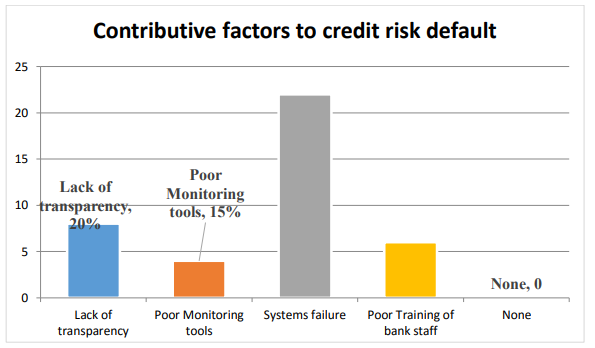
In addition, according to Yeboah, (2018), factors that contributing to high default rate in the banking sector are; lack of willingness to repay loans coupled with by borrowers diverting funds, negligence to follow up on borrowers and improper appraisal by credit officers. Moreover, regulatory challenges further complicate the landscape; while the Bank of Zambia has made strides in strengthening regulations, gaps remain that can hinder effective credit risk management (Zambia National Commercial Bank, 2021). Chamangwa (2021) further reports that there are several factors that contribute to loan defaults, and, as the chart below shows, some of these factors are Systems failure, Lack of transparency, Poor monitoring tools, Poor training of bank staff.
In this study, we focus on ZICB as a case study to investigate its specific practices in managing credit risk. ZICB has made significant investments in developing a comprehensive risk management framework that includes advanced analytics and technology-driven solutions to assess borrower creditworthiness. Previous studies have shown that effective credit risk management is linked to improved financial performance among Zambian banks (Mpofu & Nikolaidou, 2018). Through analyzing ZICB's strategies and their outcomes, this research aims to evaluate how these practices contribute to mitigating credit risk and enhancing overall bank performance.
Furthermore, understanding how ZICB navigates these challenges could provide valuable insights for other financial institutions operating in similar contexts. The findings from this research will not only contribute to the academic discourse on banking practices in Zambia but will also offer practical recommendations for improving credit risk management across the sector. As the banking industry continues to evolve amidst economic uncertainties and changing regulatory landscapes, this study seeks to fill existing gaps in knowledge regarding specific practices that can lead to better management of credit risk in Zambian banks (Bank of Zambia, 2020).
Not only that, this study is also timely, given the global economic shifts resulting from recent events such as the COVID-19 pandemic and geopolitical tensions that have affected markets worldwide. These developments have highlighted vulnerabilities within financial systems and underscored the need for robust risk management frameworks that can withstand external shocks. By focusing on ZICB's approach to credit risk management during these turbulent times, this research aims to provide insights into best practices that can enhance resilience not only within ZICB but also across the broader Zambian banking sector (Mulwanda, 2022).
1.1 Statement of the Problem
The banking sector in Zambia faces a critical challenge in effectively managing credit risk, which has significant implications for financial stability and economic growth. Despite the increasing recognition of the importance of robust risk management frameworks, many banks, including the Zambia Industrial Commercial Bank (ZICB), continue to grapple with high levels of non-performing loans (NPLs) and inadequate risk assessment practices (Mwiya, 2019). The rise in NPLs, which has been reported at over 10% in recent years, indicates that banks are struggling to recoup loans issued to clients, thereby jeopardizing their profitability and operational viability (Mulwanda, 2022).
Additionally, historical data reveals that the Zambian banking sector has experienced significant turbulence due to systemic risks stemming from poor risk management practices and internal mismanagement (Brownbridge, 2018). The consequences of these challenges are profound; they not only affect individual banks but also pose risks to the broader financial system. As highlighted by Bekale et al. (2023), the interconnectedness of financial institutions means that weaknesses in credit risk management can lead to broader economic instability.
Furthermore, the regulatory environment in Zambia has not sufficiently addressed these issues, leaving banks vulnerable to external shocks and internal inefficiencies (Zambia National Commercial Bank, 2021). This situation is exacerbated by ongoing economic uncertainties and competitive pressures that complicate effective credit risk management. Therefore, there is an urgent need to investigate the specific practices employed by ZICB in managing credit risk and assess their effectiveness in mitigating potential losses. This study aims to fill this gap by providing insights into how ZICB's risk management strategies can enhance its resilience against credit risk and contribute to the overall stability of the Zambian banking sector.
1.2 Research Objective(s)
-
To assess the robustness of ZICB's current credit risk management framework in identifying, measuring, and monitoring credit risk exposures.
-
To evaluate the adequacy of ZICB's credit risk mitigation strategies in minimizing potential credit losses.
-
To investigate the extent to which ZICB's credit risk management practices comply with relevant regulatory guidelines and best international practices.
2. Literature Review
2.1 Overview of Credit Risk Management
Credit risk management involves a systematic process of identifying, assessing, measuring, monitoring, and controlling the potential losses arising from borrowers' failure to meet their financial obligations. According to Basel Committee on Banking Supervision (2025), effective credit risk management requires banks to establish a comprehensive framework that includes board-approved policies, rigorous credit-granting criteria, ongoing portfolio monitoring, and robust controls to address both on- and off-balance sheet exposures. This structured approach ensures financial institutions maintain stability amid economic uncertainties and varying borrower behaviours.
2.1.1 Key Processes in Credit Risk Management
The core processes of credit risk management form a comprehensive cycle beginning with risk identification, which relies on thorough borrower due diligence, including financial statement analysis, credit history reviews, and portfolio-wide stress testing to uncover potential vulnerabilities early. Quantitative measurement follows, employing advanced models such as probability of default (PD), loss given default (LGD), and exposure at default (EAD), which provide precise estimations of potential losses under various economic scenarios. Continuous monitoring ensures ongoing surveillance through key risk indicators, early warning systems, and periodic portfolio reviews to detect deteriorations promptly, allowing for timely interventions. Power (2024) emphasises that modern practices increasingly integrate predictive analytics and machine learning algorithms to enhance the accuracy and speed of risk assessment, enabling proactive decision-making while addressing critical challenges like data privacy regulations, model validation rigour, and algorithmic bias mitigation. Mitigation strategies complement these efforts by incorporating diversification across sectors and geographies, collateralisation through liens on assets, guarantees, and netting agreements, as well as hedging instruments like credit derivatives to effectively limit the severity and impact of exposure. Together, these interconnected processes create a dynamic framework that not only minimises losses but also supports sustainable lending growth in volatile banking environments.
2.1.2 Governance and Emerging Trends
Strong governance forms the bedrock of effective credit risk management, exemplified by the three lines of defence model, where operational units serve as the first line by owning and managing risks daily, independent risk management functions act as the second line providing oversight, tools, and challenge to frontline activities, and internal audit constitutes the third line offering objective assurance on the overall framework's efficacy. This structure fosters accountability, escalates issues promptly, and ensures rigorous compliance with global regulations such as Basel III, which mandates minimum capital requirements, liquidity standards, and stress testing to bolster systemic resilience. Haider and Dwaikat (2023) note that in emerging markets like Zambia, aligning these international standards with local economic contexts, such as currency volatility and sector-specific lending risks, significantly improves resilience against persistently high non-performing loans, enabling banks to better anticipate and absorb shocks from borrower defaults. Recent trends further revolutionise the field, with AI-driven real-time monitoring systems enabling continuous data analysis, automated alerts, and dynamic portfolio adjustments, as projected by Deloitte (2026), while the integration of environmental, social, and governance (ESG) factors into credit assessments helps evaluate long-term sustainability risks in borrowers' operations. These advancements collectively transform credit risk from a mere compliance burden into a strategic advantage, empowering banks to optimise lending decisions, enhance profitability, and maintain stakeholder trust amid rapid technological and regulatory evolution.
2.2 How ZICB effectively measures and quantifies credit risk across its loan portfolio
Zambia Industrial Commercial Bank (ZICB) employs a multifaceted approach to measure and quantify credit risk across its loan portfolio, integrating various methodologies to enhance both accuracy and effectiveness. This comprehensive strategy is essential for understanding potential defaults and ensuring the bank's financial stability. By utilizing advanced statistical models and simulations, ZICB assesses risk at both individual borrower levels and across its entire portfolio. This dual-level analysis allows for a thorough evaluation of credit risk, enabling the bank to make informed lending decisions and manage its exposure effectively.
2.2.1 Credit Risk Measurement Techniques
Z-Score Model
One of the primary tools used by ZICB is the Z-Score model, which evaluates the financial status of loan customers by calculating a score that reflects their likelihood of default. The Z-Score model aggregates various financial ratios, such as profitability, leverage, liquidity, and efficiency, into a single score that predicts the probability of bankruptcy (Chorafas, 2024). This model is particularly useful for assessing small to medium-sized enterprises (SMEs), which are vital to Zambia's economy but often lack extensive credit histories. By employing the Z-Score model, ZICB can identify high-risk borrowers early in the lending process, thereby reducing potential losses.
Internal Ratings-Based Approach
ZICB also employs an Internal Ratings-Based (IRB) approach, which utilizes sector-specific data to simulate default rates. This method enhances the precision of risk assessments by tailoring the evaluation process to reflect the unique characteristics of different sectors within the economy (Kazoka & Mwiya, 2024). For example, sectors like agriculture may have different risk profiles compared to manufacturing or services due to varying economic conditions and market dynamics. By focusing on industry-specific factors such as historical default rates and economic indicators, ZICB can better anticipate potential risks associated with various borrower segments.
Monte Carlo Simulations
To model the loss distribution of its loan portfolio, ZICB employs Monte Carlo simulations. This technique allows the bank to account for non-normality in credit loss distributions, capturing a wider range of potential outcomes and their associated probabilities (Clemente & Romano, 2024). By simulating thousands of scenarios based on different economic conditions, such as changes in interest rates or shifts in market demand, ZICB can assess how these factors might impact its loan portfolio's performance. This approach provides a more nuanced understanding of risk exposure and helps inform strategic decision-making.
2.2.2 Portfolio Optimization Strategies
Copula-Based Approaches
In addition to measurement techniques, ZICB employs copula-based approaches to analyze joint default events among credit assets. These methodologies enable the bank to understand complex dependencies between different borrowers and tailor risk management strategies accordingly (Clemente & Romano, 2024). For instance, if two borrowers operate within the same industry or geographical area, their default risks may be correlated due to shared economic factors. By recognizing these relationships through copula models, ZICB can implement more effective risk mitigation strategies that account for potential joint defaults.
Conditional Value at Risk Minimization
Another optimization technique utilized by ZICB is Conditional Value at Risk (CVaR) minimization. This approach focuses on minimizing potential losses in extreme scenarios, those that lie beyond typical loss distributions, helping restructure inefficient loan portfolios to achieve an optimal risk-return profile (Clemente & Romano, 2024). By identifying loans that contribute disproportionately to overall risk without adequate returns, ZICB can make informed decisions about portfolio adjustments and reallocations. This strategy not only enhances risk management but also improves overall profitability.
2.3 Adequacy of processes put in place by ZICB in monitoring the effectiveness of its credit risk mitigation strategies
The processes implemented by Zambia Industrial Commercial Bank (ZICB) for monitoring the effectiveness of its credit risk mitigation strategies are crucial for maintaining financial stability. The internal control systems in place, guided by the COSO framework, have been shown to significantly reduce risks in Zambian commercial banks (Mwiya, 2023). Furthermore, the impact of external factors, such as the COVID-19 pandemic, highlighted the need for adaptive strategies in credit management, including timely engagement with distressed borrowers (Sinkala et al., 2022).
2.3.1 Internal Control Systems
ZICB employs a robust internal control framework that aligns with the COSO model, which emphasizes risk assessment and monitoring. The COSO framework consists of five interrelated components: control environment, risk assessment, control activities, information and communication, and monitoring activities. This comprehensive structure ensures that all aspects of credit risk are adequately addressed throughout the lending process.
At ZICB, a strong control environment is fostered through a culture of accountability and ethical behavior. Leadership plays a crucial role in establishing this culture by promoting integrity and transparency in all operations. Employees are encouraged to adhere to established policies and procedures, which helps minimize the likelihood of errors or fraudulent activities. ZICB conducts regular risk assessments to identify potential credit risks associated with borrowers and market conditions. This proactive approach allows the bank to evaluate the likelihood and impact of various risks on its loan portfolio. By continuously monitoring changes in economic indicators and borrower circumstances, ZICB can adjust its risk management strategies accordingly.
Control activities at ZICB include stringent credit approval processes, regular audits, and compliance checks. These measures ensure that all lending decisions are based on thorough analyses of borrower creditworthiness and that any deviations from established policies are promptly addressed. Effective communication is vital for ensuring that all stakeholders are informed about credit risk management practices. ZICB utilizes various channels to disseminate information regarding policies, procedures, and risk assessments to staff members at all levels.
2.3.2 Credit Risk Management Strategies
ZICB utilizes various credit risk mitigation techniques that are integral to its overall risk management strategy. These techniques include rigorous credit assessments and validation procedures designed to ensure loan sustainability (Shndula & Mazhar, 2020). Before approving loans, ZICB conducts thorough assessments that evaluate borrowers' financial health, repayment capacity, and overall creditworthiness. This process includes analyzing financial statements, credit histories, and cash flow projections to determine the likelihood of default. In addition to initial assessments, ZICB implements validation procedures that involve cross-checking borrower information against external databases and industry benchmarks. This step enhances the accuracy of credit evaluations and helps identify discrepancies or red flags early in the process.
To maintain high standards in credit risk management, ZICB invests in continuous training programs for its staff. These programs cover best practices in credit assessment, risk evaluation techniques, and regulatory compliance updates. Well-trained staff are better equipped to identify potential risks and make informed lending decisions. Regular reviews and updates of credit policies are essential for adapting to changing market conditions and regulatory requirements (Mahlangu & Chowa, 2022). By strengthening these policies based on lessons learned from past experiences, such as during economic downturns, ZICB can enhance its monitoring capabilities and improve overall risk management.
2.4 Extent to which ZICB's credit risk management policies and procedures comply with the regulatory requirements
Zambia Industrial Commercial Bank (ZICB) has made significant strides in aligning its credit risk management policies and procedures with the regulatory requirements established by the Bank of Zambia and other relevant authorities. This alignment is essential for maintaining the bank's operational integrity and ensuring the stability of the Zambian financial system. The regulatory framework emphasizes sound risk management practices, particularly in light of economic challenges that have increased the importance of mitigating potential losses from non-performing loans (NPLs).
2.4.1 Compliance with Regulatory Standards
ZICB's credit risk management framework is designed to meet the key directives issued by the Bank of Zambia, including adherence to capital adequacy ratios, provisioning for NPLs, and conducting regular stress testing of its credit portfolio. The Capital Adequacy Ratio (CAR) is a critical metric that ensures banks maintain sufficient capital to absorb potential losses, thereby protecting depositors and promoting financial stability. ZICB consistently monitors its CAR to ensure compliance with the minimum requirements set by the Bank of Zambia, which helps safeguard against insolvency during periods of economic stress (Bank of Zambia, 2020).In addition to capital requirements, ZICB implements stringent provisioning practices for NPLs. The bank follows guidelines that require it to set aside a specific percentage of its earnings to cover potential loan losses. This proactive approach not only aligns with regulatory expectations but also enhances ZICB's ability to manage credit risk effectively. Regular audits and compliance checks are conducted to ensure that credit processes align with both internal policies and external regulations, facilitating early identification of potential areas of non-compliance (Mwiya, 2005).
2.4.2 Leadership and Governance
The leadership at ZICB plays a pivotal role in ensuring compliance with regulatory requirements. The Head of Credit is responsible for developing and overseeing the bank's credit policies and procedures, ensuring they reflect both regulatory standards and best practices in credit risk management (Job Description, 2024). This position involves conducting regular reviews of credit processes to ensure adherence to regulatory standards and internal policies, thereby reinforcing a culture of compliance within the organization. Furthermore, ZICB engages proactively with regulatory bodies to stay updated on changes in regulations and industry best practices, ensuring that its policies remain relevant and effective (Chorafas, 2024).The bank’s governance structure supports these efforts by fostering an environment where compliance is prioritized. Regular training sessions for staff on regulatory updates and best practices in credit risk management are essential components of this strategy. By equipping employees with the knowledge necessary to navigate complex regulatory landscapes, ZICB enhances its overall compliance posture (Sinkala et al., 2022).
2.4.3 Challenges in Maintaining Compliance
Despite these robust frameworks, ZICB faces ongoing challenges in maintaining compliance amidst a dynamic economic environment. External factors such as economic downturns, high unemployment rates, and the lingering effects of the COVID-19 pandemic have necessitated adaptive strategies in credit management. For instance, during periods of economic hardship, borrowers may struggle to meet repayment obligations, leading to an increase in NPLs. In response, ZICB has recognized the importance of timely engagement with distressed borrowers as a means of mitigating rising NPLs (Sinkala et al., 2022). This proactive approach not only aligns with regulatory expectations but also enhances ZICB's reputation as a responsible lender committed to supporting its clients through difficult times. Additionally, fluctuations in global economic conditions can impact local lending practices and borrower behavior. Changes in commodity prices or shifts in foreign investment can affect key sectors within Zambia’s economy such as agriculture or mining thereby influencing borrowers' repayment capabilities (Bank of Zambia, 2020). To address these challenges, ZICB continuously reviews its credit assessment methodologies and adapts its lending criteria based on prevailing economic conditions.
3. Methodology
3.1 Research Design
This study adopted a sequential mixed methods research design, integrating quantitative and qualitative approaches within a single case study of Zambia Industrial Commercial Bank (ZICB). The design was structured in two phases. The first phase employed a quantitative survey design to generate measurable evidence on the effectiveness of ZICB’s credit risk management practices, focusing on credit risk identification, risk mitigation, monitoring, and regulatory compliance. Structured questionnaires were administered to staff involved in credit operations, risk management, and compliance functions. This phase provided numerical data that enabled the identification of patterns, trends, and relationships among key variables. The second phase utilized a qualitative design involving semi-structured interviews with selected key informants, including credit officers, risk managers, and compliance personnel. The qualitative phase was intended to explain, clarify, and expand upon the quantitative results by exploring participants’ experiences, interpretations, and practical challenges in implementing credit risk management practices. This sequential design allowed quantitative findings to inform the focus of the qualitative interviews, thereby strengthening the explanatory power of the study.
3.2 Data Collection Methods
Data collection was conducted sequentially in two phases.
In the first phase (quantitative), the researcher distributed structured questionnaires to purposively selected staff members from departments directly involved in credit risk management, including credit operations, risk management, compliance, and internal audit. Participants were briefed on the purpose of the study, assured of confidentiality, and provided with instructions on how to complete the questionnaire. Completed questionnaires were collected and screened for completeness before data entry and analysis.
In the second phase (qualitative), participants were purposively selected from among experienced staff based on their roles and years of involvement in credit risk management. These participants were contacted and appointments scheduled at times convenient to them. Interviews were conducted in a private and quiet environment to promote openness and honest discussion. With participants’ consent, responses were recorded through notetaking (as per participant preference) and later transcribed for analysis.
Throughout both phases, ethical considerations were strictly observed, including obtaining informed consent, ensuring anonymity, and using the data solely for academic purposes. The sequential approach allowed the qualitative findings to build upon and clarify the quantitative results, thereby providing a comprehensive understanding of credit risk management effectiveness at ZICB.
3.3 Target Population and Sampling Procedures
The target population for this study consisted of key stakeholders involved in the bank's credit risk management processes. This included individuals who play significant roles in shaping and implementing these strategies, such as credit officers, risk managers, compliance officers, and senior management. As of 2025 ZICB has 230 employees in Zambia (ZICB, 2025). This study employed a stratified random for the quantitative phase and purposive sampling technique for the qualitative phase to select participants who possessed direct involvement and practical experience in credit risk management at Zambia Industrial Commercial Bank (ZICB). In the quantitative phase, stratified random sampling was used to identify staff members working in departments closely associated with credit risk management, including credit operations, risk management, loan appraisal, internal audit, and compliance. These respondents were selected because of their familiarity with the bank’s credit processes and policies, enabling them to provide informed responses to the structured questionnaire.
3.4 Data Analysis Techniques
Data analysis for this study was conducted in two sequential stages, corresponding to the quantitative and qualitative phases of the research design.
In the quantitative phase, data obtained from the structured questionnaires were coded and entered into Statistical Package for Social Sciences (SPSS) software for analysis. Descriptive statistics, including frequencies, percentages, means, and standard deviations, were used to summarize respondents’ perceptions regarding credit risk identification, mitigation strategies, monitoring practices, and regulatory compliance at ZICB. These statistics enabled the researcher to identify general trends and patterns in the data. In addition, correlation analysis was conducted to examine relationships among key constructs, namely credit risk identification, credit risk mitigation, and compliance with regulatory and international best practices. The quantitative results provided an empirical basis for assessing the extent to which ZICB’s credit risk management framework is perceived to be effective.
In the qualitative phase, data obtained from semi-structured interviews were analyzed using thematic analysis. Interview notes were first organized and transcribed into textual form. The researcher then familiarized themselves with the data by reading and re-reading the transcripts to gain an overall understanding of participants’ responses. Initial coding was conducted by identifying meaningful phrases, statements, and concepts related to credit risk management practices, challenges, and improvement areas. Similar codes were grouped into broader categories and subsequently developed into themes aligned with the study objectives.
Furthermore, document analysis of ZICB internal reports (where access was permitted) and relevant regulatory documents was conducted to support and validate findings from both the questionnaire and interviews. This triangulation of quantitative data, qualitative insights, and documentary evidence enhanced the credibility and robustness of the findings.
4. Findings & Discussion
4.1. Effectiveness of Credit Risk Identification, Measurement, and Monitoring
Quantitative results indicate generally positive perceptions of ZICB’s credit risk framework. Key practices such as borrower due diligence (Mean = 3.91), financial statement analysis (Mean = 3.71), and credit history checks received strong agreement. Similarly, qualitative findings reveal three dominant themes: proactive risk identification, structured measurement tools, and continuous monitoring processes. Participants emphasized the centrality of due diligence, credit bureau checks, and early warning systems in identifying potential credit risks. Measurement tools such as internal risk ratings, probability of default (PD), and stress testing were widely used to quantify exposures. Monitoring processes, including portfolio reviews, management credit committees, and internal audits, were consistently highlighted as mechanisms for tracking loan performance.These findings align closely with Merton’s structural model, which posits that default risk depends on the relationship between borrower asset values and liabilities (Merton, 1974). ZICB’s emphasis on financial analysis and borrower screening reflects this theoretical foundation by ensuring early assessment of default risk.
The use of internal rating systems and quantitative tools is consistent with prior studies (Altman, 1968; Saunders & Allen, 2020), which argue that structured risk measurement enhances predictive accuracy and capital allocation. Furthermore, the strong presence of monitoring mechanisms reflects the Three Lines of Defense model (COSO, 2013), where operational units, risk management functions, and audit systems collectively ensure oversight. From an Agency Theory perspective (Jensen & Meckling, 1976), these mechanisms reduce information asymmetry and limit excessive risk-taking by management. Overall, ZICB demonstrates a robust and theoretically grounded framework for identifying and managing credit risk, although minor gaps (e.g., early warning system limitations) were noted.
4.2 Adequacy of Credit Risk Mitigation Strategies
Descriptive statistics show strong agreement regarding mitigation practices, particularly early identification of non-performing loans (Mean = 4.04) and post-disbursement monitoring (Mean = 3.86). Collateral requirements and defined credit limits also received positive evaluations. Qualitative analysis identified three key themes: collateral and security-focused strategies, portfolio and recovery measures, and effectiveness assessment mechanisms. Respondents emphasized collateralization, loan covenants, diversification, restructuring, and recovery teams as central to mitigating credit losses. The findings strongly support theoretical and empirical literature on credit risk mitigation. Collateral-based lending aligns with Merton’s structural model by reducing loss given default (LGD), thereby lowering expected losses (Saunders & Allen, 2020; Hull, 2018). Similarly, loan covenants and credit limits address moral hazard concerns highlighted in Agency Theory. Portfolio diversification and recovery strategies reflect best practices in emerging markets, where concentration risk is a major driver of financial instability (World Bank, 2021). The presence of recovery teams and restructuring mechanisms further demonstrates a proactive approach to managing distressed assets. Importantly, the use of NPL ratios, stress testing, and audits to evaluate mitigation effectiveness aligns with Basel recommendations (Basel Committee on Banking Supervision, 2019; 2023), which emphasize continuous validation of risk strategies. Overall, ZICB’s mitigation framework is comprehensive and largely effective, though its performance remains sensitive to macroeconomic conditions.
4.3 Compliance with Regulatory Guidelines and Best Practices
Respondents reported high levels of compliance with regulatory requirements, including adherence to Bank of Zambia guidelines (Mean = 3.86) and regulatory stress testing (Mean = 3.90). Policy updates and alignment with international standards were also positively rated. Qualitative findings highlight regulatory adherence processes and audit mechanisms as key components of compliance. Participants emphasized internal compliance departments, policy reviews, and regular audits as central to maintaining regulatory alignment. These findings are consistent with global regulatory frameworks, particularly Basel guidelines, which emphasize the importance of strong governance and compliance systems (Basel Committee, 2019; 2023). ZICB’s practices demonstrate alignment with these principles, indicating a sound regulatory foundation. From an Agency Theory perspective, compliance structures act as control mechanisms that limit managerial discretion and ensure accountability. The role of audits and policy updates further reflects the Three Lines of Defense model, where independent assurance functions validate risk processes. However, slightly lower scores for alignment with international standards suggest opportunities for improvement, particularly in adopting advanced risk modeling and automation technologies.
4.4 Integration of Risk Management Functions
Correlation analysis revealed weak relationships between risk identification, mitigation, and compliance (e.g., Risk_ID vs Mitigation_Index: r = 0.011, p = 0.928). This suggests that these functions operate largely independently within ZICB. While each component of the risk framework is individually strong, the lack of integration may limit overall effectiveness. Contemporary literature emphasizes the importance of enterprise-wide risk management systems that link identification, mitigation, and compliance into a unified framework (COSO, 2017; Basel Committee, 2023). Integrated systems enable early warning signals to trigger automatic mitigation actions and compliance checks, thereby improving responsiveness and reducing delays (Hull, 2018). The findings therefore highlight a key opportunity for ZICB to strengthen coordination across departments and enhance data integration. The study demonstrates that ZICB has successfully implemented core principles of modern credit risk management, including proactive screening, quantitative measurement, collateralization, and regulatory compliance. These practices reflect strong alignment with established theories such as Merton’s structural model, Agency Theory, and the Three Lines of Defense model. However, the findings also reveal the need for improved integration, technological advancement, and automation. Strengthening these areas could enhance predictive accuracy, improve response times, and support more cohesive risk management.
5. Conclusion & Recommendations
5.1 Conclusions
The study concludes that Zambia Industrial Commercial Bank (ZICB) has a well-structured and generally effective credit risk management framework, supported by strong practices in borrower due diligence, financial analysis, credit checks, internal risk ratings, and continuous monitoring through committees and portfolio reviews, which align with established models such as Merton’s structural model and Agency Theory; however, the framework remains largely process-driven with limited use of advanced analytics and automation. The bank’s credit risk mitigation strategies, particularly collateralization, credit limits, diversification, monitoring, and recovery mechanisms, are found to be adequate and effective in minimizing losses, although they rely heavily on manual processes that constrain predictive capabilities and timely interventions. Similarly, ZICB demonstrates strong compliance with Bank of Zambia regulations and alignment with international standards, reinforced by internal controls, audits, and governance structures consistent with the Three Lines of Defense model, yet compliance systems are somewhat fragmented and not fully digitized, with partial implementation of advanced Basel III principles. Overall, while ZICB’s credit risk management practices are sound and effective, the findings highlight the need for greater technological integration, automation, and advanced risk analytics to enhance efficiency, responsiveness, and resilience in a dynamic financial environment.
5.2 Recommendations
-
ZICB should implement an integrated, automated credit risk management platform that includes real-time early warning dashboards, automated credit scoring, and portfolio analytics. This system should link borrower financial data directly to risk rating models and trigger automated alerts when predetermined thresholds are breached.
-
ZICB should establish formal integration protocols requiring that outputs from risk identification (e.g., early warning signals) automatically trigger specific mitigation actions and compliance verification checks. This can be achieved through cross-functional risk committees meeting weekly rather than monthly, and shared digital dashboards accessible to credit, risk, and compliance units simultaneously.
-
ZICB should develop a phased roadmap to achieve full Basel III compliance within 24 months, focusing on three priority areas: (1) enhancing internal ratings-based approaches with sector-specific default data, (2) implementing forward-looking capital buffers that adjust to portfolio risk concentrations, and (3) integrating stress test results into strategic lending decisions and capital planning.
-
ZICB should upgrade its early warning system from a reactive monitoring tool to a predictive analytics platform. This should incorporate machine learning algorithms that analyze historical default patterns, borrower behavior indicators (e.g., delayed payments on other obligations, unusual transaction patterns), and macroeconomic variables to generate probability-of-default forecasts at individual borrower and portfolio levels.
-
ZICB should establish partnerships with telecommunications companies, utility providers, and fintech platforms to access alternative data sources (mobile money transaction history, utility payment records, supplier payment behavior) for credit assessment.
-
ZICB should deploy a regulatory technology solution that automates real-time compliance monitoring, regulatory reporting, and breach alerting. The system should be configured to automatically check all credit approvals against prudential limits before disbursement and generate regulatory returns directly from transaction-level data rather than manual consolidation.
-
ZICB should establish risk-based monitoring protocols where high-risk borrowers (internal rating of 4 or 5) undergo monthly financial review and site visits, while low-risk borrowers are reviewed quarterly. Clear escalation triggers should be defined (e.g., 30-day overdue on any obligation, covenant breach, negative sector news) requiring automatic referral to the recovery unit within 48 hours, with no discretion to delay action.
Declaration of Interest
The authors declare that they do not have any known competing financial interests or personal relationships that
could have appeared to influence the work reported in this paper.
Funding Declaration
This research did not receive any specific grant from funding agencies in the public, commercial, or not-for-
profit sectors.
References
- Chamangwa J. (2021). An Analysis Of The Implementation Of Automated Credit Risk Management Strategy On Loan Recovery Rate Among Standard Bank Zambia Clients In Lusaka District, Zambia. DOI ↗ Google Scholar ↗
- Bank of Zambia. (2023). Financial Stability Report. Bank of Zambia. DOI ↗ Google Scholar ↗
- Basel Committee on Banking Supervision. (2019). Standards. Basel Committee on Banking Supervision. DOI ↗ Google Scholar ↗
- Bebchuk, L. A., & Fried, J. M. (2004). Pay Without Performance: The Unfulfilled Promise of Executive Compensation. Harvard University Press. DOI ↗ Google Scholar ↗
- Bekale, A., Alagidede, P., & Odei-Mensah, E. (2023). An Examination of the Extent to Which Systemic Risk Is Prevalent in the Zambian Banking Sector. International Journal of Financial Studies, 11(1), 12-25. DOI ↗ Google Scholar ↗
- Brownbridge, M. (2018). Financial Distress in Local Banks: A Review of Zambian Experience. African Development Review, 10(1), 1-24. DOI ↗ Google Scholar ↗
- Chorafas, D. (2024). Investigating the Effects of Credit Risk Management Practices on Profitability at Absa Bank Zambia PLC. University of Zambia. DOI ↗ Google Scholar ↗
- Clemente, J., & Romano, A. (2024). Copula-based approaches for modeling dependence in finance: A survey. Journal of Financial Econometrics, 2(3), 309-344. DOI ↗ Google Scholar ↗
- Clemente, J., & Romano, A. (2024). Modeling joint defaults with copulas: A review. Journal of Risk Finance, 6(1), 6-20. DOI ↗ Google Scholar ↗
- COSO. (2013). Enterprise Risk Management - Integrated Framework. Committee of Sponsoring Organizations of the Treadway Commission. DOI ↗ Google Scholar ↗
- European Banking Authority. (2021). Annual Report 2021. European Banking Authority. DOI ↗ Google Scholar ↗
- European Banking Authority. (2022). Report on Cybersecurity Risks in the Banking Sector. European Banking Authority. DOI ↗ Google Scholar ↗
- European Central Bank. (2019). Financial Stability Review. European Central Bank. DOI ↗ Google Scholar ↗
- Chakraborty, S., & Das, S. (2021). Macroeconomic Factors and Credit Risk: An Empirical Analysis. Journal of Financial Markets. DOI ↗ Google Scholar ↗
- Gupta, S., & Kumar, A. (2021). Basel Accords and Credit Risk Management: A Study of Emerging Economies. Journal of Banking and Finance. DOI ↗ Google Scholar ↗
- Mpofu, S., & Nikolaidou, E. (2018). Credit Risk Management Practices and Financial Performance: Evidence from Sub-Saharan Africa. African Journal of Business Management. DOI ↗ Google Scholar ↗
- Rahman, M., Islam, M., & Alam, M. (2020). Corporate Governance and Credit Risk Management: An Empirical Study. Journal of Corporate Governance. DOI ↗ Google Scholar ↗
- Job Description (2024). Head – Credit at Zambia Industrial Commercial Bank Limited. Great Zambia Jobs. DOI ↗ Google Scholar ↗
- Jorion, P. (2007). Value at Risk: The New Benchmark for Managing Financial Risk. McGraw-Hill. DOI ↗ Google Scholar ↗
- IDC (2025). IDC Information. DOI ↗ Google Scholar ↗
- NAPSA (2025). Celebrating 60 Years of Zambia’s Independence: NAPSA’s Achievements in the Last 24 Years. DOI ↗ Google Scholar ↗
- ZICB (2025). About us. DOI ↗ Google Scholar ↗
- Karanja, J. K., & Ndung'u, N. (2021). "Credit Risk Management Practices and Financial Performance of Commercial Banks in Kenya." International Journal of Business and Management, 10(4), 1-12. DOI ↗ Google Scholar ↗
- Kazoka, M.I., & Mwiya, M. (2024). Internal ratings-based approach for measuring credit risk in banks: A study on Zambian banking sector. African Development Review. DOI ↗ Google Scholar ↗
- Løkke, A.-K., & Sørensen, P. D. (2020). Theory Testing Using Case Studies. European Journal of Business Research Methods. DOI ↗ Google Scholar ↗
- Mahlangu, T., & Chowa, G. (2022). Challenges in Credit Risk Management in Zambian Banks: An Empirical Review. Journal of Banking and Finance. DOI ↗ Google Scholar ↗
- Malambo J et al, (2025). Investigating the Economic Sustainability of Social Welfare Non-Governmental Organizations: A Multiple Case Study Approach. DOI ↗ Google Scholar ↗
- Manu, W., Wen, Y., Paintsil, E., Gyedu, A., & Akowuah, M. (2020). The Impact of Risk Management Practices on Financial Performance: Evidence from Zambian Banks. African Journal of Business Management, 14(4), 56-67. DOI ↗ Google Scholar ↗
- Mpofu, M., & Nikolaidou, E. (2018). Credit Risk and Systemic Risk in Sub-Saharan Africa: Evidence from Zambia. Journal of Banking and Finance, 92, 15-27. DOI ↗ Google Scholar ↗
- Mulwanda, H. (2022). Investigating the Effects of Credit Risk Management Practices on Profitability at Absa Bank Zambia PLC. University of Zambia Theses and Dissertations. DOI ↗ Google Scholar ↗
- Musonda, L., & Chimuka, C. (2022). "Credit Risk Management Practices and Financial Performance of Commercial Banks in Zambia." Journal of Economics and Sustainable Development, 13(2), 1-18. DOI ↗ Google Scholar ↗
- Schwandt, T.A. (2019). The Sage Dictionary of Qualitative Inquiry. Sage Publications. DOI ↗ Google Scholar ↗
- Shleifer, A., & Vishny, R. W. (1997). A Survey of Corporate Governance. Journal of Finance, 52(2), 737-783. DOI ↗ Google Scholar ↗
- South African Reserve Bank. (2019). Financial Stability Review. South African Reserve Bank. DOI ↗ Google Scholar ↗
- Van der Merwe, A., & Pretorius, A. (2022). "Credit Risk Management in the South African Banking Sector: Challenges and Opportunities." Journal of Risk and Financial Management, 15(3), 1-15. DOI ↗ Google Scholar ↗
- World Bank. (2021). Zambia Economic Update. World Bank. DOI ↗ Google Scholar ↗
- Yin, R.K. (2019). Case Study Research and Applications: Design and Methods. Sage Publications. DOI ↗ Google Scholar ↗
- Zambia National Commercial Bank (2021). Risk Management Report. DOI ↗ Google Scholar ↗
- Bekale, J., Mwiya, M., & Chikonde, C. (2023). The Impact of Systemic Risk on Banking Stability in Zambia. Journal of Financial Stability. DOI ↗ Google Scholar ↗