
Abstract
Inclusive education for children with Autism Spectrum Disorder (ASD) requires specialized attention due to their distinct developmental needs and characteristics, which necessitate tailored support and interventions for successful integration. However, the efficacy of inclusive education for this demographic is influenced by various multifaceted factors. This study surveyed 90 educational administrators and teachers at preschools practicing inclusion in Hanoi, Vietnam, to examine the factors influencing the management of inclusive education for children with ASD through a school-family collaboration-oriented approach. These factors include those pertaining to administrators, teachers, children, families, as well as environmental and managerial conditions. The findings reveal that these factors exert a significant impact on the management of inclusive education through a school-family collaboration-oriented approach within the preschool context in Hanoi. These results serve as a vital empirical foundation for proposing effective management strategies to enhance the quality of inclusive education for children with ASD in the current landscape.
Keywords
Management inclusive education children with Autism Spectrum Disorder (ASD) preschools school family.
1. Introduction
Inclusive Education (IE) has emerged as a global mandate in modern pedagogy, aimed at safeguarding the right to education for all children, regardless of their backgrounds or conditions. Within this framework, IE for children with Autism Spectrum Disorder (ASD) necessitates specialized focus, given their unique developmental needs and the requirement for tailored interventions to facilitate successful integration. In Vietnam, congruent with global trends, the rising prevalence of ASD diagnoses presents significant imperatives and challenges for the educational system, particularly at the preschool level (Nguyen Thi Hoang Yen et al., 2014). Robust collaboration between schools and families plays a pivotal role in fostering an effective educational environment that addresses the developmental trajectories of these children. According to Bronfenbrenner’s Ecological Systems Theory (1979), child development is profoundly shaped by a hierarchy of interacting environments, ranging from the immediate family and school to the broader societal context.
The Vietnamese Education Law reaffirms that every child possesses an equal right to education, irrespective of ethnicity, religion, gender, socioeconomic status, or health conditions (National Assembly, 2019). This reflects the consistent stance of the State in ensuring children’s rights and creating optimal conditions for their holistic development. Furthermore, Decree No. 136/2013/ND-CP provides detailed regulations and implementation guidelines for IE, emphasizing the indispensable synergy between schools, families, and communities in organizing inclusive practices for children with disabilities (Government, 2013).
Preschools in Hanoi have proactively implemented inclusive practices for children with ASD and achieved encouraging outcomes, contributing significantly to the children's ability to develop their potential and integrate into the community. Nevertheless, the practical implementation of IE for children with ASD still encounters numerous hurdles and is contingent upon various multifaceted factors that require strategic managerial interventions. Consequently, a critical question arises: What are the primary determinants influencing the management of inclusive education for children with ASD through a school-family collaboration-oriented approach? This study employs a case study methodology within preschools in Hanoi, Vietnam, to investigate the factors affecting the management of IE for this demographic. The findings serve as a vital empirical foundation for proposing effective management measures to enhance the quality of inclusive education, thereby empowering children with ASD to optimize their capabilities and better integrate into both school and community environments.
2. Literature review
2.1. Inclusive Education for Children with Autism Spectrum Disorder (ASD)
Autism Spectrum Disorder (ASD) is a complex neurodevelopmental disorder, typically diagnosed in early childhood, that significantly affects a child’s developmental trajectory. According to globally recognized definitions, ASD is characterized by persistent deficits in two core domains: (1) social communication and social interaction; and (2) restricted, repetitive patterns of behavior, interests, or activities (American Psychiatric Association, 2013; Centers for Disease Control and Prevention, 2023).
Internationally, inclusive education (IE) is regarded as a fundamental human right, as enshrined in the United Nations Convention on the Rights of Persons with Disabilities (2007). According to pioneering scholars such as Booth and Ainscow (2011), inclusion is an ongoing process aimed at increasing participation and minimizing exclusion within schools, involving the comprehensive restructuring of educational cultures, policies, and practices. This paradigm shift suggests that rather than requiring children with disabilities to adapt to pre-existing educational systems, the systems themselves must transform to accommodate the diversity of all learners, including those with special educational needs. IE for children with special needs, particularly those with ASD, represents a major policy mandate that reflects the progressive and humanitarian nature of the educational system.
In Vietnam, this principle is clearly articulated in various legal frameworks. Specifically, the Vietnamese Law on Persons with Disabilities (2010) defines: “Inclusive education is a method of educating persons with disabilities together with those without disabilities in educational institutions” (p. 1). Circular No. 03/2018/TT-BGDĐT further elucidates that inclusive education for persons with disabilities involves collective education within educational facilities. The primary objectives of IE are to enable individuals with disabilities to develop their inherent potential, facilitate their social integration, and enhance their opportunities to contribute to the community. Furthermore, it ensures equal access to quality education that is tailored to the specific characteristics and capabilities of persons with disabilities (Ministry of Education and Training, 2018).
2.2. Factors Influencing the Management of Inclusive Education for Children with ASD Through a School-Family Collaboration-Oriented Approach in Preschools
2.2.1. Factors Pertaining to Educational Administrators
In the context of preschools, the primary management entities include the principal and heads of specialized departments/groups. A principal’s awareness of the significance of inclusive education, their belief in the potential of children with ASD, and their perspective on families as indispensable, equal educational partners directly influence the allocation of priorities and resources to these activities (Nguyen Thi My Loc, 2017). An administrator characterized by an open-minded, receptive, and respectful attitude fosters a conducive environment for collaboration between teachers and parents (Nguyen Thi Thu Ha, 2017). In particular, a profound understanding of the central role families play in the intervention and support process for children with ASD encourages principals to proactively establish effective collaborative mechanisms, rather than merely maintaining superficial or formalistic activities. The proactivity, positive attitude, and commitment of administrators in investigating, listening to, and resolving emerging issues serve as a significant catalyst for the entire staff and parents, thereby enhancing morale and synergy.2.2.2. Factors Pertaining to TeachersTeachers serve as the frontline implementers of inclusive educational activities and act as the primary liaison between the school and the family. Professional competence is a prerequisite for teachers to provide evidence-based support for children with ASD. This competence encompasses specialized knowledge of the psychophysiological characteristics and unique needs of children with ASD; core pedagogical skills such as observation and assessment, the development of Individualized Education Programs (IEPs), the adaptation of curriculum and teaching methods, and positive behavior management (Tran Thi Le Thu et al., 2021). Teachers must be proficient in applying specialized intervention methods and possess the ability to design visual, structured, and flexible learning activities tailored to the specific needs of each child. Competence in developing and utilizing behavior charts, visual schedules, and augmentative communication tools is of paramount importance (Bui Thi Lam & Hoang Thi Nho, 2012; Nguyen Xuan Hai, 2028). A teacher with a correct perception and a positive attitude will be intrinsically motivated to refine their professional capacity and collaborative skills, thus becoming a pivotal factor in the successful management of school-family partnerships.2.2.3. Child-Related Factors
The characteristics and specific needs of children with Autism Spectrum Disorder (ASD) constitute the pivotal factor directly influencing the management and implementation of inclusive education. A comprehensive understanding of these attributes enables schools and families to develop appropriate support plans and methodologies. According to the DSM-5 (Diagnostic and Statistical Manual of Mental Disorders) (American Psychiatric Association, 2013), ASD characteristics are categorized into two primary domains: persistent deficits in social communication and social interaction, and restricted, repetitive patterns of behavior, interests, or activities. These manifestations necessitate that early intervention and inclusive education (IE) measures be meticulously designed, individualized, and multidimensional (Nguyen Thi Hoang Yen et al., 2014). Within the preschool context, these characteristics translate into specific support requirements: children need direct, explicit instruction and visual aids to participate in group activities; a structured, stable, and predictable learning environment; and targeted strategies for behavior management and sensory regulation (Le Thi Thuy Hang, 2017).
2.2.4. Family-Related Factors
The family represents the primary and most influential environment for a child, particularly those with ASD. A correct parental perception of the nature of ASD facilitates a positive acceptance of the child's condition, helping parents overcome stigma and self-consciousness. A proactive attitude in seeking knowledge, a willingness to accompany the child, and viewing the school as an educational partner foster a conducive collaborative environment (Nguyen Thi Thu Hà, 2017). Furthermore, parental beliefs and coping mechanisms determine the extent of their engagement in school or community-based support activities (Clifford & Minnes, 2013). Active parental participation in developing and executing Individualized Education Programs (IEPs), proactive information exchange with teachers, and the consistent reinforcement of skills at home are paramount. Collaborative competence is also reflected in constructive communication skills, the clear expression of expectations, and a readiness to adopt educational strategies advised by professionals to become effective home-based interveners (Mahoney & MacDonald, 2007). Maintaining regular communication and providing timely, transparent feedback regarding challenges at home allows teachers to refine pedagogical methods and plans effectively.
2.2.5. Environmental and Managerial Condition Factors
Environmental and managerial conditions exert a profound impact, creating either an enabling context or significant hurdles for the management of inclusive education through a school-family collaboration-oriented approach. A comprehensive, synchronized, and highly enforceable policy and legal framework serves as the essential legal foundation and resource for IE. Vietnam has demonstrated a robust commitment by ratifying the United Nations Convention on the Rights of Persons with Disabilities (UNCRPD) and enacting key legislation such as the Law on Education (National Assembly, 2019) and the Law on Persons with Disabilities (National Assembly, 2010). These laws are operationalized through detailed decrees and circulars regarding the organization of inclusive practices, as well as the rights and obligations of stakeholders (Government, 2013; Ministry of Education and Training, 2018). Moreover, a community characterized by empathy, absence of stigma, and a readiness to support fosters a positive social environment that encourages the integration of children with ASD and their families. Conversely, persistent social prejudices can act as invisible barriers, imposing psychological pressure and social isolation on families (UNICEF, 2020). Finally, the availability and connectivity of schools with broader community support services (intervention centers, hospitals, and disability organizations) are critical conditions for establishing a comprehensive support network.
3. Participants and Research Methodology
- Research Participants: The study was conducted with a sample of 90 participants, comprising school administrators and preschool teachers directly involved in teaching inclusive classes that include children with Autism Spectrum Disorder (ASD). These participants were recruited from three preschools located in the Gia Lam and Thuan An communes of Hanoi, Vietnam, all of which are currently implementing inclusive education programs for children with ASD. To ensure a multidimensional perspective and enhance the validity of the findings, the survey respondents were purposefully selected from two primary stakeholder groups: school management and frontline teaching staff.
- Research Methods and Data Analysis: This study employed a quantitative research design, utilizing a survey questionnaire as the primary instrument for data collection. The data were subsequently processed and analyzed using descriptive and inferential statistical methods.
The assessment of factors influencing the management of inclusive education for children with ASD through a school-family collaboration-oriented approach was measured on a 5-point scale: Very Influential, Influential, Neutral, Slightly Influential, and Not Influential.
To facilitate quantitative analysis, numerical values were assigned to the qualitative responses as follows: Very Influential: 5 points; Influential: 4 points; Neutral: 3 points; Slightly Influential: 2 points; Not Influential: 1 point. Evaluation intervals: 1.00 – 1.80: Not influential; 1.81 – 2.60: Slightly influential; 2.61 – 3.40: Neutral; 3.41 – 4.20: Influential; 4.21 – 5.00: Highly influential.
4. Results and Discussion
4.1. The Current State of Factors Pertaining to Educational Administrators
| No | Content | Level of Impact (f/%) | Mean (X̅) | Rank | ||||
|---|---|---|---|---|---|---|---|---|
| Very High | High | Neutral | Low | None | ||||
| 1 | Administrators’ awareness of the importance of inclusive education for children with ASD through a school-family collaboration-oriented approach. | 75/ 83.3 | 15/ 16.7 | 0/ 0.0 | 0/ 0.0 | 0/ 0.0 | 4.83 | 1 |
| 2 | Managerial and coordination capacity of administrators regarding inclusive education activities for children with ASD through a school-family collaboration-oriented approach. | 70/ 77.8 | 18/ 20.0 | 2/ 2.2 | 0/ 0.0 | 0/ 0.0 | 4.76 | 2 |
| 3 | Professional guidance and support from administrators in implementing inclusive education content for children with ASD. | 59/ 65.6 | 25/ 27.8 | 6/ 6.6 | 0/ 0.0 | 0/ 0.0 | 4.59 | 3 |
| 4 | The spirit, responsibility, and enthusiasm of school administrators in the inclusive education of children with ASD. | 51/ 56.7 | 32/ 35.6 | 7/ 7.7 | 0/ 0.0 | 0/ 0.0 | 4.49 | 4 |
| General Mean | 4.67 |
The data in Table 1 indicate that factors pertaining to educational administrators are perceived to exert a very significant impact on the management of inclusive education for children with ASD through a school-family collaboration-oriented approach in Hanoi preschools, with a high general mean score of 4.67.
Specifically, the factor identified as having the most substantial influence is "Administrators’ awareness of the importance of inclusive education through a school-family collaboration-oriented approach," which achieved an almost perfect score (X̅ = 4.83). This finding is fundamentally logical, as awareness serves as the genesis of all cognitive processes and subsequent actions. If an administrator lacks proper perception, fails to believe in the potential of children with ASD, or does not view the family as an equal partner, all subsequent plans and directives will likely become merely formalistic or tokenistic.
Ranked closely behind is "Managerial and coordination capacity of administrators" (X̅ = 4.76). Accurate perception must be accompanied by the capacity for execution. A manager's ability to formulate plans, organize resources, coordinate activities, and resolve emerging issues is a pivotal factor in translating policy mandates into practical reality.
Other factors, such as "Professional guidance and support" and "Spirit, responsibility, and enthusiasm," were also rated as having a very high impact (X̅ = 4.59 and 4.49, respectively). These results underscore that the efficacy of inclusive education for children with ASD is heavily contingent upon the school leadership. Administrators are not only decision-makers but also essential sources of professional support who inspire and foster a sense of responsibility among teaching staff in the challenging endeavor of educating children with ASD.
4.2. Current Status of Teacher-Related Factors
| No | Content | Level of Impact (f/%) | Mean (X̅) | Rank | ||||
|---|---|---|---|---|---|---|---|---|
| Very High | High | Neutral | Low | None | ||||
| 1 | Teachers’ awareness of the importance of inclusive education for children with ASD through a school-family collaboration-oriented approach. | 65/ 72.2 | 20/ 22.2 | 5/ 5.6 | 0/ 0.0 | 0/ 0.0 | 4.67 | 4 |
| 2 | Professional competence (knowledge of ASD, individualized instruction skills, parental communication skills) of teachers. | 78/ 86.7 | 12/ 13.3 | 0/ 0.0 | 0/ 0.0 | 0/ 0.0 | 4.87 | 2 |
| 3 | Teachers' attitude, enthusiasm, and professional dedication to educating children with ASD. | 81/ 90.0 | 9/ 10.0 | 0/ 0.0 | 0/ 0.0 | 0/ 0.0 | 4.90 | 1 |
| 4 | Communication and collaboration capacity with families of children with ASD in educational activities. | 74/ 82.2 | 16/ 17.8 | 0/ 0.0 | 0/ 0.0 | 0/ 0.0 | 4.82 | 3 |
| General Mean | 4.81 |
The results in Table 2 indicate that with a very high general mean score of 4.81, factors pertaining to teachers are perceived to exert the most significant impact on the management of inclusive education for children with ASD through a school-family collaboration-oriented approach in Hanoi preschools. This finding aligns with practical observations, as all managerial policies and plans must be actualized through classroom teachers.
The factor identified as having the most overarching and vital influence is "Teachers' attitude, enthusiasm, and professional dedication," achieving a near-perfect score (X̅ = 4.90). In a challenging and patience-demanding field like inclusive education, these qualities are considered prerequisites and the foundation for all other professional efforts.
Furthermore, "Professional competence" (comprising knowledge of ASD and individualized instruction skills) and "Communication and collaboration capacity with families" were also rated as having an extremely high level of influence (X̅ = 4.87 and 4.82, respectively). These competencies are deemed decisive factors in the educational success of current teaching staff. In the context of inclusive education for children with ASD, teachers must be proficient in personalizing curricula, managing behaviors, utilizing specialized assessment tools, and, crucially, fostering substantial collaboration with families.
4.3. Current Status of Child-Related Factors
| No | Content | Level of Impact (f/%) | Mean | Rank | ||||
|---|---|---|---|---|---|---|---|---|
| Very High | High | Neutral | Low | None | ||||
| 1 | Severity of deficits in children with ASD. | 57/ 63.3 | 25/ 27.8 | 8/ 8.9 | 0/ 0.0 | 0/ 0.0 | 4.54 | 1 |
| 2 | Diversity of needs among children with ASD. | 47/ 52.2 | 34/ 37.8 | 9/ 10.0 | 0/ 0.0 | 0/ 0.0 | 4.42 | 3 |
| 3 | Participation ability of children with ASD in classroom activities. | 38/ 42.2 | 36/ 40.0 | 16/ 17.8 | 0/ 0.0 | 0/ 0.0 | 4.24 | 4 |
| 4 | Adaptability and integration capacity of the child into the classroom environment and collective activities. | 52/ 57.8 | 32/ 35.6 | 6/ 6.6 | 0/ 0.0 | 0/ 0.0 | 4.51 | 2 |
| General Mean | 4.43 |
The results in Table 3 indicate that with a general mean score of 4.43, child-related factors are perceived to have a very significant impact on the management of inclusive education for children with ASD. This finding is fundamentally intuitive, as all educational plans and activities must be child-centered and originate from the specific characteristics of the child. Specifically, the "Severity of deficits in children with ASD" was identified as the most influential factor (X̅ = 4.54). The degree of impairment in communication, social interaction, and behavior directly dictates the required intensity of support, the complexity of Individualized Education Programs (IEPs), and the level of challenge faced by teachers. Similarly, the "Adaptability and integration capacity of the child" exerts a substantial influence (X̅ = 4.51), as lower adaptability requires schools and families to exert greater effort in creating a stable, safe, and highly structured environment. However, it is noteworthy that while child-related factors are highly influential, their impact score (X̅ = 4.43) is rated lower than those pertaining to teachers (X̅ = 4.81) and families (X̅ = 4.71). This carries significant implications: administrators and teachers recognize that while the child's characteristics are inherent and often fixed, the responsiveness, competence, and attitudes of the surrounding stakeholders (teachers and families) are the ultimate determinants of educational success.
4.4. Current Status of Family-Related Factors
| No | Content | Level of Impact (f/%) | Mean | Rank | ||||
|---|---|---|---|---|---|---|---|---|
| Very High | High | Neutral | Low | None | ||||
| 1 | Family’s awareness and attitude toward the child's condition and the importance of inclusive education. | 75/ 83.4 | 12/ 13.3 | 3/ 3.3 | 0/ 0.0 | 0/ 0.0 | 4.80 | 1 |
| 2 | Level of cooperation and proactive participation in inclusive education activities at school and at home. | 72/ 80.0 | 16/ 17.8 | 2/ 2.2 | 0/ 0.0 | 0/ 0.0 | 4.78 | 2 |
| 3 | Economic conditions, time, and educational background of the family. | 59/ 65.6 | 27/ 30.0 | 4/ 4.4 | 0/ 0.0 | 0/ 0.0 | 4.61 | 4 |
| 4 | Family’s ability to access information, knowledge, and external support resources. | 63/ 70.0 | 23/ 25.6 | 4/ 4.4 | 0/ 0.0 | 0/ 0.0 | 4.66 | 3 |
| General Mean | 4.71 |
The results in Table 4 indicate that with a very high general mean score of 4.71, family-related factors are perceived to have a significant impact, ranking second only to teacher-related factors. This confirms that the family is a central entity and an indispensable partner in the inclusive education of children with ASD. Among these, "Family’s awareness and attitude" and "Level of cooperation and proactive participation" are identified as the two most influential factors, with mean scores of 4.80 and 4.78, respectively. This result is fundamentally logical: parental acceptance of the child's condition, along with a positive and supportive attitude, serves as the foundation for all collaboration. When families participate proactively, they not only provide valuable information about the child but also act as an extension of the school's intervention at home. Other factors, such as "Ability to access information and knowledge" and "Economic conditions, time, and educational background," are also rated as having a very high impact. This suggests that educators recognize that for effective collaboration, families require favorable conditions regarding both knowledge and resources.
4.5. Current Status of Environmental and Management Condition Factors
| No | Content | Level of Impact (f/%) | Mean (X̅) | Rank | ||||
|---|---|---|---|---|---|---|---|---|
| Very High | High | Neutral | Low | None | ||||
| 1 | State policies and legal documents on IE for children with ASD and school-family collaboration. | 64/ 71.1 | 23/ 25.6 | 3/ 3.3 | 0/ 0.0 | 0/ 0.0 | 4.68 | 1 |
| 2 | Conditions regarding infrastructure, equipment, and teaching materials of the school serving IE for children with ASD. | 54/ 60.0 | 29/ 32.2 | 7/ 7.8 | 0/ 0.0 | 0/ 0.0 | 4.52 | 2 |
| 3 | Level of support from the community, social organizations, and specialized intervention centers. | 50/ 55.6 | 34/ 37.8 | 6/ 6.6 | 0/ 0.0 | 0/ 0.0 | 4.49 | 3 |
| 4 | Information system and communication channels between the school and families. | 47/ 52.2 | 38/ 42.2 | 5/ 5.6 | 0/ 0.0 | 0/ 0.0 | 4.47 | 4 |
| 5 | Socio-economic context of the locality. | 36/ 40.0 | 38/ 42.2 | 16/ 17.8 | 0/ 0.0 | 0/ 0.0 | 4.22 | 5 |
| General Mean | 4.48 |
The results in Table 5 indicate that with a general mean score of 4.48, factors pertaining to environmental and managerial conditions are also perceived to exert a very significant impact. This demonstrates that educators are keenly aware that school efforts alone are insufficient and require support from a synchronized policy system and favorable material conditions. The factor identified as having the most overarching influence in this group is "State policies and legal documents," with a mean score of 4.68. Policies not only establish a mandatory legal framework but also provide orientation, allocate resources, and ensure equity for inclusive education (IE) practices on a broad scale. This is followed by "Infrastructure, equipment, and teaching material conditions" (X̅ = 4.52), as these are essential "tools" for teachers to implement specialized pedagogical methods. Notably, the impact of "Support from the community, social organizations, and intervention centers" is rated very highly (X̅ = 4.49). This suggests that external support networks are crucial; therefore, schools must cultivate these networks to bolster inclusive activities for children with ASD, especially given that specialized conditions within preschools remain highly limited.
4.6. Synthesized Results of Factors Influencing the Management of Inclusive Education for Children with ASD through a School-Family Collaboration-Oriented Approach in Preschools
| No | Content | Mean (X̅) | Rank |
| 1 | Factors pertaining to educational administrators | 4.67 | 3 |
| 2 | Factors pertaining to teachers | 4.81 | 1 |
| 3 | Child-related factors | 4.43 | 5 |
| 4 | Family-related factors | 4.71 | 2 |
| 5 | Environmental and managerial condition factors | 4.48 | 4 |
| General Mean | 4.62 |
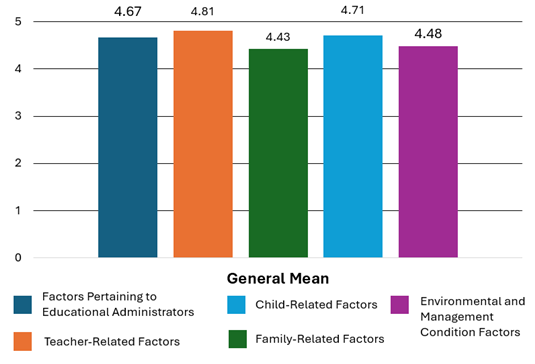
The results presented in Table 6 show that with a general mean score of X̅ = 4.62, all five groups of factors are perceived to exert a very significant impact on the management of inclusive education (IE) for children with ASD through a school-family collaboration-oriented approach in preschools in Hanoi, Vietnam. This confirms the complex and multidimensional nature of IE activities, which necessitates synchronized attention across multiple dimensions rather than focusing on a single isolated factor. However, a clear trend emerges when analyzing the rankings: human factors—those individuals directly involved in the daily educational process—are perceived to have the most decisive influence. Specifically, "Factors pertaining to teachers" (X̅ = 4.81) and "Family-related factors" (X̅ = 4.71) rank first and second, respectively. These results suggest that the success of children with ASD depends less on macro policies or material conditions and more on the quality of two core relationships: the teacher-student relationship and the school-family partnership. The competence, attitude, and dedication of teachers, combined with the awareness and proactive participation of families, constitute the two primary pillars determining the child's progress. Ranking third is the group of factors related to "Educational administrators" (X̅ = 4.67), reaffirming the critical leadership role of school heads. Finally, objective factors such as "Environmental and managerial conditions" (X̅ = 4.48) and "Child-related factors" (X̅ = 4.43), while still having a very high impact, are ranked last.
The overall synthesis of factors influencing the management of inclusive education for children with ASD through school-family collaboration in Hanoi preschools can be illustrated in the following chart:
5. Conclusion
Various factors influence the management of inclusive education (IE) for children with ASD through a school-family collaboration-oriented approach in Hanoi preschools, encompassing those pertaining to administrators, teachers, children, families, as well as environmental and managerial conditions. Among these, human factors—comprising individuals directly engaged in the child's daily educational process—are identified as the most decisive, with teacher-related and family-related factors emerging as the primary determinants. Elucidating these influential factors assists preschool administrators in gaining a deeper awareness of their roles and responsibilities in managing inclusive practices and fostering synergy with families. This, in turn, facilitates the mobilization of collective strength among educational stakeholders to successfully fulfill the inclusive education objectives established by preschools and the city of Hanoi amidst the current landscape of educational reform.
References
- Ministry of Education and Training. (2018). Thông tư số 03/2018/TT-BGDĐT, ngày 29 tháng 01 năm 2018, quy định về giáo dục hòa nhập đối với người khuyết tật. [In Vietnamese]. DOI ↗ Google Scholar ↗
- Ministry of Education and Training. (2021). Thông tư số 01/VBHN-BGDĐT ngày 13 tháng 4 năm 2021 ban hành Chương trình Giáo dục mầm non. [In Vietnamese]. ) DOI ↗ Google Scholar ↗
- The Government of Vietnam. (2013). Nghị định số 136/2013/NĐ-CP quy định chi tiết và hướng dẫn thi hành một số điều của Luật Giáo dục về giáo dục hòa nhập. [In Vietnamese]. DOI ↗ Google Scholar ↗
- Nguyen, T.T. H. (2017). Thực trạng và giải pháp nâng cao chất lượng giáo dục hòa nhập cho trẻ khuyết tật tại Việt Nam, [Current status and solutions to improve the quality of inclusive education for children with disabilities in Vietnam] [Doctoral dissertation, Hanoi National University of Education]. [In Vietnamese]. DOI ↗ Google Scholar ↗
- Nguyen, X. H. (2018). Giáo trình Quản lý giáo dục hòa nhập [Textbook on inclusive education management]. Hanoi National University of Education Publishing House. [In Vietnamese]. DOI ↗ Google Scholar ↗
- Bui, R. L. & Hoang, T. N. (2012). Giáo trình giáo dục hòa nhập [Textbook on inclusive education]. Vietnam Education Publishing House. [In Vietnamese]. DOI ↗ Google Scholar ↗
- United Nations. (2007). United Nations Convention on the Rights of Persons with Disabilities (UNCRPD). DOI ↗ Google Scholar ↗
- Nguyen, T.M. L. (2017). Giáo dục hòa nhập cho trẻ em khuyết tật ở Việt Nam: Thực trạng và giải pháp [Inclusive education for children with disabilities in Vietnam: Current status and solutions]. Vietnam Journal of Educational Sciences, 25(3), 45. [In Vietnamese]. DOI ↗ Google Scholar ↗
- National Assembly of Vietnam. (2010). Luật Người khuyết tật [Law on Persons with Disabilities]. Law No. 51/2010/QH12. [In Vietnamese]. DOI ↗ Google Scholar ↗
- National Assembly of Vietnam. (2019). Luật Giáo dục [Law on Education]. Law No. 43/2019/QH14. National Political Publishing House. [In Vietnamese]. DOI ↗ Google Scholar ↗
- Nguyen, T.H. Y. Y., et al. (2014). Nghiên cứu biện pháp can thiệp sớm và giáo dục hòa nhập cho trẻ rối loạn phổ tự kỷ ở nước ta hiện nay và trong giai đoạn 2011 – 2020 [Research on early intervention and inclusive education for children with autism spectrum disorder in Vietnam currently and in the period 2011–2020]. State-level independent research project. [In Vietnamese]. DOI ↗ Google Scholar ↗
- American Psychiatric Association. (2013). Diagnostic and Statistical Manual of Mental Disorders (5th ed.), American Psychiatric Publishing. DOI ↗ Google Scholar ↗
- Booth, T., & Ainscow, M. (2011). Index for inclusion: Developing learning and participation in schools (3rd ed.), CSIE, Bristol. DOI ↗ Google Scholar ↗
- Bronfenbrenner, U. (1979). The ecology of human development: Experiments by nature and design: Harvard University Press, Cambridge, MA. DOI ↗ Google Scholar ↗
- Centers for Disease Control and Prevention. (2023). Data & Statistics on Autism Spectrum Disorder. DOI ↗ Google Scholar ↗
- Clifford, T. & Minnes, P. (2013). “Who participates in support groups for parents of children with autism spectrum disorders? The role of beliefs and coping style”, Journal of Autism and Developmental Disorders, 43(1), tr. 179- DOI ↗ Google Scholar ↗
- Mahoney, G., & MacDonald, J. D. (2007). Parent-Implemented Intervention for Young Children with Autism Spectrum Disorders: Brookes Publishing. DOI ↗ Google Scholar ↗
- UNICEF (2020), Children with disabilities in Viet Nam: A situation analysis, UNICEF Viet Nam, Ha Noi. DOI ↗ Google Scholar ↗